


Table of Contents
1. Why Bother with a Bench Test? My Two Cents
2. Safety First: Lessons from My Early Mistakes
3. Gathering Your Gear: What's Really on My Bench
4. Making Sense of Those Mysterious Terminals
5. The Main Event: My Step-by-Step Testing Ritual
a. The "Will It Even Wake Up?" Test
b. Listening to the Solenoid's Story
c. The Tell-All: Measuring Amp Draw
d. The Hands-On Feel Test
6. Decoding the Results: What Is Your Starter Telling You?
7. Leveling Up: For the Truly Curious
8. Pitfalls I've Stumbled Into (So You Don't Have To)
9. The Big Question: Fix It or Swap It?
10. Where I Turn When It's Time for a New One
11. Parting Thoughts: Knowledge is Power
1. Why Bother with a Bench Test? My Two Cents
Let me be honest with you. Early in my career, I replaced a lot of starter motors that weren't actually dead. I’d get a "no-start" call, jump to conclusions, and swap the part—only to have the same problem. It was frustrating, expensive for my clients, and bad for my reputation. That’s when an old-timer in the shop showed me the power of the bench test.
Pulling the starter and testing it on your bench isn't just a step; it's the definitive verdict. It cuts through the guesswork. Is it a bad starter, or is it a weak battery, corroded cable, or a failing ignition switch? The bench tells you the truth.
Whether you're a weekend warrior saving money on a car repair, a marine mechanic troubleshooting a boat that won't crank, or an engineer vetting components for a new design, this skill is gold. In this guide, I’ll walk you through my exact process, the one I’ve refined over years. And because I know that finding a reliable, high-quality replacement is half the battle, I’ll also share how I’ve streamlined that part of the process in today’s global market.
2. Safety First: Lessons from My Early Mistakes
We’re dealing with enough raw power to weld metal here. I’ve seen sparks fly and tools get launched. Please, learn from my early scares:
● Glasses On, Always: A fragment from a spinning gear or a stray spark is no joke. My safety glasses have earned their keep.
● Lock It Down: The first time I didn’t clamp a starter securely, it spun right out of my hand like a wild top. Use a solid vise with soft jaws or a rag to protect the casing.
● Respect the Battery: A solid, fully-charged 12V battery is key. A weak one will give you false results. Keep it stable and clear of your work area.
● Use Beefy Cables: Those skinny jumper cables from your trunk? They’ll melt. Use heavy-duty, 4-gauge cables or thicker.
● Mind the Pinion: That little gear can snap out with force. Keep your fingers, tools, and cables well clear when it’slive.
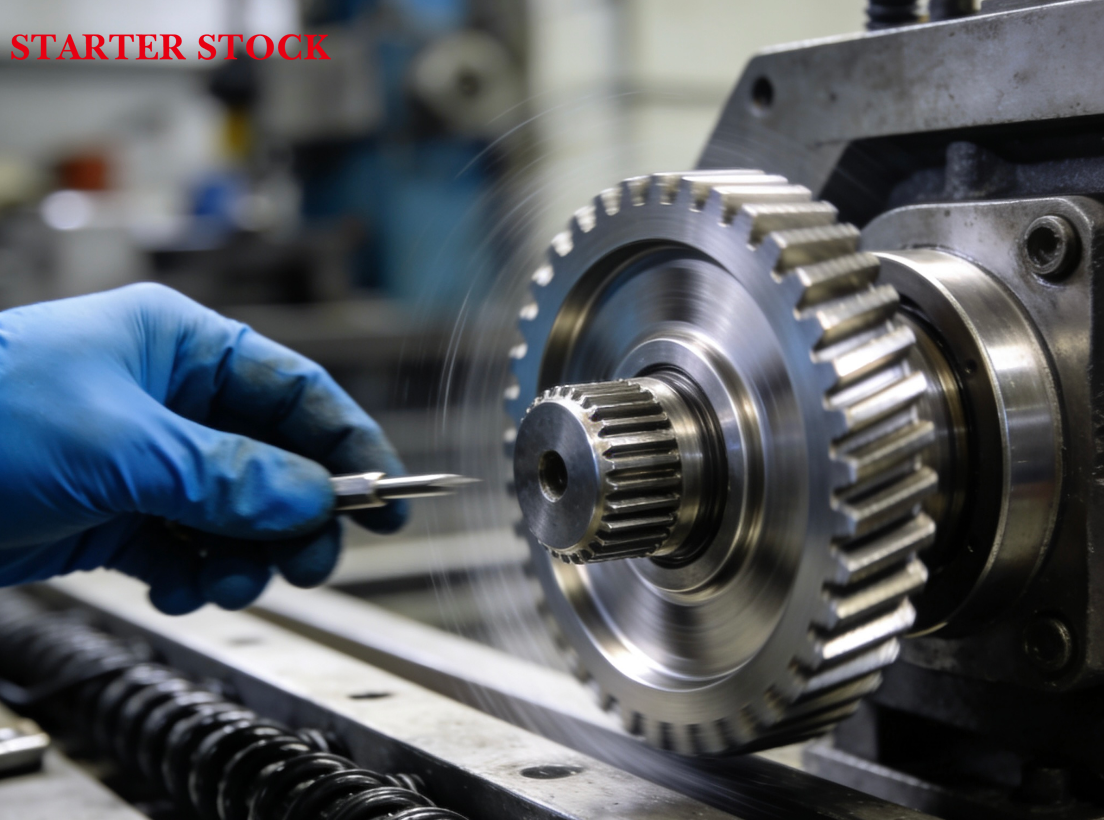
3. Gathering Your Gear: What's Really on My Bench
Here’s what I actually reach for:
1. A Known-Good Battery: My dedicated bench battery. I check its charge before every test.
2. Two Sets of Heavy Jumper Cables: For power and ground.
3. A Solid Bench Vise: My third hand.
4. A Digital Multimeter: Essential. One with a min/max function and a DC amp clamp is a game-changer for measuring current without breaking the circuit.
5. A Set of Insulated Jumper Wires: For activating the solenoid safely.
6. Safety Gear: Glasses and gloves are non-negotiable.
7. A Clean Rag and Terminal Brush: Corrosion is the enemy of a good test.
Having the right tools is as important as having the right parts. When I need a specific starter for an antique tractor or a custom motor for a prototype, finding a supplier who can deliver quality without a massive minimum order used to be a headache.
4. Making Sense of Those Mysterious Terminals
Don’t let the starter intimidate you. It usually has just two or three points of contact:
● The Big Stud (B+ or Battery Terminal): This is where the main cable from your car’s battery connects. It’s the high-current entry point.
● The Small Tab or Post (S or 50 Terminal): This is the “switch.” When you turn your ignition key to “start,” a small current hits this terminal, telling the solenoid to kick in.
● The Ground Path: The starter grounds itself through its metal body to the engine block. On the bench, we have to create that ground ourselves with a cable.
5. The Main Event: My Step-by-Step Testing Ritual
5.1 The "Will It Even Wake Up?" Test (Basic Function)
This is the first check. I want to see if it has any life at all.
1. Secure & Connect: I clamp the starter firmly. I attach one heavy cable from the negative (-) battery post directly to the starter’s clean metal body. This is my ground.
2. Prepare Power: I connect another cable to the positive (+) battery post. I let the other end hang loose for now.
3. The Moment of Truth: Here’s the trick. To simulate the ignition switch, I need to send power to both the big stud and the small “S” terminal at the same time. My favorite safe method is this:
a. I touch the loose positive cable end to the big stud (B+).
b. While keeping it there, I use an insulated screwdriver or a jumper wire to briefly bridge the gap between that big stud and the small “S” terminal.
c. What you want: A loud, healthy CLUNK (the solenoid engaging) followed immediately by a fast, smooth, and noisy WHIRRR (the motor spinning). The drive gear should stay extended while it spins.
5.2 Listening to the Solenoid's Story
That CLUNK is music to my ears. It means the solenoid’s electromagnet is strong and the shift fork is throwing the drive gear forward. Watch the gear: it should shoot out straight and true. When you remove power, it should snap back cleanly. A weak click or a sluggish return means internal solenoid trouble.
5.3 The Tell-All: Measuring Amp Draw
Sound alone isn't enough. A starter can sound okay but draw too much power, indicating internal problems. This is where my amp clamp meter shines.
1. I set up the test as in Step 5.1.
2. I clamp the meter’s jaws around just one of the cables leading to the starter (doesn’t matter which, as long as it’s around one conductor).
3. I activate the starter and watch the meter. Once it’s spinning freely (not the initial spike), I note the stable current.
a. A healthy 12V car starter typically draws 50-80 amps with no load.
b. Over 100-120 amps? It’s struggling—likely due to worn bushings, a short, or internal drag.
c. Under 40 amps? It’s not engaging properly—could be bad brushes or high resistance.
5.4 The Hands-On Feel Test
With everything off, I give it a physical.
● I try to rotate the pinion gear by hand. It should turn with some smooth magnetic resistance from the armature. If it spins too freely or is locked solid, that’s a red flag.
● I grab the pinion and try to wiggle it. Any noticeable side-to-side play means the bushings are worn out.
6. Decoding the Results: What Is Your Starter Telling You?
● Passes All Tests (Good clunk, strong spin, correct amps): Your starter is innocent. Look elsewhere—battery, cables, ignition switch, or engine mechanical issue.
● Solenoid Clicks, Motor is Silent: The solenoid is engaging, but it’s not connecting the main circuit inside. Could be burnt contacts or completely dead brushes.
● Motor Spins Slow & Lazy, Draws High Amps: This starter is tired and bound up. It’s on its last legs.
● Works on Bench, Fails on Car: This is common. The bench test has no load. Under engine compression, weak components fail. It’s still a bad starter.
7. Leveling Up: For the Truly Curious
If you really want to geek out:
● Voltage Drop Test: With the starter cranking, check the voltage between the battery positive post and the starter’s B+ stud. More than a 0.5V drop means you’re losing power in the cables or connections.
● Thermal Camera: After running the starter for 10-15 seconds, a quick scan can show a hot spot on a winding that’s beginning to short.
8. Pitfalls I've Stumbled Into (So You Don't Have To)
● The Underrated Battery: Using a weak battery is the #1 cause of a false “bad starter” diagnosis.
● The Forgotten Ground: Not making a solid, clean ground connection from the battery to the starter case will ruin your test.
● Ignoring the Numbers: Trusting your ears over the amp meter will lead you astray. Data doesn’t lie.
9. The Big Question: Fix It or Swap It?
● Rebuild: Worth it for rare, vintage, or expensive units if you can get a quality kit (brushes, bearings, solenoid contacts). It’s satisfying work.
● Replace: For 95% of modern applications, this is the faster, more reliable path. The key is what you replace it with.
And that’s the real challenge, isn’t it? Do you pay the premium at the dealership, wait for weeks, or roll the dice on a cheap online part of unknown origin? I got tired of that compromise.
10. Where I Turn When It's Time for a New One
This is the part of the job that used to frustrate me. Sourcing shouldn’t be harder than the repair. That’s why I was thrilled to find a platform that actually gets it.
When I need a starter—whether it’s a one-off for a customer’s vintage motorcycle or a batch of 50 for a fleet of utility vehicles—I now use StarterStock. Let me tell you why it feels different:
It’s built by people who understand that real projects start small. Need just one sample to verify fit and function before committing? They have suppliers who welcome that, unlike the giant distributors who ignore small orders. Every supplier is pre-vetted, so I’m not playing quality roulette. I can see their certifications and past work.
The platform keeps the whole process transparent, from the first quote to delivery. For peace of mind, I can even opt for a third-party inspection report before anything ships. As someone who’s been burned by “new” parts that were dead on arrival, this feature alone is a lifesaver.
For me, it’s more than a store. It’s a resource. Their community blog is full of practical knowledge from other mechanics and engineers—exactly the kind of real-world insight you’re reading right now. For anyone who works with motors, from hobbyists to plant managers, it’s become a trusted part of my workflow.
11. Parting Thoughts: Knowledge is Power
Mastering the bench test empowers you. It turns a mysterious black box into a knowable component. You save money, time, and pride by making accurate diagnoses.
And when that diagnosis points to a replacement, you deserve a sourcing experience that’s as smart and reliable as your diagnostic skills. Now you know my full process, from the first safety check to the final procurement step. Go put that knowledge to work.