


You hear it all the time in the shop. A DIYer or a new apprentice holds up a carbon brush, flips it over a couple of times, and shrugs. "It's just a square of carbon. Does it even matter which way it goes in?"
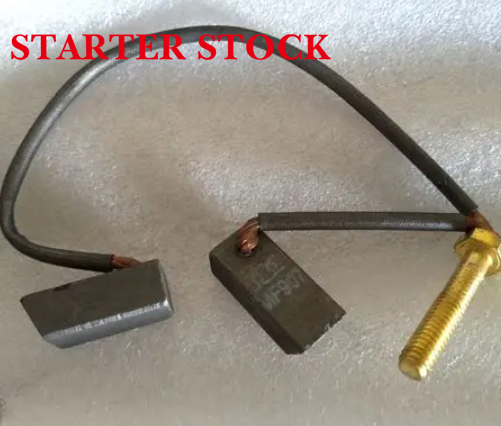
Let me tell you, it matters more than almost anything else in the whole job. I've seen more motors killed by backwards brushes than by old age. It's the quickest way to turn a simple $20 maintenance task into a $200 paperweight. The difference isn't about being fancy; it's about physics. Get it wrong, and you're inviting three killers into your motor: grinding wear, runaway heat, and arc welding.
Think of a carbon brush not as a part, but as a partner to the spinning copper commutator. Its shape, its angles, even where its little wire tail sits—all of it is designed for a perfect handshake. Flip it around, and you break that handshake.
What Actually Happens When It's Backwards?
1. The "Knife Edge" Effect (The Main Killer)
Look at a new brush. See that slight curve or bevel on one face? That's not a manufacturing quirk. That curve is machined to match the exact radius of your commutator. Its job is to sit down and make full, even contact across the whole surface.
Right Way: Full surface contact. Smooth current transfer, even wear.
Backwards: Now the flat back or wrong side is pressing against the round commutator. You get point contact. All the spring force concentrates on a tiny edge. It grinds itself away like a pencil, and carves a nasty groove into the copper. You'll hear a high-pitched scraping sound almost immediately.
2. The "Jammed Brick" (A Fast Follow-Up)
The sides of a brush aren't perfect rectangles either. Often, one or two sides have a slight relief angle—a tiny taper. This lets it slide smoothly up and down in its holder (called the "brush box") as it wears down.
Right Way: Brush slides freely, keeping constant pressure.
Backwards: The angled side is now jammed against the wrong wall of the box. It sticks, it tilts, it binds. The spring fights to push it, but it can't move. Now you have a stuck, tilted brick grinding unevenly. This causes "chatter" and accelerates wear on one side.
3. The "Tail That Wags the Dog"
The flexible copper pigtail (the wire) has a specific home. It's supposed to be on the side that doesn't interfere, usually the side away from the main rotation.
Right Way: Pigtail sits calmly, out of the way.
Backwards: The pigtail can get pulled into the path of the spinning commutator. It gets sliced, frays, and can short things out. Even if it doesn't, it can pull the brush off-angle, breaking contact and causing massive, sparking arcs.
How to Get It Right Every Time: The Four-Step Field Guide
Forget complex manuals. Here’s how we do it on the bench.
Step 1: Your Best Friend – The Old Brush (If You Have It)
Before you pull the old brush, take a phone picture. Look at it after it's out.
Which face is worn shiny and curved? That’s the contact face.
Which side has a polished stripe from rubbing the brush box? That’s the guide side.
Which way does the pigtail point?
Your new brush must mirror the old one exactly. Line them up side-by-side before you install anything.
Step 2: Reading the New Brush's "Fingerprints" (If You Have No Old Brush)
No old part? The new one tells its own story.
Find the Curve: Run your finger over the faces. One will have a distinct curve or bevel. That's the front.
Find the Angle: Feel the long sides. One will often feel smoother or look slightly machined at an angle compared to the others. That's the guide side.
Mind the Tail: The pigtail usually comes out of the top, on the side opposite the guide angle. Make sure it will have a clear, relaxed path.
Step 3: The Dry Fit Test (The Final Judge)
This is the ultimate test. Do not install the spring yet.
Place the brush into its box the way you think is correct.
It should drop in and slide up and down with just its own weight. No rocking, no tilting, no catching. It should feel slick.
Look at how it faces the commutator. The curved face should look like it's ready to hug the round copper surface.
If it’s binding, it’s wrong. Flip it and try again.
Step 4: The First Start – Listen and Smell
Once you're sure, assemble it, but be vigilant on the first start.
Good: A soft hum, maybe a few small orange sparks that fade in 30 seconds as it "seats."
Bad: A loud scraping/grinding noise, a burning smell, or continuous bright blue/white sparks. SHUT IT OFF IMMEDIATELY. You likely have it backwards or it's binding.
The Aftermath: If You Already Got It Wrong
So you started it and knew right away from the sound? Stop. Power down. Here's the damage control:
Pull the brush. It's probably ruined—worn at a sharp angle. Don't try to reuse it. The shape is destroyed.
Inspect the commutator. Look for a new, shiny groove carved into the copper or severe black scoring. Light marks can be carefully sanded smooth with fine paper. Deep grooves mean the armature needs professional machining.
Clean everything. Blow out all the carbon dust from the incident before trying again with a fresh, correctly oriented brush.
The Bottom Line
Installing carbon brushes isn't about brute force; it's about alignment and respect for design. That little block of carbon is a precision component. Taking two extra minutes to look, compare, and test-fit isn't nitpicking—it's the mark of someone who understands that the smallest detail can save or destroy the whole machine. Your motor's life literally depends on which way that square faces. Get it right, and it'll run for years. Get it backwards, and you'll be buying a new one by next month.