


High-Performance Motorcycle Starter Motors: Wholesale Importer's Guide
Everyone chases exhausts and tuners. Flashy stuff, big margins, customers ask for it by name. Starter motors? Not sexy. But they're constant sellers, and the performance segment is growing faster than most importers realize.
Big bore kits, high-compression pistons, stroker cranks—builders are squeezing more out of every engine. Stock starters were designed for stock compression. Bump it from 9:1 to 12:1, add displacement, and that wimpy factory starter grinds, overheats, fails. Riders want something that spins the motor like it's stock again.
Then there's the restoration market. Guys rebuilding CB750s, GS1000s, old Brit bikes. OEM starters are NLA or stupid expensive. Quality reproductions that look right and crank hard command premium prices.
And the custom scene. Cafe racers, bobbers, street trackers. Often running different engines, different configurations, needing adapters or modified starters. Niche, but margins are fat when you know what you're doing.
I got into this by accident. Customer asked for a high-torque starter for his built Hayabusa. Couldn't find one through my usual channels. Sourced direct, sold it, realized there was demand I'd been ignoring. Now starters are 15% of my revenue. Steady, repeat business, fewer returns than exhaust systems.
What "High-Performance" Actually Means
Marketing departments slap "high-performance" on everything. As an importer, you need to know what's real.
Real high-torque starters use stronger motors. More copper in the windings, better magnetic circuit, lower internal resistance. They draw the same or less current while producing more torque. Not just "spins faster"—spins harder under load.
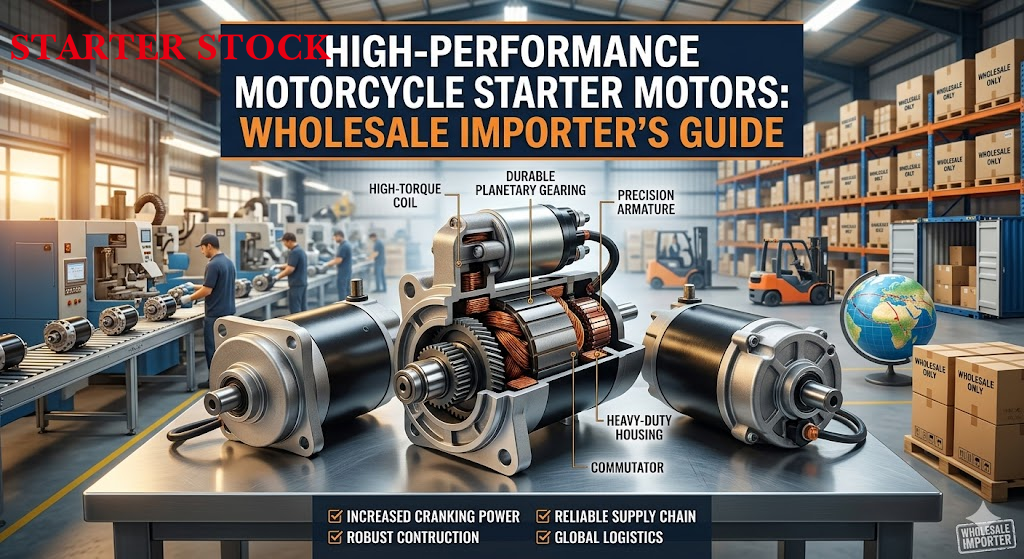
Gear reduction starters are the modern approach. Small motor spins fast, planetary gears reduce speed and multiply torque. Lighter than direct-drive, more cranking power, easier packaging. Most Japanese sportbikes and big cruisers use this design now. Older bikes are direct-drive—bigger, heavier, simpler.
Permanent magnet starters use magnets instead of field coils. Lighter, more efficient, but magnets can demagnetize from heat or abuse. Wound field starters are heavier but more tolerant of abuse and heat. Most performance upgrades are PM designs for the weight savings.
Billet housings show up in the premium segment. CNC machined aluminum instead of cast. Better heat dissipation, tighter tolerances, looks great for show bikes. Costs more, sells to the right customer.
Sizing for the Application
This is where importers get burned. Order a container of "high-torque starters" without checking what they actually fit, or whether the torque matches the need.
Compression ratio is the key number. Stock 9-10:1, OEM starter usually fine. 11-12:1, mild upgrade helps. 13:1 and up, you need real torque. I've seen 14:1 drag bike motors that wouldn't crank with anything less than a gear reduction high-torque unit.
Displacement matters too. Bigger pistons, more mass to accelerate, more friction. 1800cc V-twin needs more than a 600cc inline four even at same compression.
Engine type influences selection. V-twins with long strokes load the starter hardest at TDC. Inline fours have lighter pistons, easier cranking. Single cylinders, big thumpers, lots of compression spike. Each needs different torque curves.
Fitment is critical. Same engine family, different years, different starters. Mounting bolt pattern, shaft length, pinion tooth count, rotation direction. Get any wrong and it's a paperweight. I keep a spreadsheet of every variation I've encountered. Saves me from expensive mistakes.
Electrical compatibility too. Some bikes trigger the solenoid through the start button, others through relays, others through the ECU. Starter needs the right solenoid or integrated design. Voltage—12V standard, but some vintage bikes are 6V, some custom builds run 16V. Match the starter to the system.
Quality Markers You Can Check
When you're buying containers from overseas, you can't test every unit. But you can spot trouble before it ships.
Weight is a quick check. Cheap starters use less copper, smaller magnets, thinner housings. Lighter than spec usually means corners cut. Weigh a sample, compare to known good unit. Significant difference, ask questions.
Spin test on a bench. Clamp it, jump it with a good battery. Should spin smooth, strong, no grinding or vibration. Listen for bearing noise. Feel for heat after 10 seconds of running—should be warm, not hot.
Commutator inspection on rebuildable units. Should be smooth, concentric, proper undercut between segments. Rough, burnt, or uneven commutator means poor construction or used parts.
Brush holder and spring quality. Cheap plastic that distorts, weak springs that don't maintain pressure. Brushes should move freely, make solid contact, have adequate length.
Housing quality shows in the casting. Clean parting lines, no porosity, proper machining of mounting surfaces. I've seen housings that leaked oil past the gasket because the sealing surface was never properly finished.
Hardware matters too. Mounting bolts, terminal nuts, should be correct grade and plating. Cheap hardware strips, rusts, causes field failures that come back as warranty claims.
Documentation is a quality indicator. Factory that provides test data, specifications, dimensional drawings—usually cares about consistency. Factory that shrugs and says "it works"—usually doesn't.
Importing: What Goes Wrong
I've made the mistakes so you don't have to.
Specification drift between samples and production. Approved a sample, placed container order, received goods that were "close enough" by factory standards. Pinion shaft 2mm short. Mounting ear drilled wrong. Solenoid wired backward. Not catastrophic, but unsellable without rework. Costs kill the margin.
Copper theft in windings. Sounds crazy, but happens. Factory uses aluminum wire with copper plating, or undersized copper, or fewer turns. Tests okay on no-load, fails under real starter load. Heat kills it in months.
Counterfeit labeling. "OEM supplier" stickers on generic junk. I've caught this twice. Looked right, priced right, performance was garbage. Now I verify supply chain, visit when possible, build relationships with factories I've vetted.
Customs classification bites importers who don't know the codes. Starter motors have specific HS codes depending on type, voltage, application. Wrong code, wrong duty rate, delays, possible seizure. Use a broker who knows automotive electrical. Worth the fee.
Moisture damage in transit. Container ships are humid. Starters with exposed steel parts, raw commutators, can rust in weeks at sea. Proper packaging—VCI bags, desiccant, sealed inner boxes. Costs pennies, saves thousands.
Warranty exposure. Cheap starters fail, customers come back to you. If you imported junk with no factory backing, you eat it. Build warranty terms into supplier agreements. 12 months minimum, parts replacement or credit. Factory that won't stand behind product is telling you something.
Where I Source Now
After too many container headaches, I consolidated most of my starter sourcing with STARTERSTOCK. Here's why that works for an importer.
They specialize. Not a general parts distributor that happens to carry starters. Charging and starting systems are their core. That means they understand torque curves, fitment variations, quality markers. When I call with a question, I talk to someone who knows the difference between a direct-drive and gear reduction unit.
Quality is consistent. I've toured their facility, seen the testing. Every starter gets spin test, load test, current draw check before it ships. Not statistical sampling—every unit. Reject rate is under 1%. My return rate from customers is under 2%. That's sustainable.
They carry the range I need. Stock replacement for daily riders. High-torque upgrades for builders. Gear reduction conversions for vintage bikes. Even custom builds—different shaft lengths, modified pinions, special rotation for oddball applications.
Volume pricing scales properly. I'm not big enough for factory-direct from overseas, but I move enough that STARTERSTOCK's pricing works. No container minimums, no currency risk, no customs delays. Order what I need, when I need it.
For big orders, they'll do custom. Different housings, private label, special packaging. I've had them build starters with my branding for a shop line. Quality was identical to their house brand, just with my stickers. Good margin, my reputation protected by their manufacturing.
Technical support is real. Sent them a starter from a customer that failed early. They didn't just replace it—they tore it down, found the customer had hydrolocked the engine and was cranking against liquid. Taught me how to spot that damage pattern, saved me from future warranty fraud. That's partnership.
| STARTERSTOCK Advantage | What It Means for Importers |
| 100% testing | Every unit verified, not sampled |
| OEM-spec construction | Copper weight, magnet grade, bearing quality match or exceed factory |
| Model-specific fitment | Exact applications, not "close enough" |
| Technical documentation | Specs, drawings, test data for your catalog |
| Volume pricing | Container loads, pallet quantities, single units |
| 12-month warranty | Factory-backed, not just promises |
| Same-day shipping | US stock, no 8-week container waits |
| Custom builds | Special applications, private label, modified shafts |
Moving Inventory Without Getting Stuck
Importing is only half the battle. You have to sell it.
I segment my starter inventory three ways. Fast movers—common sportbikes, cruisers, standards. Stock replacements that turn regularly. Thin margin, high volume, keeps cash flowing.
Performance upgrades—high-torque, gear reduction, billet housings. Slower turn, fatter margin. Market to builders, shops, online forums where the enthusiasts hang out.
Niche applications—vintage, custom, oddball bikes. Special order mostly, but when you have it and nobody else does, you name the price.
Content sells starters. Write the articles, make the videos, explain why high-torque matters. Most riders don't know their starter is struggling until it fails. Educate them, offer the upgrade before they're stranded. I get steady sales from blog posts I wrote two years ago.
Shop partnerships are gold. Performance shops, engine builders, restoration specialists. They recommend, you supply, everyone wins. Offer them wholesale accounts, technical support, fast shipping. Make it easy to sell your stuff.
Online, detailed fitment is everything. "Fits 2008-2016 CBR1000RR" sells better than "fits Honda sportbikes." Cross-reference OEM numbers. Show dimensions. Answer the questions before they're asked. Returns kill margin on heavy items like starters.
Warranty handling builds reputation. Easy returns, no argument, fast replacement. Costs a little, earns loyalty. Customers remember who stood behind them when they were stuck.
Conclusion
High-performance starter motors are a solid import niche. Constant demand, growing performance market, good margins when you source right. But it's easy to get burned—specification drift, quality issues, inventory that doesn't move.
Source carefully. Test samples thoroughly. Build supplier relationships with factories or distributors who understand the product and stand behind it. STARTERSTOCK has been that partner for me—consistent quality, technical competence, terms that work for my scale.
Know your applications. Size starters to the build, not just the bike. Market to the right customers—builders, restorers, enthusiasts who understand why quality matters. Educate, support, deliver.
The starter motor isn't the sexiest part on a bike. But when a customer hits the button and the engine roars to life on the first crank, that's satisfaction. That's repeat business. That's why this niche is worth doing right.