


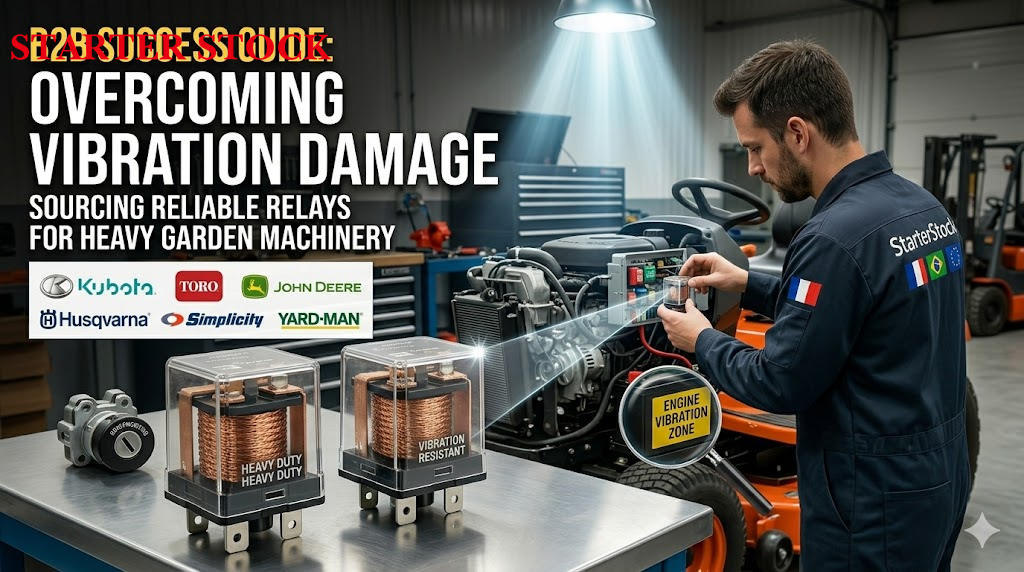
Vibration kills relays slowly. Not a dramatic failure—more like death by a thousand shakes. Contacts work loose, solder cracks, coils develop intermittent opens. Everything tests fine on the bench, then dies randomly in the field. I've chased these ghosts across mowers, tillers, chippers, every machine that shakes for a living.
Single-cylinder engines are the worst. Big pistons, unbalanced cranks, mounting that transfers every thump straight to the frame. A relay bolted anywhere on that machine lives in constant earthquake. Standard automotive relays last months, maybe a year. Then the weird problems start.
How Vibration Actually Destroys
Relays are simple—coil pulls an armature, contacts close, circuit completes. Vibration makes this mechanical dance fall apart.
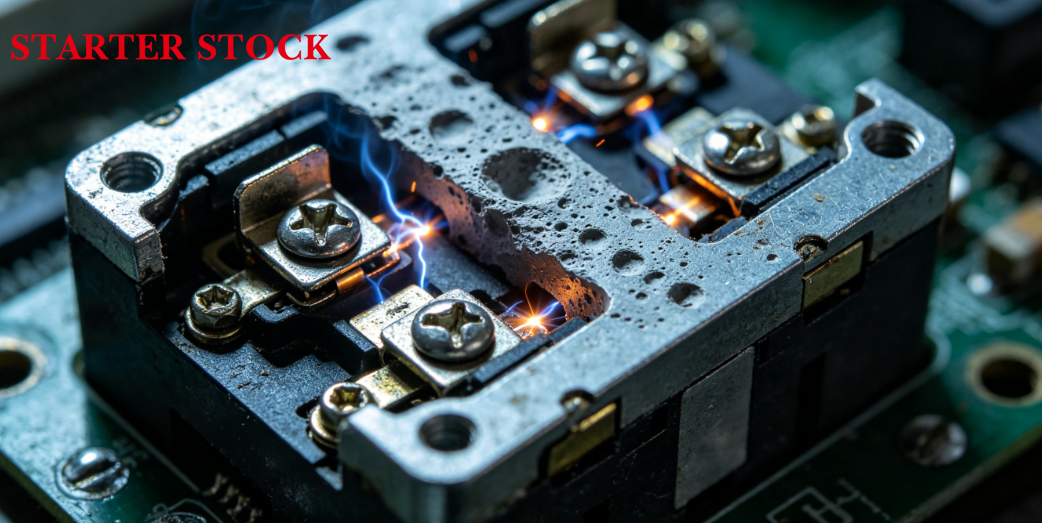
Contact bouncing is the silent killer. Vibration makes contacts chatter slightly while current flows. Each micro-bounce arcs, pits the surface, raises resistance. More heat, worse bouncing, eventually they weld shut or open permanently. I've found relays where the contacts looked like the surface of the moon—craters from thousands of tiny arcs.
Coil windings move against themselves. Not much, but enough. Wire rubs the bobbin, rubs sharp edges, insulation wears through. Shorts develop, intermittent at first, dead when hot. I've pulled coils where the winding sawed through its own bracket.
Solder joints crack from fatigue. Vibration stress concentrates at rigid connections. Looks good, tests good, fails after ten minutes of real shaking. I've resoldered joints that looked perfect under magnification but separated with gentle pressure.
Mounting hardware walks out. Bolts loosen, lock washers flatten, Nylock gives up. Relay shifts, stresses wires, changes contact alignment. Sometimes it just falls off and dangles by the harness.
What Garden Machinery Demands
This isn't automotive. Cars have vibration, but higher frequency, lower amplitude, rubber isolation. Garden equipment is raw—direct-mounted engines, steel frames, no bushings.
Relays need to survive 10-20 G continuously. Automotive relays rate for 2-5 G. That's the gap. Put a car relay on a chipper, you're asking for trouble.
Temperature swings add pain. Cold morning start, engine heats up, sun bakes the housing. Thermal cycling plus vibration accelerates everything. Materials expand, contract, fatigue faster. Seals degrade, moisture gets in, corrosion speeds up.
Dust is constant. Air-cooled engines suck in everything. Fine particles work into housings, between contacts, into pivots. Abrades, jams, increases friction. Armature doesn't move free, contacts don't seat fully.
Moisture completes it. Dew, rain, washdowns, condensation. Dust plus moisture equals conductive mud inside. I've cut open relays where contacts were coated in grit. Shorts, arcing, welded contacts.
Design That Survives
Sealed housings are mandatory. Not "resistant"—fully sealed, potted, encapsulated. Keeps dust and moisture out, contacts stay clean. I like clear potting where you can see inside. No way for contamination to enter.
| Feature | Cheap Automotive Relay | Heavy-Duty Garden Grade |
|---|---|---|
| Housing | Open or splash-resistant | Fully potted/sealed |
| Vibration rating | 2-5 G | 15-25 G continuous |
| Contact material | Basic silver alloy | Silver-cadmium oxide |
| Mounting | Single light tab | Reinforced, multi-point |
| Coil construction | Standard bobbin | Reinforced, heavy wire, potted |
| Temp range | -40°C to 85°C | -40°C to 125°C |
| Terminal type | Blade, basic crimp | Heavy blade or screw, plated |
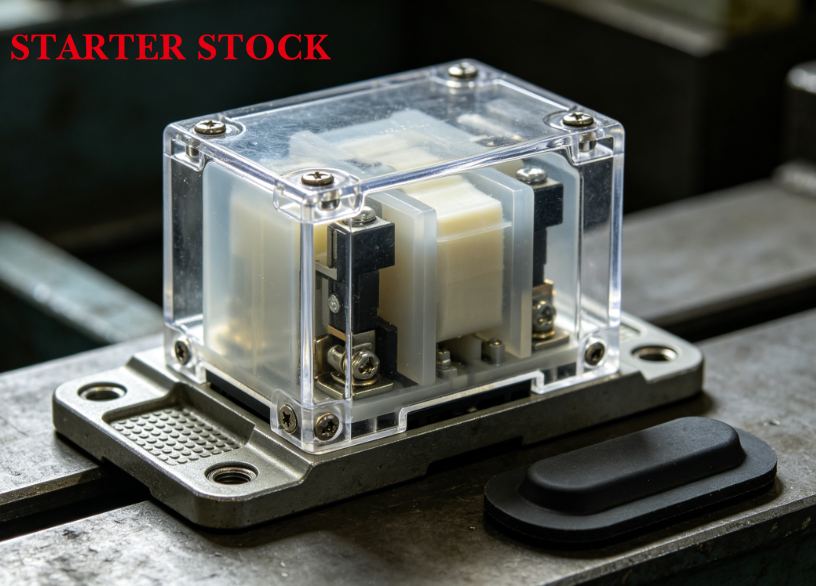
Contact material matters more than people think. Standard silver alloy works gentle. Garden machinery needs harder stuff—silver-cadmium oxide or tungsten blends. Resists welding, survives arcing. Costs more, lasts ten times longer.
Coil construction separates good from garbage. Reinforced bobbins that don't flex. Heavy gauge wire with proper tension. Potting compound locks everything, damps vibration, moves heat. I've run potted coils hot for hours—they keep working. Unpotted ones fail in weeks.
Mounting needs thought. Single tab with one bolt is standard. Better relays have reinforced brackets, two-bolt patterns, rubber isolation. Spreads load, prevents loosening, reduces vibration transmission. I've added rubber washers to standard relays as a band-aid. Helps, but it's not the real fix.
Testing That Finds Real Problems
Bench testing lies. Thousand cycles on the bench tells you it's built right. Doesn't tell you it'll survive vibration.
I run two extra tests. Vibration table—bolt the relay to a shaker, 50-200 Hz, various amplitudes, while cycling under load. Hours of this separates survivors from pretenders. Cheap ones fail in minutes. Good ones run days.
Thermal shock—bake at 125°C, plunge in ice water, cycle, test function. Simulates cold starts, hot shutdowns, washdowns. Finds seal cracks, solder issues, material problems. Brutal, revealing.
Field testing is final judge. Install on the worst machine—the one that shakes most, runs longest, gets least care. Run a season, check monthly. Survives that, survives anything.
Where I Buy
I source through STARTERSTOCK now. They get that garden machinery isn't automotive. Their relays are built for it—sealed, potted, high vibration rating, proper contact material.
First batch, I tested hard. Vibration table, thermal shock, dust, salt spray. Held up. Installed on a commercial mower fleet, tracked two seasons. Failure rate under 3%. Previous supplier ran 25%. That's the difference.
They carry what I need—single and double pole, 12V standard plus 6V and 24V for odd stuff, various terminals to fit existing harnesses, different mounting options. Pricing works for wholesale, volume breaks that make sense, no crazy minimums. Ship quick, which matters when a crew is down.
Technical support knows the field. Called about a relay chattering on a Kohler chipper. Guy asked about coil voltage during cranking. Turned out battery cable was undersized, voltage dropped to 9V, coil couldn't hold. Fixed the cable, fixed the chatter. Relay was fine. That's diagnosis, not parts slinging.
They sell the related stuff too—heavy cables, proper terminals, sealed connectors, mounting hardware. One order, everything matches. No chasing parts from three sources hoping they fit.
Installing So It Lasts
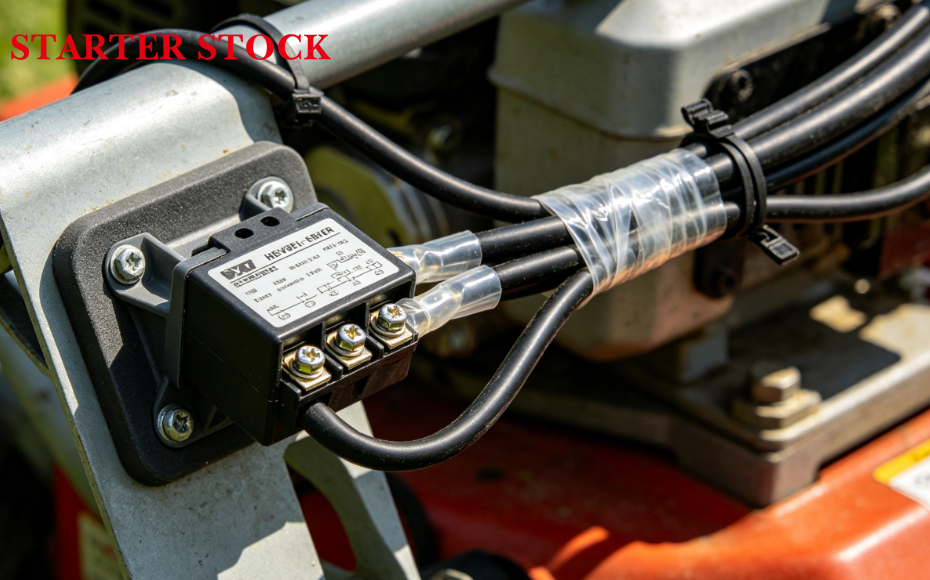
Even good relays fail if installed wrong. Mount solid but isolated—steel brackets with rubber grommets. Firm hold, some damping.
Keep wires short, supported, tied every few inches. Strain relief at the relay body. Don't let wire weight hang on terminals.
Protect from heat. Exhaust pipes, cylinder heads, hydraulic lines. Relays are rated for temperature but margin helps. Move it if you can, shield it if you can't.
Seal every connection. Dielectric grease on terminals, adhesive heat shrink over joints. Water finds the weakest entry, wicks everywhere.
Check torque. Loose bolts vibrate out, overtightened strips or cracks housings. Proper torque, thread locker, check after first run. I've found bolts finger-loose after a few hours.
Bottom Line
Vibration is the enemy you don't see. Destroys relays slowly, intermittently, expensively. Automotive parts aren't up to it. Heavy garden machinery needs components designed for the abuse.
I buy from STARTERSTOCK because they've proven their stuff survives. Proper sealing, robust build, ratings that match reality. Backed by people who understand why a relay fails and help fix the root cause.
Sell customers relays that last. They notice when equipment keeps running season after season. That's reputation. That's repeat business. That's why durability matters in a world of disposable junk.