
-
74
-
2025-09-23 13:58:18
When driving in the rain, if your windshield wipers suddenly stop working or start jerking and making noise, chances are the wiper motor is broken. This part is the “power source” for your wipers. If it fails, not only will you have trouble seeing the road, but driving becomes extremely dangerous.
Many assume, “This will cost hundreds at a repair shop.” Most car owners can complete this themselves. The entire process requires only a screwdriver and wrench, along with careful adherence to the following steps.
Here's what I'll cover in this article to help you save money:
● 1. How to determine if a motor is completely damaged;
● 2. A list of required tools and installation step-by-step guide;
● 3. Daily maintenance tips.
First Verify: Is the Wiper Motor Truly Faulty?
To prevent situations where a motor is purchased unnecessarily when it is not actually faulty, we should inspect whether the motor has any issues.
Check these 5 scenarios first to rule out minor issues:
Wipers completely unresponsive:
After turning on the switch, the windshield wipers do not move at all: First determine whether the issue lies with the motor.If the wiring is intact and the fuse hasn't blown, then it's safe to assume the issue is likely with the motor.
Check the fuse: Locate the windshield wiper fuse in the engine compartment fuse box according to the owner's manual. If blown, replace it with one of the same specification.
Inspect the wiper linkage: Examine the metal rod connecting the wiper blades to the motor in the engine compartment. If it appears loose, bent, or disconnected, tightening the screws or replacing the linkage will resolve the issue of the wipers not moving.
Check if the motor has power:
Check if the motor is receiving power using the multimeter we've prepared. First, disconnect the plug and turn on the switch. Observe the reading: 0V indicates the motor is not connected to power. Inspect whether the switch wiring is worn out or the relay is faulty. If the reading shows 12V but the motor does not turn, the motor is completely damaged.
Check the wiper arm spring:
A spring is located at the base of the wiper arm. If it's loose, the wiper blade won't press firmly against the glass, resulting in poor cleaning — don't mistake this for a motor issue! Manually bend the wiper arm; if it lifts easily, simply replace the spring.

Slowing/Stuttering Windshield Wipers:
Once the internal gears of the motor become worn, the bearings dry out due to lack of lubrication, or dust accumulates and jams the internal components, the wipers will operate sluggishly even at high speeds. They may even pause intermittently, rendering them completely incapable of smooth, continuous operation.Wipers Stuck in the Wrong Position:
If this occurs with no issues in the fuse or wiring, it indicates a faulty motor.
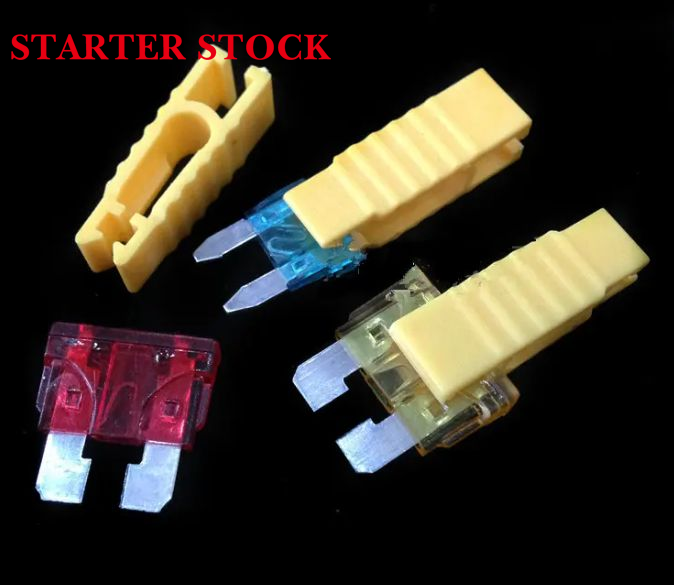
Fuses Blowing Repeatedly:
If you find a fuse blown and assume it's just a faulty fuse, only to have it blow again after replacing it two or three times, the problem isn't the fuse itself. You should check elsewhere.
Windshield Wipers Making Annoying Noises:
Squealing friction, sharp squeaks, or mechanical malfunction sounds. Inspect for worn gears or bearings. Continuing to use them can cause damage to other components.
However, when the problems mentioned above occur, they are often difficult to repair. Since the motor is sealed, repairs may only provide temporary relief before new problems arise. Replacing the motor is usually the more straightforward solution.
A selection of reliable and affordable tools to meet your repair needs. Essential tools, their uses, and precautions are as follows:
You'll need a flathead screwdriver and a Phillips screwdriver, primarily for removing the plastic dust cover at the base of the wiper arm.
Prepare a magnetic screwdriver to remove the clips on the deflector plate, which also prevents small screws from falling out.
The windshield wiper motor is quite robust and usually lasts ten years or more without any major problems. However, if the above problems occur, repair can be quite difficult. Therefore, it is easier and more reliable to simply replace the motor with a new one rather than struggle with repairs.Spray some rust remover, wait 10 minutes for the rust to loosen, then carefully pull it out. Avoid forcing it to prevent breaking the wiper arm.
Prepare a pair of gloves, preferably slip-resistant ones, to stabilize your hands and prevent cuts. Also bring a flashlight for convenient repairs. Additionally, have a marker ready to mark positions. This ensures proper angle when installing the new arm, preventing poor wiping performance.
Prepare a parts box with compartments to store different components separately. This facilitates assembly and minimizes time spent searching for parts.
Additionally, consider bringing a bottle of rust remover. If the wiper arm shaft or motor bolts are rusted, treating them with this rust removal product will make them much easier to remove. However, be sure to choose a neutral formula—avoid highly corrosive types, as they can damage plastic parts.
When replacing the motor, take the opportunity to inspect the wiper blades and linkage as well. The entire set of replacement parts isn't expensive—you can get it done for between 50 and 150 yuan,select a suitable motor.
Another thing to watch out for in older cars: there's a rubber waterproof seal around the motor connector. This seal ages easily over time, and once it does, water can leak into the motor.
Safety precautions during maintenance
1. The most critical step is disconnecting the power: Before starting work, always remove the negative battery terminal. Loosen the nut by hand, pull it off, and wrap the connection with insulating tape. Otherwise, if tools touch the positive terminal while disconnecting wires, a short circuit could occur, burning out the circuitry. Also, never confuse the positive and negative terminals.
2. Avoid contact with other engine compartment components: The engine bay contains the battery, fuse box, and numerous wires. When removing the motor, prevent wrenches or screwdrivers from touching these items, especially avoiding damage to wire insulation.
3. Don't discard old motors carelessly: Motors contain metal and electrical components, making them recyclable. Either return them to an auto repair shop for recycling or place them in your neighborhood's “recyclable waste” bin. Do not dispose of them as regular trash.