
-
89
-
2025-09-24 14:39:46
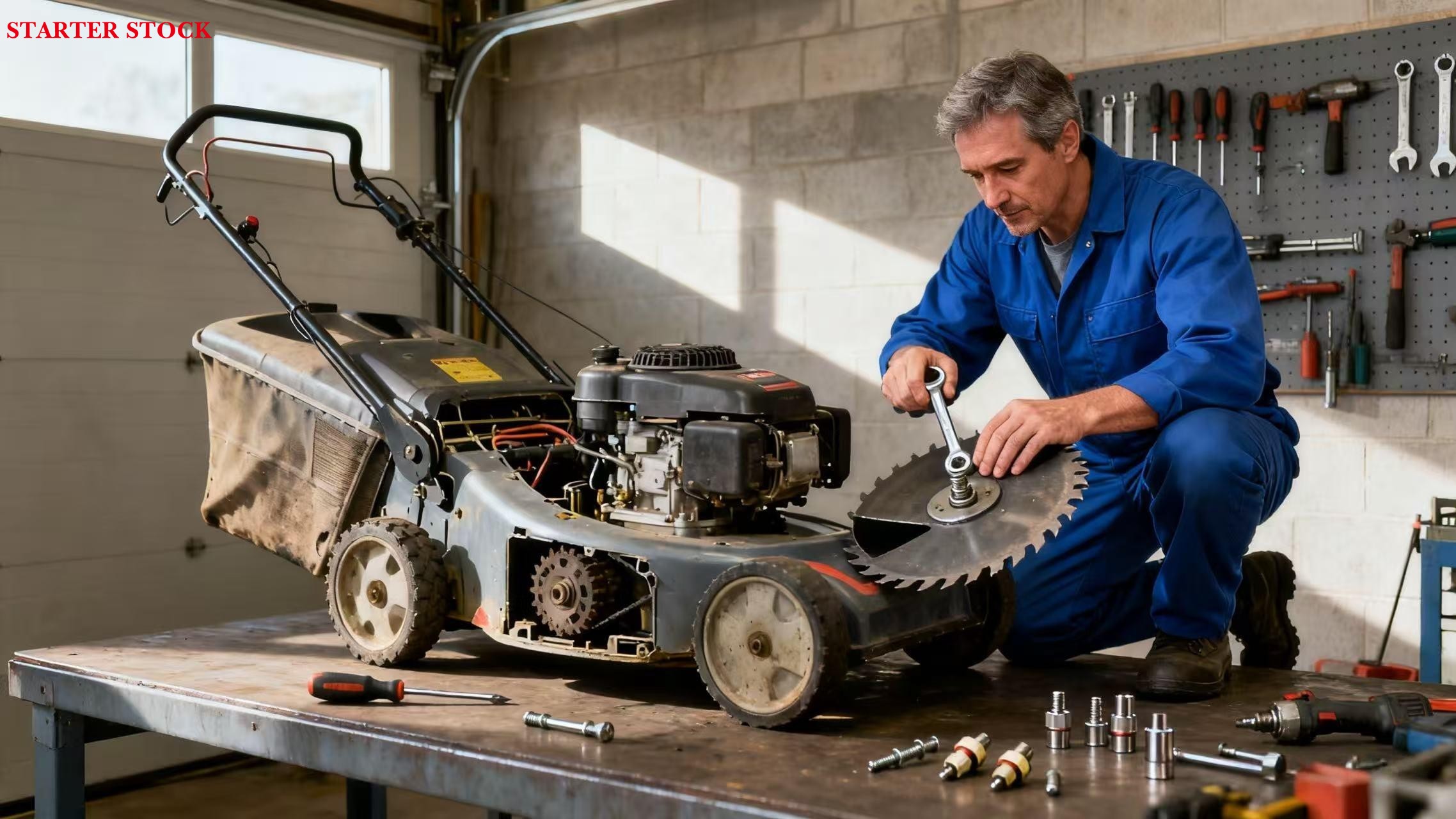
Scenario:Unstable Idling in Lawn Mowers
As core equipment for landscaping and lawn maintenance, the idling stability of lawn mowers directly impacts operational efficiency and machine longevity. If idling speed fluctuates erratically, abnormal vibrations occur, or the engine frequently stalls during sudden deceleration or gear shifts, it not only disrupts continuous workflows but may also accelerate engine wear due to prolonged abnormal operation, increasing subsequent repair costs. This article examines the symptoms of unstable idling, dissects six core fault causes, and provides targeted diagnostic and resolution methods to offer practical maintenance guidance for users.
Unstable idling in lawnmower engines exhibits distinct recognizable patterns, categorized into three typical scenarios. First, noticeable RPM fluctuations: the engine fails to maintain a steady idle speed. Models without gauges can identify this through irregular engine noise—a “high-low” rumbling pattern. Models with gauges will display RPM variations exceeding ±50 RPM. Second, abnormal machine vibration. When holding the control handle, high-frequency shaking is distinctly perceptible, accompanied by slight bouncing at the machine's contact points with the ground. Severe cases may cause blade imbalance during operation or even damage to the lawn. Third, critical shutdown occurs during operations. When abruptly releasing the throttle to decelerate or during gear shifts requiring power transition, the engine fails to maintain minimum stable RPM and stalls immediately. This occurs more frequently when turning at lawn edges or adjusting working direction.
From the root cause perspective, unstable idle operation in lawn mowers is often linked to abnormalities in the fuel supply system or regulating mechanisms. This can be broken down into six primary causes, each with a clear diagnostic and troubleshooting path.
Air in the fuel lines is one of the most common culprits. If the lawn mower's low-pressure fuel lines (such as the line from the fuel tank to the fuel injection pump) have sealing defects—like loose fuel line fittings, aged or cracked fuel lines, or failure to thoroughly bleed air after refueling—air can enter the fuel system with the fuel, creating “air lock.” As air locks circulate with the fuel, they cause fluctuating fuel pressure. The engine experiences intermittent fuel supply, resulting in unstable idle speed. During diagnosis, observe the fuel at the fuel injection pump's bleed screw. If the flowing liquid contains bubbles, this confirms the issue. Resolution requires two steps: First, inspect the low-pressure fuel lines—tighten loose fittings and replace cracked hoses. Then, open the fuel switch, loosen the fuel injection pump's bleed screw until continuous, bubble-free fuel flows out. Tighten the screw, restart the machine, and the idle speed will stabilize.
Insufficient fuel supply through the low-pressure fuel line can cause fuel starvation during idle operation. Over time, the inner walls of low-pressure fuel lines are prone to scaling and clogging by contaminants. Fuel filter elements gradually become dirty from filtering impurities, and even the fuel tank outlet screen can become blocked by debris—these issues reduce fuel flow, failing to meet the minimum fuel demand during idle operation. During diagnosis, disassemble the low-pressure fuel system components to inspect for visible deposits on the fuel line walls and check if the filter element has turned black. Targeted cleaning is required: blow out the fuel lines with compressed air or flush the interior with clean diesel fuel. Replace severely contaminated paper fuel filters directly. For metal mesh filters, clean them thoroughly, allow them to air dry completely, and reinstall them to ensure unobstructed fuel flow.
Improper adjustment of the idle stabilizing device is a common issue stemming from human error or prolonged use. Misalignment of the idle stabilizing components (such as the idle adjustment screw or throttle limit screw) in a lawn mower engine can lead to improper throttle opening and imbalanced idle fuel supply. For example, over-tightening the idle adjustment screw increases fuel supply, causing high and fluctuating RPMs; over-loosening reduces fuel supply, resulting in low RPMs and stalling. Diagnosis can be confirmed via a “fine-tuning test”: slightly adjust the screw; if RPM fluctuations improve, the issue is confirmed. Resolution requires standard procedure: Start the engine and warm it up to normal operating temperature. Using a flathead screwdriver, first adjust the valve limit screw to stabilize the RPM within the specified idle range (typically 700-900 RPM). Then slowly turn the idle adjustment screw until the RPM remains constant and shows no fluctuation after rapid acceleration and subsequent deceleration. Finally, lock the adjustment screw with its lock nut (if present).
Poor atomization of the fuel injector can cause uneven fuel combustion. The injector atomizes fuel before spraying it into the combustion chamber. If the needle valve wears out, the nozzle becomes clogged, or the injection pressure is too low, fuel enters the combustion chamber as droplets rather than a uniform mist. At idle, with low engine load, incomplete combustion becomes more pronounced. Misfires in some cylinders lead to idle vibration and fluctuating RPM. During diagnosis, remove the injector and connect it to a test bench to observe atomization. If uneven fuel streams or dripping droplets appear, corrective action is required. Solutions depend on wear severity: - Clogged nozzle orifices can be cleared with a specialized cleaning needle (avoid scratching the orifice) or an ultrasonic cleaner. - Worn needle valves or insufficient injection pressure necessitate replacing the injector assembly or the entire injector. After installation, restart and retest.
Uneven fuel delivery from the injection pump constitutes a relatively complex fault, typically caused by internal component wear. The injection pump must supply fuel to each cylinder at specified volumes and intervals. Wear on the plunger assembly, degraded outlet valve seals, or sticking in the fuel quantity regulator can cause fuel delivery variations exceeding permissible limits. This results in some cylinders receiving ample power while others receive insufficient power, causing overall engine power imbalance and manifesting as severe idle vibration. Since fuel pump calibration requires specialized equipment (e.g., a fuel pump test bench), ordinary users cannot perform this procedure themselves. During diagnosis, a preliminary assessment can be made using the “cylinder cut-off test” (disconnecting fuel supply to each cylinder one by one and observing idle speed changes). After confirmation, the vehicle must be sent to a professional repair facility where technicians will replace worn components and calibrate fuel delivery to each cylinder to restore uniform fuel supply.
Wear on the governor linkage components can cause “regulation failure.” The governor controls fuel pump output via rods, pins, and fork heads to maintain stable idle speed. Over time, pin wear and fork head bore erosion increase rod clearance (i.e., “backlash”), preventing precise transmission of governor adjustments to the fuel pump. When engine speed fluctuates, the governor cannot promptly regulate fuel delivery, exacerbating idle instability. During diagnosis, remove the governor housing and shake the connecting rods. Noticeable looseness indicates wear. To resolve, replace worn pins and forks. During installation, ensure all components connect tightly with no backlash. Apply a small amount of lubricant to reduce future wear. After reassembling the housing and restarting, the governor should respond normally to RPM changes.
In fact, diagnosing lawn mower idle instability requires no complex tools. Follow the principle of “starting simple and moving to complex, easy to difficult”—prioritize checking easily addressed issues like air in the fuel line or low-pressure fuel line blockages before progressively inspecting adjustment mechanisms and precision components. This significantly improves repair efficiency. More importantly, routine maintenance is more critical than troubleshooting: Inspect fuel line seals and fuel levels before each use. Clean the fuel filter every 50 operating hours. Check governor linkage wear every 100 operating hours. Replace engine oil and filters regularly per the manual. These practices reduce idle instability at its source, ensuring long-term stable operation and extending the equipment's lifespan.