
-
79
-
2025-10-09 14:21:44
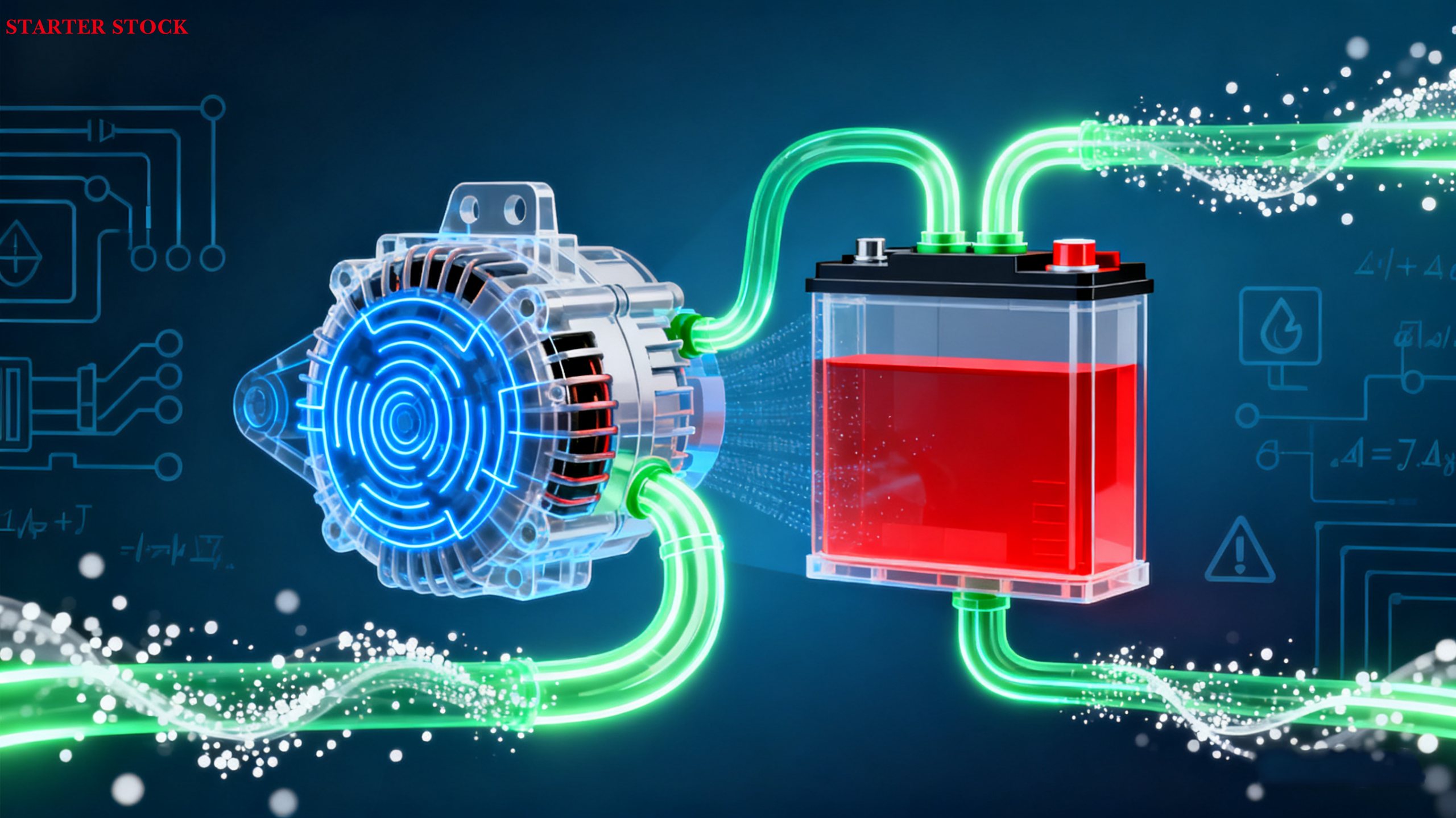
"Oh no! Forgot to turn off the lights again, the battery must be dead!" I believe that many car owners have had such a terrible experience -- the next morning found that the car can not start the fire, can only call the rescue power. This time will inevitably wonder: the car obviously has a generator, it usually does not charge the battery?
The answer is in fact very clear: the car generator will not only charge the battery, or vehicle power system “core blood supply station”, just its work logic hides a lot of interesting little secrets, from the two “division of labor” to talk about.
1. Battery and Alternator: A "Power Team" with Distinct Roles
To understand the role of the generator, you have to first recognize the car battery's “true identity”. Car battery (commonly known as “battery”) is not the main long-term power supply, more like an “emergency charging treasure”, the core task is only one - the vehicle starts instant power supply.
When starting, the engine's starter motor needs an instantaneous burst of tens of amperes of current, this power far exceeds the generator's instant response capability, only by the battery “come through”. However, the battery has a limited capacity, and if you keep it powered, it will soon lose power.
Once the vehicle is successfully started, the “main power supply” will immediately switch to the generator. At this time, the generator took over the “heavy burden”, not only to meet the lights, air conditioning, center control screen, brake power and other equipment, real-time power needs, but also to “exhaustion of physical strength” of the battery to replenish the power, so that it is ready to deal with the next start.
2. How Does the Alternator "Intelligently Recharge" the Battery?
Generator to charge the battery, relying on not “blind power”, but a set of accurate “intelligent control system”, the core component is the voltage regulator.
When the engine speed reaches a certain level (which can be met at idle in an ordinary family car), the generator will follow, converting the engine's mechanical energy into electrical energy. At this time, the voltage regulator will be like a “smart housekeeper”, real-time monitoring of the battery voltage:
● If the battery voltage is lower than 13.5 volts (most sedan batteries standard voltage is 12 volts), indicating that the power is insufficient, the regulator will increase the output voltage of the generator, so that the current continues to flow to the battery, to give the battery "
● If the battery voltage reaches about 14.5 volts, meaning that it is fully charged, the regulator immediately reduces the output to prevent the battery from being damaged by overcharging.
This “on-demand power supply” design, not only to ensure that the battery “full not support”, but also does not delay other devices with electricity, the perfect balance of power supply efficiency and battery life.
3. Don’t Fall for the Myth: "The Car Moves, So It Must Be Charging"
Many people think that “as long as the car is running, the generator is charging”, in fact, this is a common misunderstanding. The following two situations, the generator may not be able to charge the battery:
The first is when the engine is off and coasting. At this time, the engine speed is too low, the generator output is only enough to maintain the lights, center control and other basic equipment operation, there is no excess power to charge the battery.
The second is when the automatic start-stop system is working. Waiting for the red light when the engine is off, the generator will also follow the “stop work”, at this time the vehicle all electricity are dependent on the battery. If you start and stop frequently in traffic jams, the battery will continue to consume power, and it is easy to have a power loss problem.
4. Daily Driving: How to Protect Your Vehicle’s Electrical System
Understand the generator and the battery's working logic, daily use of the car only need to pay attention to two points, you can avoid power loss troubles:
One is to start and then open the power equipment. When starting the vehicle in winter, do not rush to open the air conditioning, warm air or headlights, wait for the engine to run for 1-2 minutes, the generator into a stable power supply state before use, both to reduce the burden on the battery, but also allows the engine to enter the best state faster.
Second, long-term parking to “replenish power”. If the vehicle is to be parked for more than a week, it is recommended to start every 3-5 days, so that the engine runs for 20-30 minutes, so that the generator to fully charge the battery, to avoid the battery due to natural discharge resulting in power loss.
To summarize
The car generator is like a “mobile charging station”, always replenishing energy for the battery; the battery is like an “emergency power source”, carrying the heavy load when starting. The two complement each other and work together to maintain the normal operation of the vehicle. Next time you encounter a battery loss of power, you may want to think about it first: is it too much short-distance driving recently, the generator did not have time to charge? Or did you forget to turn off the device after parking, leaving the battery “idle”? Figure out these details, you can make the car's electrical system always keep the best state.