
-
126
-
2025-10-22 15:29:59
How to start an outboard motor
When starting the outboard engine, it is necessary to strictly follow the process of "safety inspection → preparation operation → step-by-step starting → status confirmation", especially paying attention to the safety details of fuel, circuits, and mechanical components to avoid equipment damage or safety accidents caused by improper operation. The following are detailed operation steps in stages, applicable to common two-stroke/four stroke outboard engines (mainly manual start, electric start process can refer to the corresponding steps).
1、Pre startup safety check (core prerequisite, approximately 30 minutes)
The inspection before starting the engine is the key to avoiding faults. It is necessary to confirm the equipment status item by item, focusing on the four major systems of "oil, electricity, water, and machinery", as follows:
Environmental and safety equipment inspection
First, let's take a look at the docking environment: the ship needs to be parked on a stable surface of water, with no rocks or other obstacles around it. Stay away from the swimming area and shallow waters to prevent the ship from drifting aimlessly after starting.
Wear protective equipment again: Life jackets must be fastened tightly, anti slip shoes can prevent slipping on the deck, protective gloves should be worn when pulling ropes to prevent scratches, and if the engine displacement is large, it is recommended to wear goggles to prevent oil splashing.
Next, check the fire-fighting equipment: the dry powder fire extinguisher (capable of extinguishing oil fires) should have normal pressure and be placed in a convenient location; The tools for handling fuel leaks, such as oil absorbing cotton and cloth, need to be confirmed to be complete.
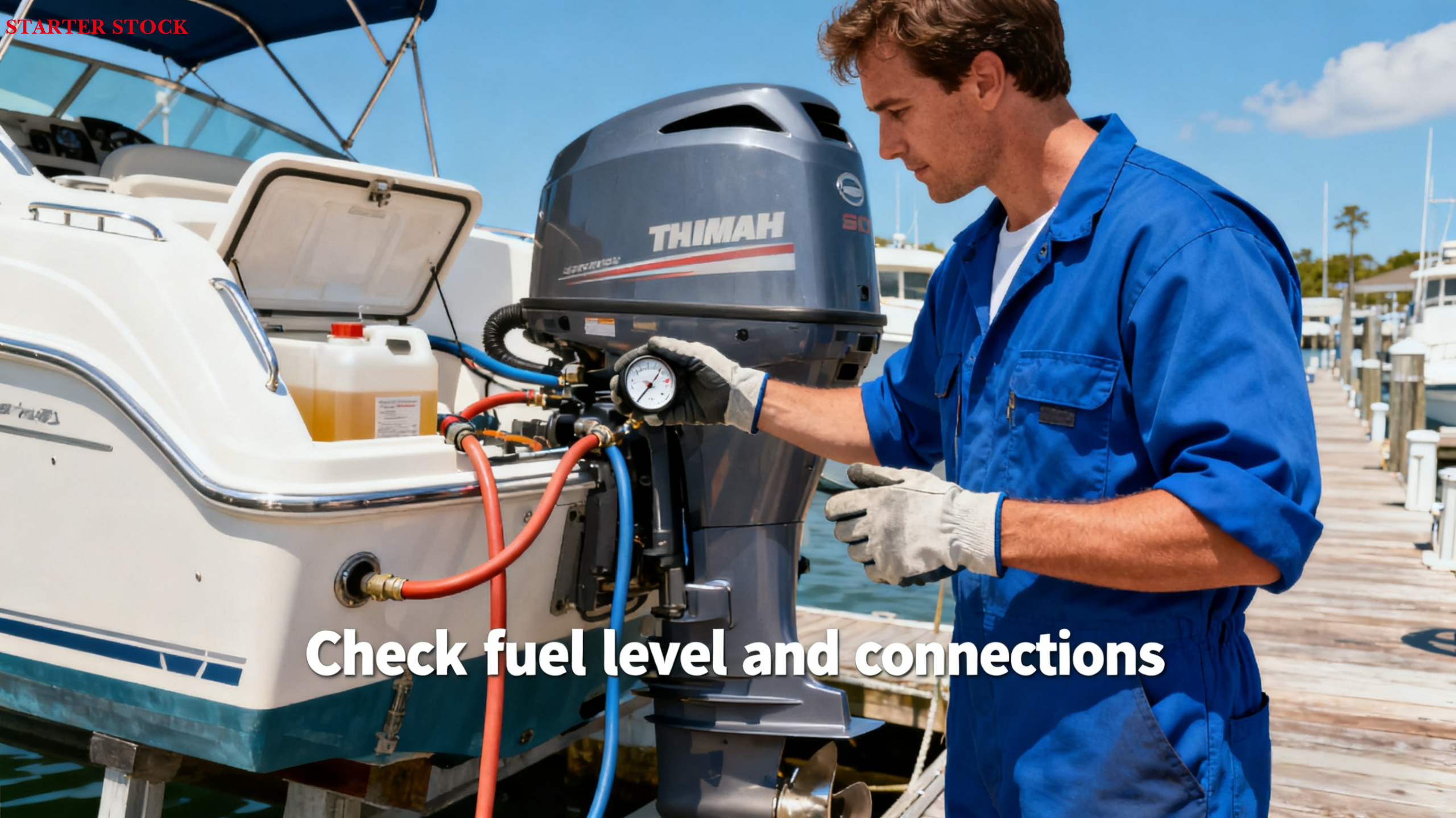
Finally, check the fuel system (most likely to malfunction):
Distinguishing fuel types: Two stroke engines use a mixture of "gasoline+two-stroke specialized engine oil", with the ratio according to the instructions (commonly 25:1 or 50:1, incorrect may damage the engine); A four stroke engine should be equipped with 92 octane or higher gasoline (do not use expired) and four stroke engine oil separately, and the two should not be mixed.
Check the fuel tank: Open the tank cap and ensure that there is at least 1/4 of the fuel remaining (otherwise the negative pressure in the tank will not be able to supply fuel); The fuel tank gasket should be intact, without cracks or aging; The vent hole on the fuel tank cap or side is unobstructed, and if it is blocked, it will cut off the fuel.
Check the fuel pipeline: Starting from the oil outlet of the fuel tank, inspect the pipeline section by section for aging, cracking, or damage (pay more attention to the joints). If it is damaged, replace it (do not use ordinary rubber pipes, use marine oil resistant hoses); If you have a fuel filter, unscrew the filter cup and check for rust or sediment inside. If it gets clogged, clean or replace it.
Test fuel switch: Turn the switch to "ON" and wait for 1-2 minutes to see if the fuel pipe joint leaks oil. If it leaks, turn off the switch, tighten the joint again or replace the sealing gasket.
Circuit system inspection
Check the battery (electric starter model): If it is an electric starter, confirm that the battery is fully charged (measure the voltage with a multimeter, the normal voltage of a 12V battery is 12.5-13V); Check if the battery terminals are secure and free of oxidation (if there is an oxide layer, polish it with sandpaper and apply Vaseline for corrosion prevention), and if the insulation layer of the wires is not damaged.
Check the ignition system: For manual starting models, it is necessary to check whether the high-voltage package (black cable on the top of the engine) is secure and not loose; Remove the spark plug cap (be careful not to pull the cable), remove the spark plug, and observe whether the electrode is clean (without carbon deposits or oil stains), and whether the gap meets the requirements of the instruction manual (commonly 0.6-0.8mm, too large a gap cannot ignite, too small a gap is easy to burn); If the spark plug is damp, wipe it dry with a clean cloth and replace it with a spare spark plug if necessary.
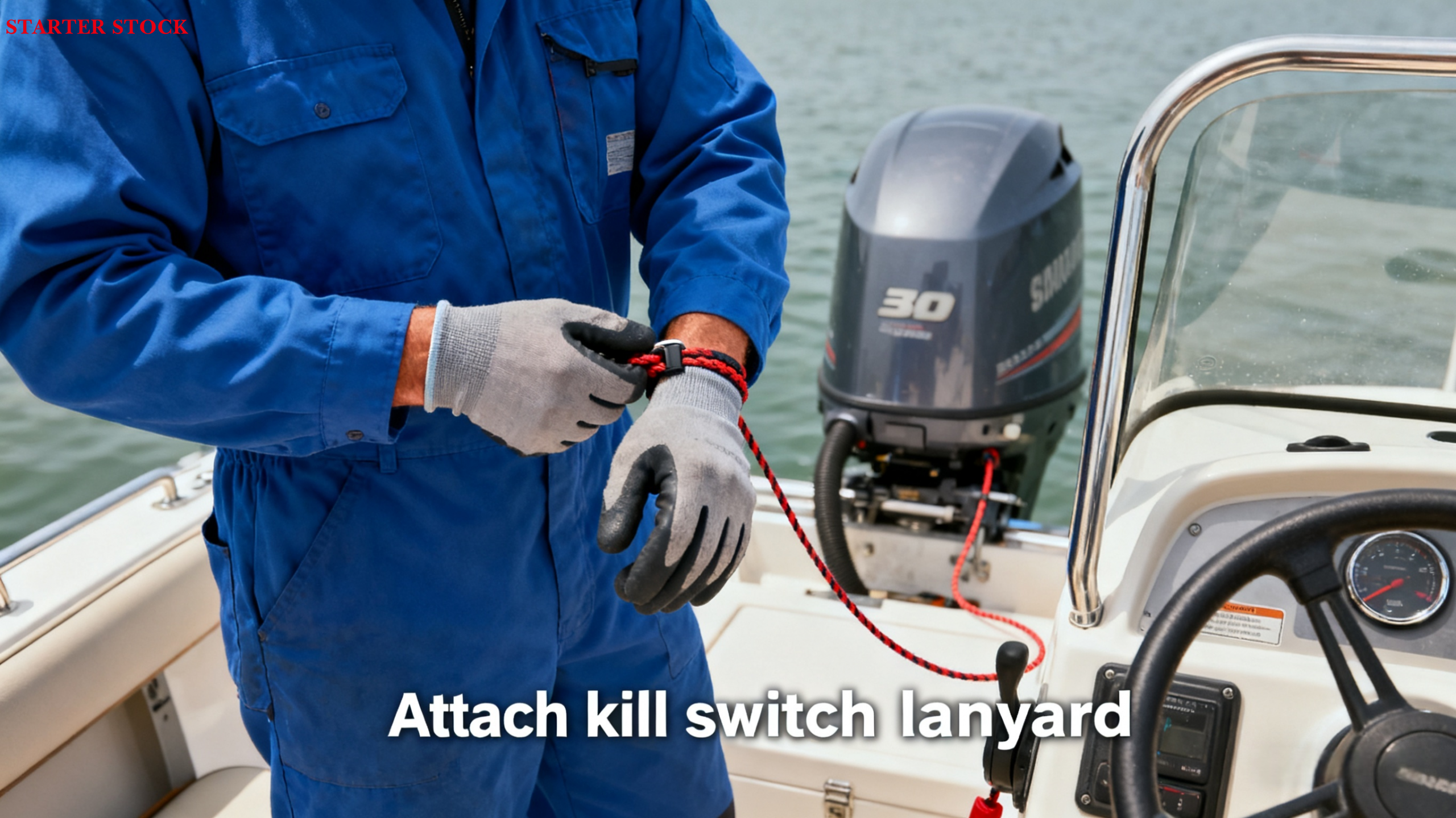
Check the shutdown switch: Turn the shutdown switch on the engine to the "RUN" position, gently pull the pull rope (not start), and confirm that the shutdown switch can be reset normally; If the shutdown switch is faulty (such as stuck in the "OFF" position), it is strictly prohibited to start the engine and the switch needs to be repaired first.
Cooling system inspection (core protection system of outboard engine)
Confirm cooling water source: The outboard engine relies on external water cooling, and it is necessary to check whether the "water inlet" (located at the lower part of the engine, near the propeller) is unobstructed and free of debris such as weeds and plastic bags (can be gently cleaned with a thin wire to avoid damaging the water inlet filter).
Check the cooling water pipeline (some models have external water pipelines): If the engine has a cooling water pipeline, confirm that the pipeline is not bent or damaged, and that the joint is well sealed to avoid cooling water leakage after starting and causing engine overheating.
Additional inspection for four stroke models: Open the oil filling port, measure the oil level with an oil dipstick, and ensure that the oil level is between the "MIN" and "MAX" marks. If the oil level is too low, it will cause insufficient lubrication, and if it is too high, it will cause oil emulsification.
Mechanical and transmission system inspection
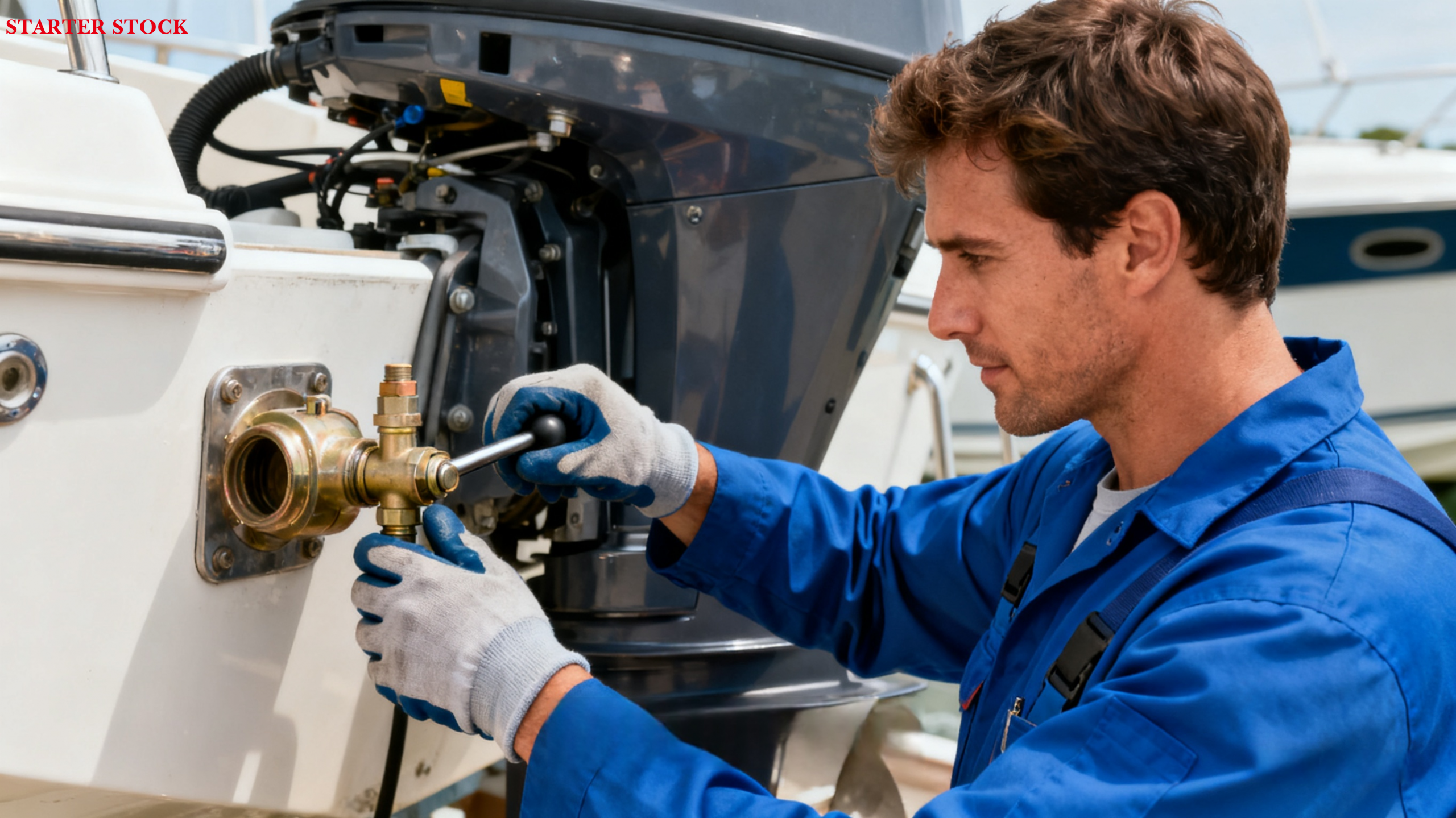
Check engine fixing: Do not loosen the bolts (usually 4-6) connecting the engine and the ship. If they rust, tighten them with a wrench, otherwise it will be troublesome if they loosen after starting.
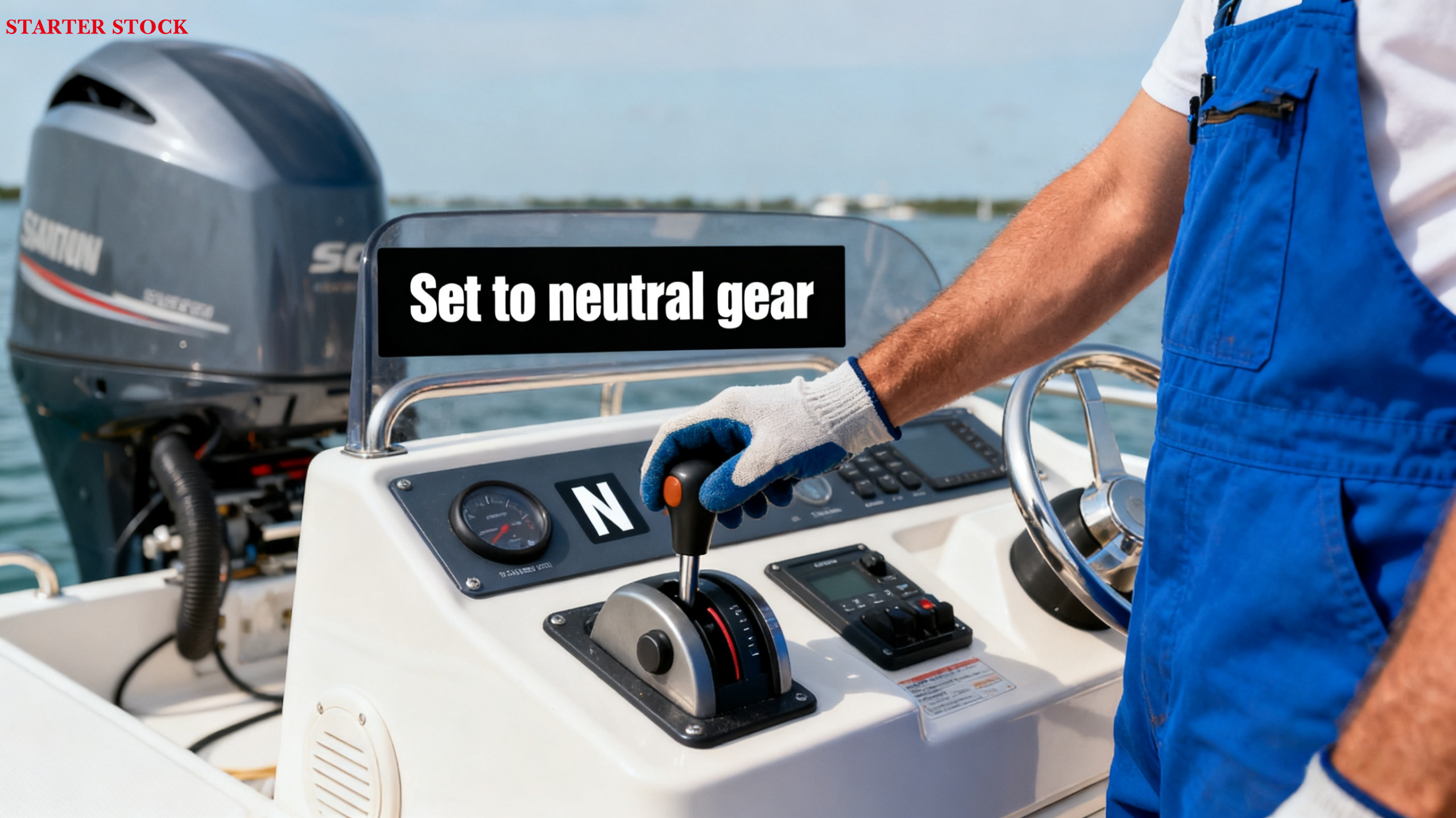
Check the gear lever and propeller: Set the gear lever to "neutral (N)", push the propeller by hand to see if it can turn, don't get stuck; The inability to rotate may be due to a lack of oil in the gearbox or stuck parts, and the machine needs to be stopped for inspection. Also, check if the propeller blades have cracks or become crooked. If they are damaged, they should be replaced before starting, otherwise unstable rotation may damage the transmission shaft.
Check the throttle lever: Set the throttle lever to "IDLE" (usually at the 1/10 position where the lever can be moved), gently push the lever, and see if the throttle cable is not stuck. Release it to return to its original position; If the cable gets stuck, the throttle cannot be controlled, and the engine may spin wildly after starting.
2、Preparation before startup (key steps for connecting inspection and startup)
After completing the safety check, it is necessary to perform preparatory operations before starting to ensure that the engine is in a "startable state". The specific steps are as follows:
Engine attitude adjustment
If the ship is in a tilted state (such as docking on one side), the engine tilt angle needs to be adjusted: turn the "tilt/lift handle" of the engine (located on the side of the engine or the driver's cab) to the "horizontal" position, so that the engine's inlet is completely submerged in water (at least 5cm or more submerged), to avoid insufficient cooling caused by exposed inlet after starting (idling for more than 30 seconds will burn out the water pump impeller).
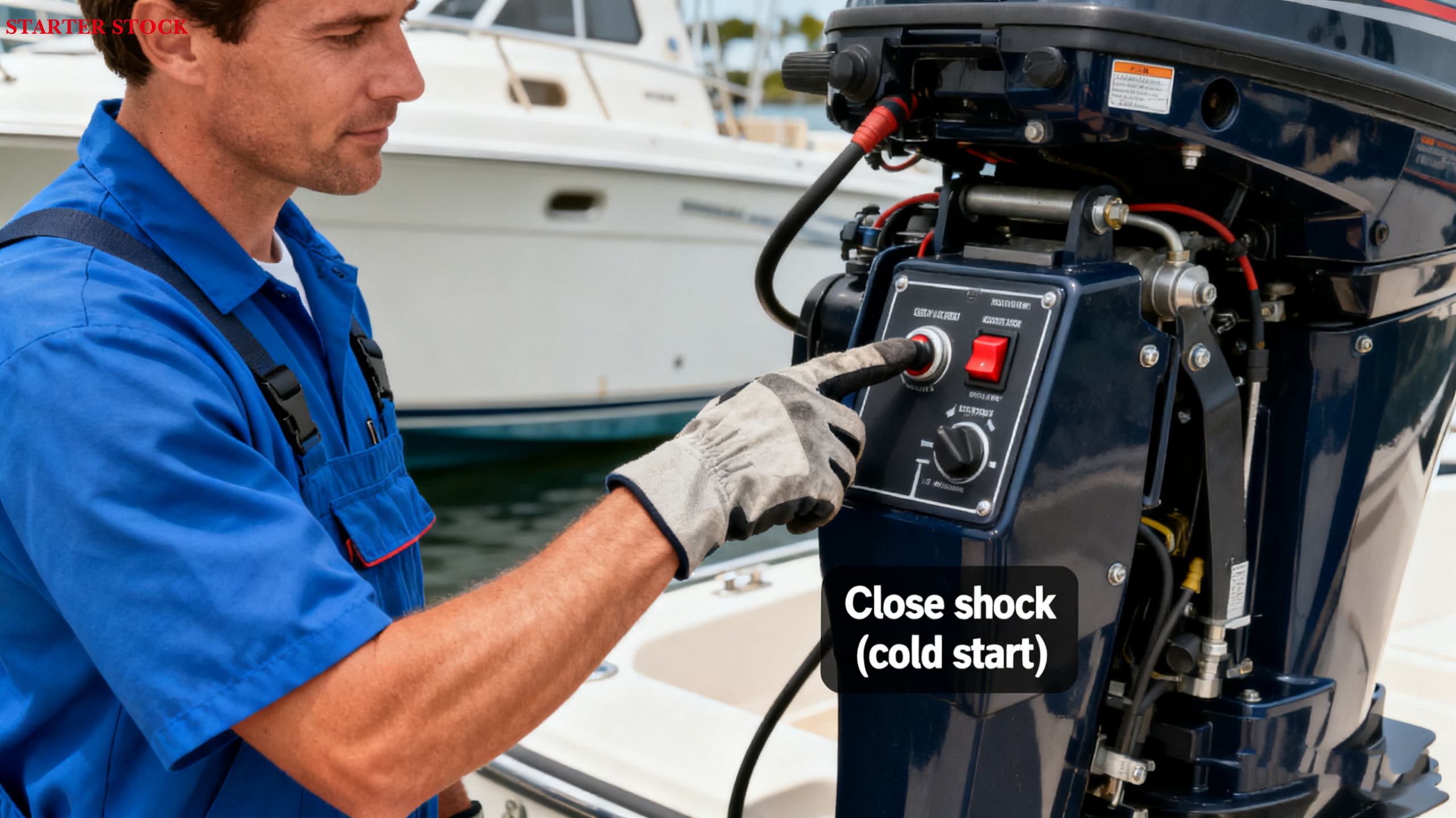
If the engine is equipped with a "choke valve" (used for cold start refueling), confirm that the choke valve is in the "CLOSED" position (the choke valve needs to be closed during cold start to increase the mixture concentration; it does not need to be closed during hot start); Some new engines have automatic choke valves, which can be skipped.
Fuel system exhaust (to avoid fuel supply interruption)
For models with a manual fuel pump (located in the middle of the fuel line, with a black rubber ball), press the pump repeatedly by hand until the feel becomes hard (indicating that the air in the pipeline has been expelled and the fuel has filled the pipeline). During the pressing process, observe the fuel pipe to ensure that there are no bubbles flowing (if there are continuous bubbles, check whether the fuel pipe joint is leaking).
If there is no manual fuel pump, gently turn the throttle lever to the "start" position (slightly higher than idle, about 1/5 of the stroke), wait for 10-15 seconds, and let the fuel flow naturally into the carburetor (to avoid frequent operation causing the mixture to be too rich).
Circuit and startup switch preparation
Electric starter model: Insert the ignition switch key and turn it to the "ON" position (not starting). Observe the dashboard indicator light (if any): the oil pressure light should be on (turned off after starting), the power light should be normal, and there should be no flashing fault light (if the fault light is on, check the fault code before starting).
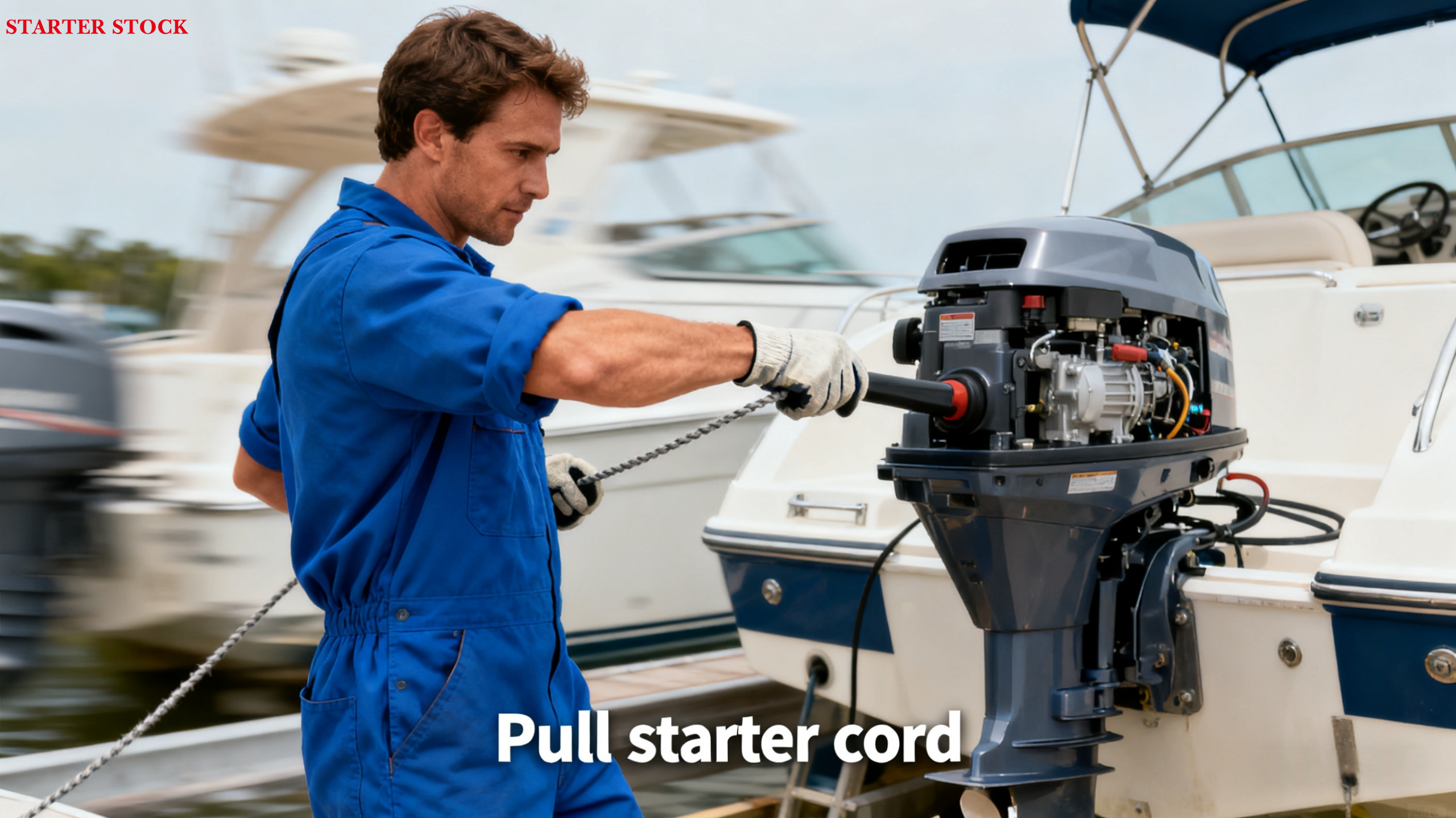
Manually start the model: Confirm that the shutdown switch has been turned to "RUN", hold the starting rope handle with your right hand (palm facing upwards to avoid scratching when the rope rebounds), and hold the engine body with your left hand (to maintain stability and reduce vibration).
3、Step by step start-up operation (core process, cooling/heating machine)
The start-up of the outboard engine is divided into "cold engine start-up" (engine shutdown for more than 2 hours, temperature lower than ambient temperature) and "hot engine start-up" (engine still has temperature within 30 minutes of shutdown), with slight differences in process and requiring separate operations:
Cold machine start-up steps (most common scenario, taking manual start-up as an example)
Pre pressure fuel supply (filling the carburetor with fuel)
Keep the throttle lever in the "idle" position and gently pull the starting rope 2-3 times (pulling distance is about one-third of the total length of the rope, without starting the engine), in order to fill the float chamber in the carburetor with fuel and avoid "dry start" (the rope cannot ignite after multiple attempts).
If the engine is equipped with a "primer bulb", it needs to be pressed 3-5 times until the ball is filled with fuel (the transparent ball can be directly observed), and excessive force should be avoided when pressing to prevent fuel spillage.
Start the rope pulling operation (key technique for exerting force)
Stabilize the engine with your left hand: Use your palm to hold down the stabilizer bar (or cylinder head) on the top of the engine to avoid body imbalance caused by severe engine vibration during startup.
Pull the starting rope with your right hand: Fully pull out the rope (avoid letting go halfway to prevent the rope from rebounding and damaging the internal spring), and then quickly and uniformly pull it towards your body (use your arm to drive your body when applying force, rather than just using your wrist to avoid wrist sprains).
If the first pull does not start: wait for 5-10 seconds (to restore the balance of the mixture in the carburetor), then repeat the pull, usually starting within 3-5 times; If it fails to start more than 5 times, stop the operation and check for fuel leaks, spark plug carbon deposits, and other issues (unsustainable pulling to avoid overheating of the pull rope or damage to the starter).
Initial stability after startup (avoid idling and stalling)
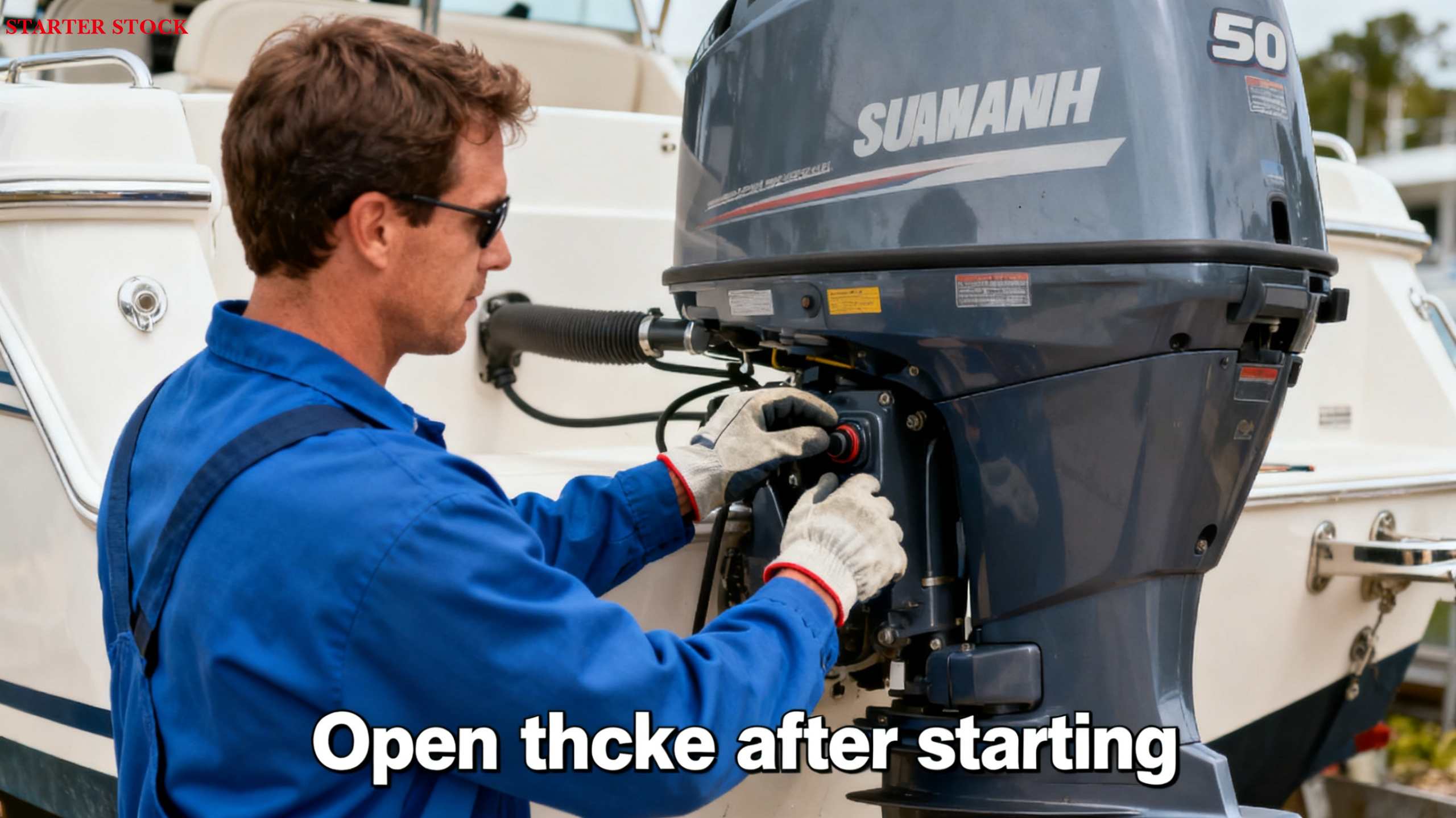
At the moment of engine start-up, there will be slight vibrations and exhaust sounds (the exhaust sound of a two-stroke engine is thicker, and that of a four stroke engine is smoother). At this time, the right hand needs to keep the rope handle stable to avoid the rope rebounding after releasing it; Immediately turn the choke valve to the "OPEN" position with your left hand (closing the choke valve during cold engine start-up is to enrich the mixture, and it must be opened after start-up, otherwise it will cause the mixture to be too rich and the idle speed to be unstable).
Adjust idle speed: If the engine idle speed is too low (fluctuating speed, about to shut down), gently push the throttle lever 1-2mm towards the "acceleration" direction (keep the idle speed stable, usually the dashboard displays 600-800 revolutions per minute, observe the propeller when there is no dashboard: the propeller does not rotate or rotates slightly during idle).
Hot engine start-up steps (short restart after shutdown)
Hot engine start-up does not require closing the air damper, making the process simpler:
Confirm that the fuel switch is still "ON", turn the shutdown switch to "RUN", and keep the throttle lever in the "idle" position.
Manual start: Simply pull the starting rope 1-2 times to start (there is still residual mixture in the carburetor, no need for pre pressure fuel supply).
Electric start: Turn the key to the "START" position (lasting no more than 3 seconds to avoid overloading the starter motor), release the key immediately after starting the engine, and return to the "ON" position.
4、State confirmation and debugging after startup (to ensure safe operation)
The engine is not immediately available after starting, and the operating status needs to be confirmed through "listening, watching, and touching" to eliminate potential faults. The specific steps are as follows:
Sound judgment (listen to whether the operation is stable)
Normal sound: The engine runs evenly without any abnormal noises such as "clicking" (mechanical friction), "popping" (excessive mixture), "sharp whistling" (air leakage), etc.
Exception handling: If there is a "click" sound, it may be due to a lack of oil in the gearbox, and the machine should be stopped immediately to check the gear oil; If there is a "popping" sound, adjust the throttle slightly (push 1mm towards the "idle" direction), or check if the air filter is clogged.
Cooling system inspection (check if the water flow is normal)
Observe the engine drain outlet (located on the side of the engine, near the propeller): Under normal circumstances, there will be continuous and uniform water flow discharged within 10-15 seconds after starting (the water flow will be misty or columnar, and the water volume will increase with the increase of speed), which is a sign of normal operation of the cooling system.
Exception handling: If there is no water flow discharged within 30 seconds, immediately stop the engine (to avoid overheating and cylinder pulling), check if the water inlet is blocked (use a fine wire to clean debris), or if the cooling water pump is faulty (professional maintenance is required).
Fuel and oil condition inspection (touch and look combined)
Touch the temperature of the fuel pipe: Use the back of your hand to lightly touch the fuel pipe (away from the exhaust port). Under normal circumstances, it should be at room temperature (if it is hot, it may be due to the fuel pipe being close to high-temperature components, and the position of the pipe needs to be adjusted to avoid fuel evaporation due to heat).
Check the oil status (four stroke model): After starting, observe the oil pressure light on the dashboard, which should turn off within 30 seconds (if it continues to light up, it indicates insufficient oil pressure, and the machine needs to be stopped to check the oil level and troubleshoot the oil pump).
Shifting and propeller testing (to ensure normal transmission)
After confirming that there are no obstacles around the hull, adjust the throttle lever to "minimum idle", hold the shift lever with your left hand, slowly shift from "neutral (N)" to "forward (F)", observe whether the propeller rotates smoothly (without jamming or abnormal noise), and feel whether the hull has a slight forward trend (if shifting is difficult, check whether the shift cable is too tight or whether the gearbox is short of oil).
Test reverse gear: Move the gear lever back to "neutral", wait for 3 seconds (to completely separate the gears), then shift to "reverse gear (R)", confirm that the propeller rotates in reverse normally and there is no abnormal vibration; After the test is completed, turn back to "neutral" and adjust the throttle to idle.
5、Precautions and emergency response after startup
Do not immediately run the engine at high speed after starting (especially when it is cold). It is necessary to idle for 5-10 minutes (which can be shortened to 3 minutes for four stroke models) to allow the oil to fully lubricate all components (especially the cylinder and crankshaft) and avoid "dry friction" damage caused by immediate acceleration; During idle, the throttle can be slowly adjusted (increasing or decreasing by 100 revolutions per minute each time) to allow the engine to adapt to changes in speed.
If the following situations occur after starting the emergency shutdown operation, the machine should be stopped immediately (priority should be given to using the shutdown switch):
Fuel leakage: If you smell gasoline or see fuel dripping from the fuel pipe joint, immediately turn off the ignition switch, close the fuel tank switch, and clean the leaking fuel with an oil absorbing cotton.
No cooling water discharge: After stopping the machine, check the water inlet. If it is blocked, you can clean it yourself. If there is still no water flow after cleaning, you need to contact maintenance personnel and do not forcefully start it.
Severe vibration or abnormal noise: If the engine shakes violently or there is a sound of metal collision, stop immediately and check whether the propeller is deformed and whether the fixing bolts are loose.
If the engine is idle for more than 3 months after a long-term shutdown, 3 additional checks need to be performed before starting:
Change fuel: Pour out expired gasoline from the fuel tank and add new gasoline (mixed fuel needs to be re proportioned).
Cleaning carburetor: Disassemble the carburetor and rinse the float chamber and fuel injector with carburetor cleaner to avoid residual fuel solidification and blockage.
Check the engine oil: For four stroke models, it is necessary to replace the engine oil with a new one (the engine oil may oxidize and deteriorate during idle periods), and for two-stroke models, check whether the mixed oil ratio is correct.