
-
99
-
2025-11-05 13:42:33
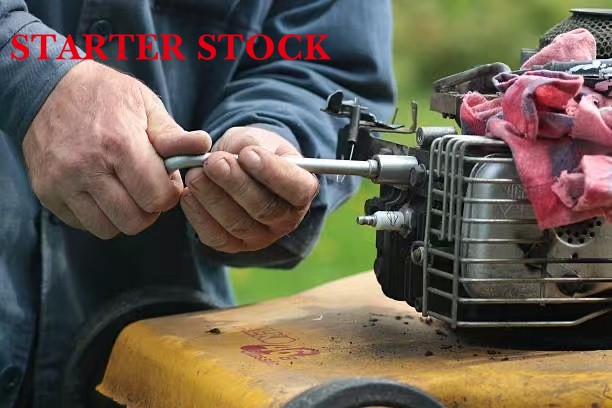
In courtyard maintenance, lawn mower is an indispensable tool.The starter, as the "power switch" of the lawn mower. The most common name is starter or ignition starter. And there are specific types, like pull-start starters and electric starters, based on how they work. Let’s break down what you need to know about lawn mower starters.
Common Names for Starters and Their Main Job
Officially, a lawn mower starter is called an engine starting device. But in daily life and repairs, people just say starter. Its main job is to “ignite” the mower’s engine. It uses mechanical or electric power to turn the engine’s crankshaft. This makes fuel burn in the cylinder, and finally, the engine runs steadily. Think of it as the mower’s “start key”—without it, even a strong engine stays still.
You might hear different names from repair workers. Some call it a “starting assembly,” others “ignition starter.” But these are all nicknames for the same part. As long as it’s the part that starts the mower, the name doesn’t matter—its job is the same.
Common Starter Types and Their Names
Lawn mower starters have three main types. Each has its own name and works best in different situations:
1. Pull-Start Starter: The Most Common “Manual Starter”
This is the most popular type. People usually call it a pull-start starter or “pull cord starter.” Some just say “pull cord.” It’s simple: a pull cord, a spool, a return spring, and gears. To use it, you yank the cord outside the mower. The cord turns the inner spool, which spins the engine’s crankshaft to start the mower.
Pull-start starters are simple, cheap, and rarely break. Almost all small home lawn mowers use them. But they have a downside: you need strength. If you’re not strong, you might have to pull multiple times. It’s harder to start if the mower sits for a long time.
2. Electric Starter: The Easy “Battery-Powered Starter”
More mid-range and high-end mowers now have electric starters—also called “electric starting devices” or “electric starters.” It works like a car’s starter. It uses the mower’s 12V battery for power. Press the start button on the mower, and the motor turns gears to start the engine.
Electric starters are easy to use. Just press a button, and the mower starts fast. They’re great for big yards or people who don’t have much strength. But they’re more complex and expensive. You need to charge the battery regularly. If the battery dies, most electric-start mowers have a backup pull cord.
3. Hand-Crank Starter: The Old “Manual Crank Starter”
This type is rare now. It’s used on old, large lawn mowers or professional farming mowers. People call it a hand-crank starter or “crank starting device.” To use it, you turn a crank on the side of the mower to spin the engine.
It’s hard to use and not very safe. So it’s being replaced by pull-start and electric starters. You’ll only see it on vintage mowers or special-use machines.
How Starters Work: A Simple Explanation of “Ignition”
No matter the type, all starters do one key thing: turn the engine’s crankshaft to make fuel burn. Here’s how it works in simple terms:
For a pull-start starter: When you yank the cord, it spins the inner spool. The spool’s gears lock with the engine’s crankshaft gears. This turns the crankshaft. The crankshaft moves the piston up and down in the cylinder. It compresses fuel and air inside. Then the spark plug makes a spark. The spark lights the fuel mixture. The burning fuel pushes the piston, which keeps the crankshaft turning. Let go of the cord, and the return spring pulls it back into the spool.
Electric starters work the same way—just replace “yanking the cord” with “an electric motor.” Press the start button, the battery powers the motor. The motor turns gears to spin the crankshaft. The rest (spark, fuel burn, engine start) is identical.
Daily Use and Repairs: Common Starter Problems
Once you know the names and types, simple maintenance can make your starter last longer.
1. Common Pull-Start Starter Issues
• Pull cord breaks: This happens often. The cord wears out over time, or you pull too hard. Fix it easily—replace the cord. Pull cords are universal and cheap.
• Can’t pull the cord: The return spring might be stuck, or the inner gears are broken. Gently wiggle the cord to free the spring. If that doesn’t work, open the starter cover to fix it.
2. Common Electric Starter Issues
• No response when pressing the button: The battery is probably dead. Charge it, or check if the battery connections are loose.
• Weak start: The motor might be worn out, or the battery is old. Replace the motor or battery.
3. Simple Maintenance Tips
• Check the pull cord for wear often. Replace it if it’s frayed—don’t wait for it to break.
• Charge the electric starter’s battery regularly. If you don’t use the mower, charge it every 1-2 months. This stops the battery from dying.
• Keep the starter cover clean. Don’t let dirt or grass get inside—it can mess up the gears and spring.
Summary: No More Confusion About Starter Names
Lawn mower starter names are simple. The common name is starter. By how you use it, it’s either a pull-start starter (manual), electric starter (battery-powered), or hand-crank starter (old-style). Its main job is to start the engine. It’s not complex—simple maintenance keeps it working.