
-
84
-
2025-11-06 14:03:28
Getting stuck on the road is the worst for drivers. A bad alternator often causes this.
Many drivers don’t know what an alternator does. They think it’s less important than the engine or transmission. But they regret that when their car dies suddenly.
Here’s the truth: Your car’s alternator is like a “battery charger.” It keeps the battery full. It powers all your car’s electronics. If it breaks, your lights, AC, and dashboard will act up. In bad cases, your engine shuts down.
Below are 6 easy-to-spot signs of alternator trouble. Learn them. You’ll save a lot of hassle.
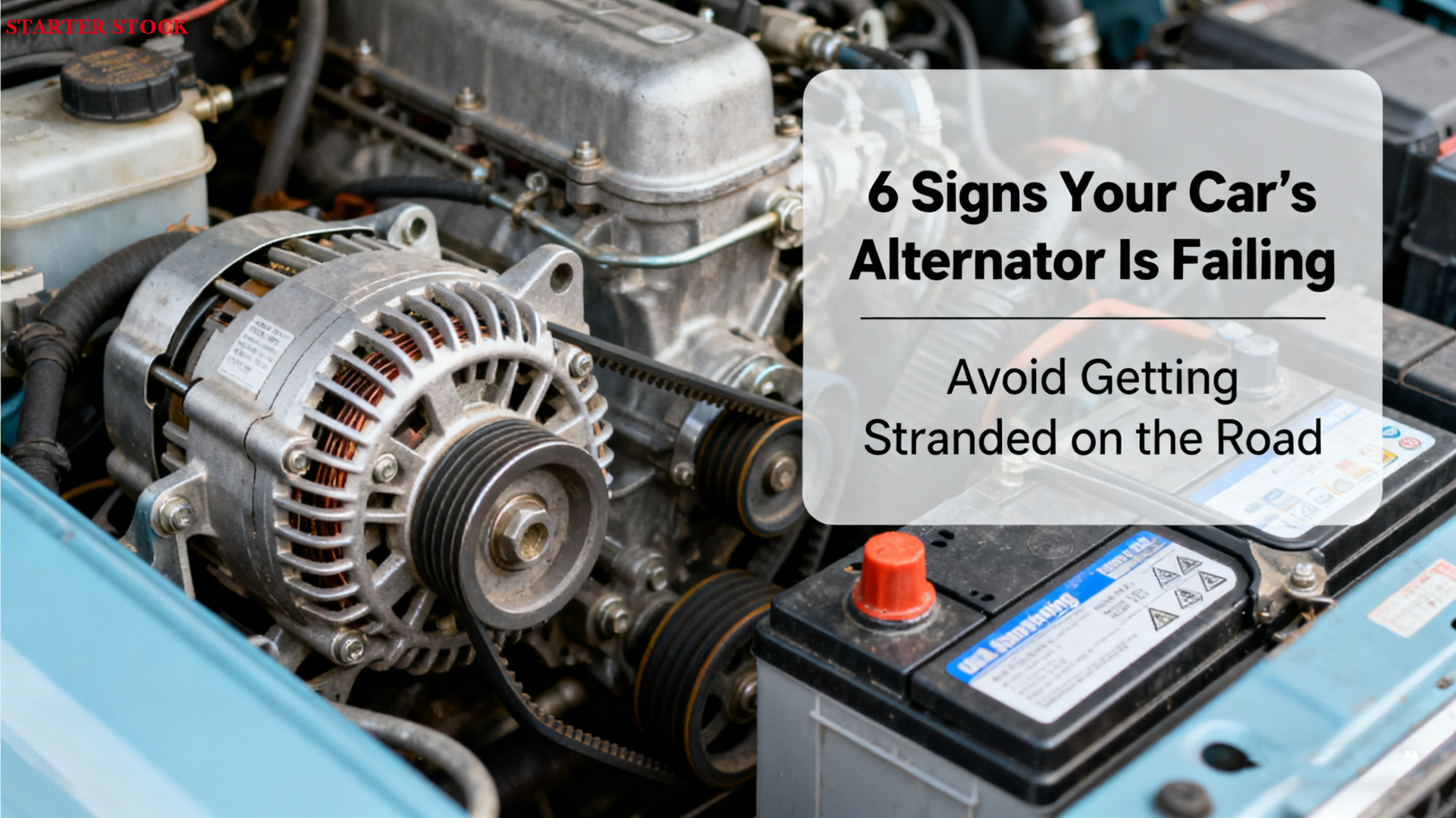
1. The Battery Warning Light Turns On – Don’t Ignore It
Your dashboard lights talk to you. The one that looks like a battery (red or yellow) links to the alternator.
People see this light and think, “My battery’s dead.” But usually, the alternator is the problem.
When you start your car, the alternator should work right away. The battery light should turn off. That’s because the alternator powers the car now, not the battery.
If the light stays on after starting? Or pops on while driving? The alternator isn’t charging the battery. It could be a loose belt, bad connection, or broken part.
One driver ignored this light. They were late for work. Twenty miles later, their dashboard flashed. The AC died. The car shut down on the road. A mechanic found worn alternator brushes. No power. The battery died.
Even if your car still runs, get this checked fast. Don’t wait to get stuck.
2. Lights Flicker or Dim – Not Just a Bad Bulb
Your lights act weird? Like low beams getting dim? High beams flickering? Turn signals blinking fast? Don’t rush to change bulbs.
This usually means the alternator isn’t supplying enough power.
Car lights need steady voltage. A good alternator puts out 13.5 to 14.5 volts. If it fails, voltage drops or spikes. Lights react.
Example: You drive at night. Low beams feel dim. Hit the gas? They get brighter. Let off the gas? They dim again. That’s a weak alternator. Hitting gas revs the engine (and alternator). More power. Letting off slows it down. Less power.
Turn signals blinking fast? People think it’s a bad relay. But it’s often unstable voltage from the alternator. The real issue is the alternator.
3. Electronics Stop Working – From AC to Radio
The alternator powers more than lights. If it breaks, other electronics act up.
AC is a big one. Normally, AC blows steady cold or hot air. But a weak alternator? AC might suddenly get weaker. Or blow only outside air. This is worse when idling (at a stoplight). Idle = slow engine = slow alternator. Not enough power for AC. The car focuses on keeping the engine running. AC cuts back.
Other electronics:
● Radio goes silent. Or sound gets scratchy.
● Infotainment screen blacks out and restarts.
● Power windows move slow. You press the button a few times to get them up.
These seem small. But they’re the alternator warning you.
One driver thought their window motor was broken. It moved so slow. A mechanic found the alternator put out too little voltage. The window motor had no power.
4. Battery Dies Often – Don’t Blame the Battery First
Battery dies a lot? People think, “Battery’s old. Need a new one.” But sometimes, the alternator is to blame.
How it works: The battery only starts the car. Once running, the alternator charges the battery. If the alternator is bad, it can’t recharge. The battery drains until it’s dead.
New battery still dies? Like needing a jump every few days? Or won’t start after sitting overnight? Check the alternator.
Quick test: Start your car. Use a multimeter to check battery voltage. 13.5 to 14.5 volts? Alternator works. Battery is bad. Below 13 volts? Or same as before starting (around 12 volts)? Alternator isn’t charging. It’s faulty.
Another clue: Corrosion on battery terminals. Bad alternator = too much voltage. Overcharges the battery. Creates gas and fluid that eats terminals.
5. Engine Acts Up – Rough Idle or Slow Acceleration
Alternator and engine connect via a belt. Engine runs = spins alternator = makes power.
If alternator is broken (worn bearings, stuck rotor)? It adds work to the engine. Engine acts up.
Most common: Rough idle. You stop (at a stop sign). Engine speeds up and slows down. Or shakes. Worse when you turn on electronics (AC, lights). Alternator needs more power. Strains engine more.
You might notice slow acceleration. Press gas? Car feels sluggish. Uses more gas. Why? Engine uses extra power to spin bad alternator. Less power to speed up.
Bad cases: Engine shuts off. Especially when driving slow or idling. Alternator stops making power. Battery drains. No electricity for engine.
6. Strange Noises – Don’t Miss These
A bad alternator makes weird sounds. Two to listen for:
First: Squealing. Usually when starting the car or pressing gas. Happens when alternator belt is loose or worn. Belt can’t grip the pulley. Slips. Makes squeal. Slipping belt = less power. Wears out fast. Breaks? Alternator stops working.
Second: Mechanical noises. Low hum or grinding. Comes from inside the alternator. Could be worn bearings, rotor rubbing stator, or worn brushes. Starts quiet. Gets louder as alternator gets worse. Get it checked before it breaks.
3 Easy Tips to Prevent Alternator Trouble
You don’t have to wait for signs. Keep your alternator working longer:
1. Check the belt often: Ask your mechanic to look at it during oil changes. Loose? Tighten it. Cracked or worn? Replace it. Most belts last 60,000 to 80,000 miles. Don’t wait for it to break.
2. Don’t use too many electronics while idling: Idle = alternator makes less power. Leave AC, lights, radio on long (sitting in parking lot)? Strains alternator. Drains battery.
3. Don’t start your car over and over: Every start uses lots of battery power. Alternator has to recharge it. Start again and again (errands)? Makes battery and alternator work too hard. Wears them out faster.
The alternator doesn’t get as much attention as the engine. But it’s just as important. If it fails, you get stuck. Repairs cost more the longer you wait.
Learn these signs. Watch and listen for trouble. Get help early. Save time, money, and stress.