
-
110
-
2025-11-25 13:45:39
Can You Start a Boat Motor Out of Water?
1、First of all, understand: ship engines and car engines are not the same thing!
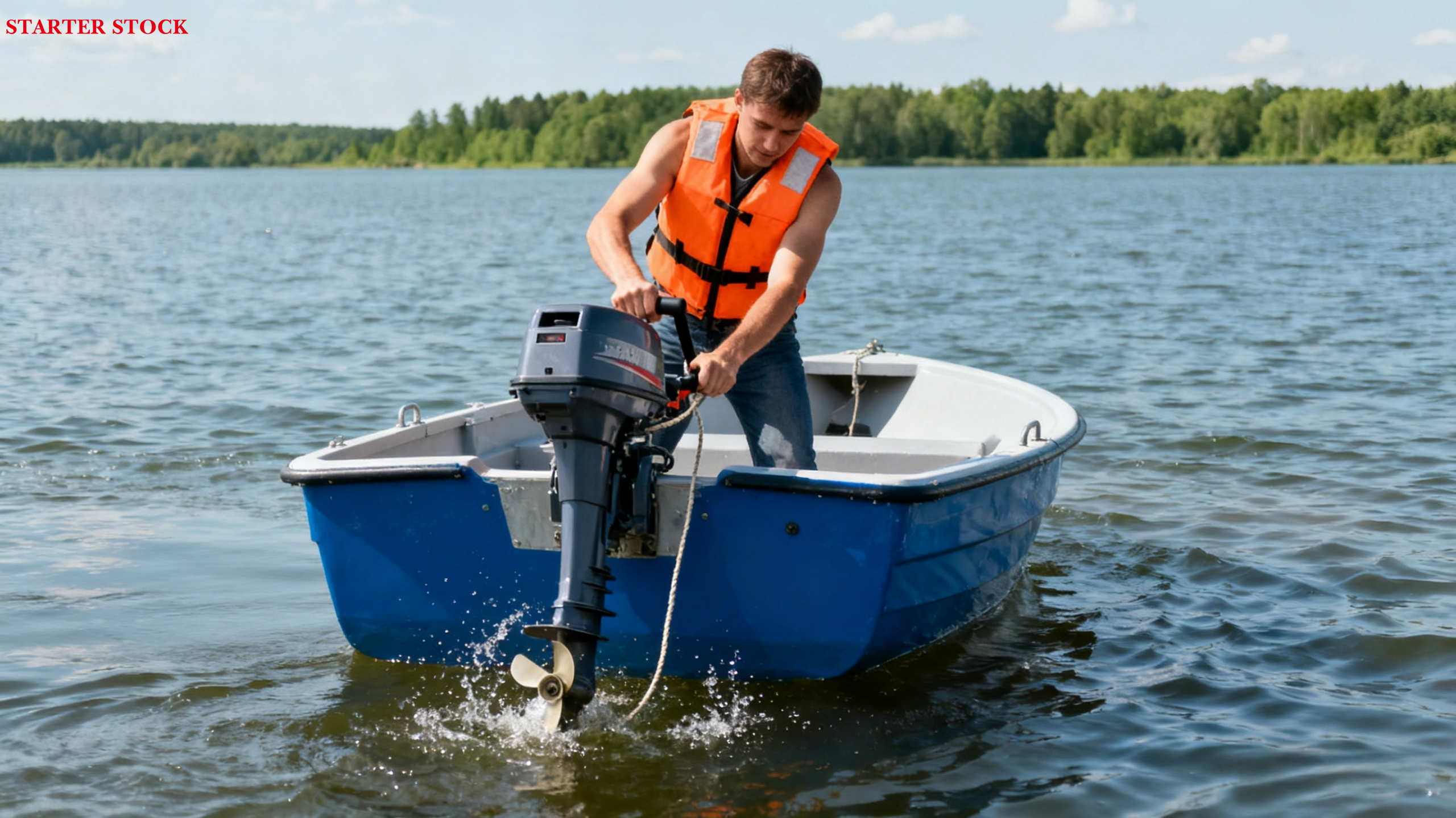
Let's first clarify a misconception: don't think that ship engines and car engines are just "changing soup without medicine", in fact, the two are "a world of difference"! The car engine is a "landlubber" that stays in the air all its life, relying on the intake duct to suck in air, inject fuel, ignite and explode to generate power; But the engines of the ship (especially those propelled by propellers) are "semi aquatic animals", half inside the hull and half submerged in water - to be precise, it is the engine's "drive shaft" and "propeller" submerged in water, while the core "heart parts" such as the cylinder and crankshaft are still in the enclosed space inside the hull.
The key point here is that the engine block of a ship is never "submerged" in water, and it is the "propulsion system" that truly comes into contact with water. So the essence of what we are discussing about "starting from water" is: if the key components of the engine (such as the intake, exhaust, and electrical system) are accidentally soaked in water, can they still ignite and start? The answer is: Most likely not, forcibly starting is' ask for trouble '!
2、Why can't it start from the water? Three 'fatal pitfalls' cannot be avoided
1.Inlet water intake=engine "drowning in water"
The first condition for starting the engine is to "suck in air", just like breathing a fish out of water. The air intake of a car is located at the front of the car, and although the air intake of a ship is also designed on the upper part of the hull, if the ship is stranded and wet by waves or if water enters the cabin, water may flow into the air intake.
Imagine: When you take a deep breath and your mouth is filled with water, do you choke and cough uncontrollably? The engine is much more delicate than a person - once water enters the cylinder, because water is almost incompressible, the piston will be "hydrolock" by the water when it moves upward, which can cause the connecting rod to bend or the cylinder to explode. This is much more expensive to repair than buying a new phone (cost an arm and a leg)! It was like "picking up sesame seeds and losing watermelon".
2.Electrical system water ingress="short circuit strike"
The ship's engine is powered by batteries for ignition and signals are transmitted through circuits, all of which are water phobic electrical components. Although marine electrical systems undergo waterproofing treatment, it is to prevent splashing water, not submergence.
If the wiring, spark plugs, and starter motor around the engine are soaked in water, a short circuit will occur when powered on - at least the starter motor will "buzz" but not turn, at worst the battery will burn out, or even cause a fire hazard. It's like soaking your phone in water and charging it, either the screen goes black or it explodes, purely a 'court disaster'!
My friend once drove a small fishing boat to go fishing. When the cabin flooded after a rainstorm, he started the engine without drying the electrical system. As a result, the motor started to smoke directly. Finally, he had to float on the sea and wait for rescue. It was really "up the creek without a puzzle".
3.Exhaust outlet return water="backflow flooding"
The exhaust port of the ship is located on the side or tail of the hull, below the water surface. During normal navigation, the exhaust gas pressure emitted by the engine is high and can push the water away; But if the ship is stationary or the engine is not started, seawater may flow back into the exhaust manifold of the engine through the exhaust port.
If the engine is started at this time, the backflow of seawater will enter the cylinder through the exhaust manifold, which will also cause "hydraulic lock".
Simply put, the exhaust port is like the "nose" of the engine. Normally, it only exhales air outward. Once water enters and flows back, it is like "choking water in the nose" and cannot function properly.
3、Are there any exceptions? A few 'special players' can do it, but it's super troublesome!
Not all ship engines die when they touch water. A few specially designed ones can start in water, but the conditions are so harsh that they are "a real headache" and ordinary people basically don't need them:
Jet Ski: 'Shallow Water King' but afraid of deep water
Small boats like motorboats and jet boats use a "jet propulsion system" - the engine body is inside the hull, the intake and exhaust ports are designed at high altitudes, and there are specialized "anti backflow valves".
If it is only shallow water grounding and there is no water entering the intake port, after starting the engine, the jet pump will suck in seawater and spray it out at high speed, generating thrust to help the ship escape. But this is only limited to situations where the shallow water area and air intake are dry. If the ship is fully submerged, it still cannot be started, which is purely a band aid solution.
4、Submarine: "Underwater exclusive" but not accessible to ordinary people
The engine of a submarine (nuclear or diesel powered) is a "specialized underwater starter", but its design is completely different: the intake is drawn in by a "snorkel" that extends out of the water surface, the exhaust has a high-pressure system to discharge the exhaust gas out of the water surface, the electrical system is a "fully sealed water proof", and there is a dedicated "bilge pump" to promptly drain the accumulated water in the cabin.
But submarines are military equipment, and ordinary people can't even see them, let alone start them. Consider this "special situation" as entertainment only, and don't expect your own fishing boat to operate like this!
5、Emergency activation: "Drain first and then activate"=gamble on luck
Some old captains may say, 'I used to start the ship even when it was flooded!' This is not because the engine can be 'started from the water', but rather because they promptly drained the water, dried the electrical system, checked the intake and exhaust ports, which is equivalent to 'taking the engine out of the water and wiping it dry before starting it', rather than starting it directly in the water.
And this is purely a 'take a gamble' - even if the surface water is drained, there may still be hidden water in the cylinder and circuit, and there is a high probability of problems after starting, which is equivalent to 'playing Russian roulette with the engine'.
6、Summary: Don't mess around blindly! Remember these three 'life-saving principles'
The engine body is not soaked in water=check first before starting: if only the cabin is flooded and the engine is not soaked in water, drain the accumulated water (bilge pumping), dry the electrical system (air drying the electrical system), check if there is water in the intake/exhaust ports, and confirm safety before starting.
Engine soaked in water=Never start: As long as the engine's intake, electrical system, and exhaust manifold are soaked in water, no matter how deep the water is, do not touch the start button! Call for rescue or find a tow truck, otherwise it's turning a minor issue into a disaster.
Want to avoid trouble=Regular maintenance: Regularly check the waterproof seals of the engine, clean debris from the intake and exhaust ports, and perform moisture proof treatment on the electrical system. Don't wait until problems arise to regret it. "Prevention is better than cure" is always correct!
Finally, let me be honest: the engine of a ship is a 'delicate equipment', not a 'cock in water', don't think about the operation of 'starting in water'. Our goal in sailing is safety first, not a 'death defining challenge'. If we really damage the engine, it will not only delay the process, but also require a lot of money to repair, which is purely 'not worth it'!
In our Starter Stock platform, we cover various categories of yacht motors. Whether you want to purchase for your own use or for commercial procurement, we will meet your needs as long as you have them. Welcome to the Starter Stock.