
-
74
-
2025-12-04 10:54:34
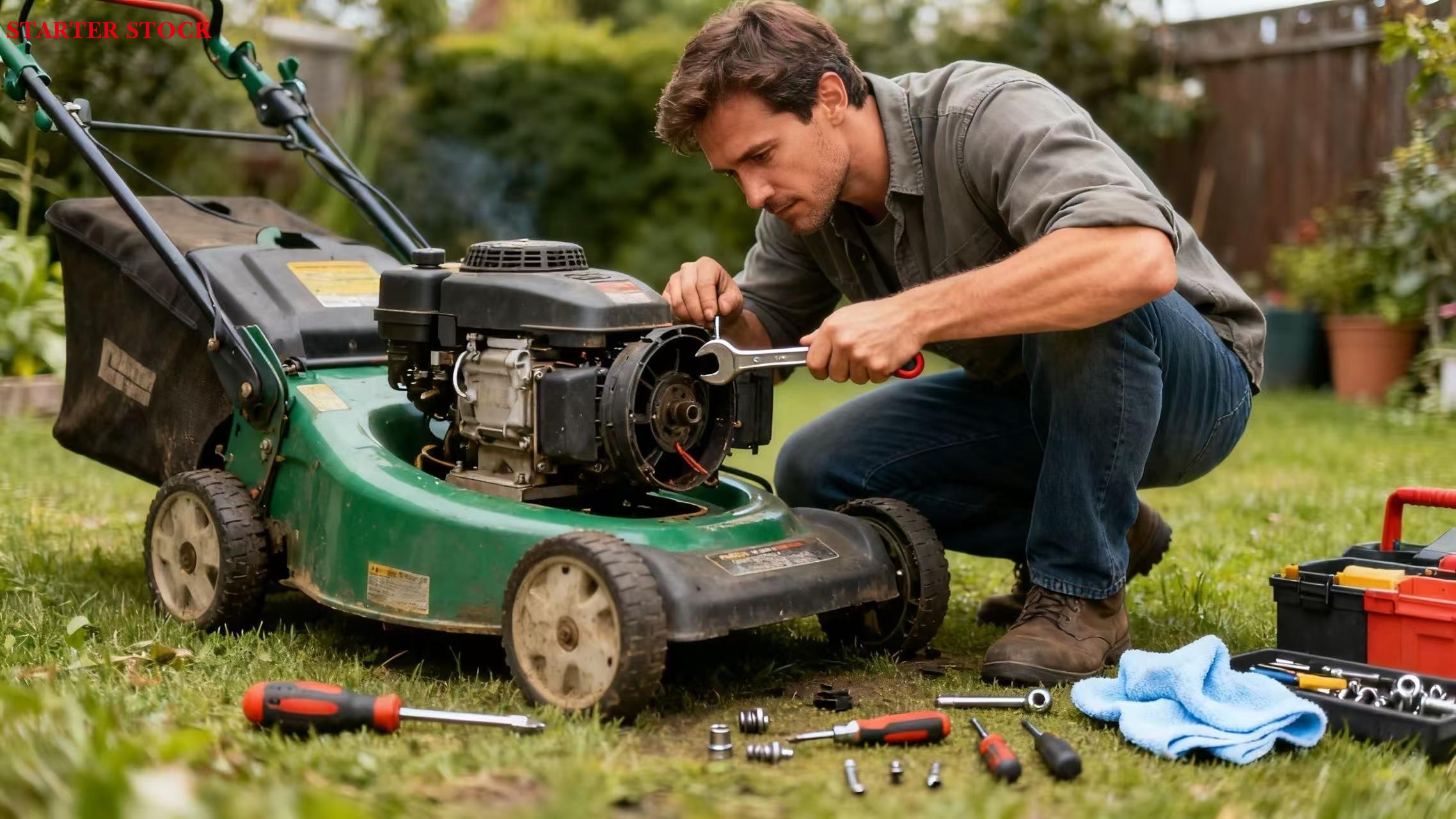
The good news? Your lawn mower isn’t broken for good after sitting all winter. Most of the time, it’s just small issues from sitting idle all winter, especially if it’s a gas-powered model (electric ones have simpler problems, which we’ll cover later). Today, we’ll break down the fixes in simple steps. No need for a repairman—you can do this yourself.
First: Why It Won’t Start After Winter?
A lawn mower is like a car. Let it sit too long in winter, and key parts act up. For gas-powered mowers, there are 5 main reasons (easy to remember!):
1. Bad gasoline: The #1 cause! Gas goes bad after 3 months. It gets thick, cloudy, and forms gunk. This clogs the fuel line—like the engine drinking spoiled milk.
2. Dead spark plug: Think of it as a tiny lighter. It ignites the fuel. Winter moisture and bad gas make it dirty or weak. No spark = no start.
3. Clogged air filter: This is the mower’s “mask.” Summer dust and grass clippings build up over winter. A blocked filter means the engine can’t get enough air. Fuel can’t burn right.
4. Clogged carburetor: The carburetor mixes gas and air for the engine. Bad gas leaves gunk that clogs its small holes. No proper mix = no start.
5. Old oil: Oil gets thick and gunky over time. It doesn’t lubricate well. The engine has too much friction—even pulling the cord feels hard.
Electric lawn mowers have fewer issues:
• Dead battery: Cold winter temperatures drain batteries fast. Leave it idle, and it dies.
• Poor wire connection: Winter moisture oxidizes plugs. The power can’t flow right.
Step-by-Step Checks: Start Simple, No Fancy Tools
Always check the easiest fixes first. Don’t take apart complex parts right away.
Step 1: Check the Fuel (Fastest Fix)
Start here—no tools needed!
1. Open the fuel tank cap. Smell the gas. If it’s weak, sour, or gummy—it’s bad. Look at it: good gas is clear. Bad gas is cloudy with sediment.
2. Drain all the old gas. Don’t save it—it will only clog more parts.
3. Add fresh gas. Use the type your mower needs (most home models use regular unleaded—check the label). Don’t overfill.
4. If your mower has a fuel switch, turn it on. Pull the starter cord 3-5 times. This flushes old gas out of the lines.
5. Try to start it. If it starts but dies quickly, repeat. There’s still old gas left in the lines.
Step 2: Check the Spark Plug (Cheap and Easy)
If fresh gas doesn’t work, check the spark plug. A new one costs $5-$10.
1. Disconnect the power first! Remove the high-voltage wire from the spark plug (the thick black wire inserted at the top of the spark plug, which can be pulled down easily) to prevent accidental startup;
2. Use a spark plug socket (usually not found at home, but available for a few dollars at hardware stores) to remove the spark plug;
3. Look at the metal tips (electrodes). If they’re black, greasy, or dirty: wipe them with a old toothbrush and gas. Dry well. If they’re cracked or worn—replace the plug (match the model number!).
4. Screw the plug back in. Don’t over-tighten—hand-tighten, then a tiny turn more.
5. Plug the wire back in. Try starting again. This fixes the problem most of the time!
Step 3: Check the Air Filter (Free or Cheap Fix)
A clogged filter is another easy fix.
1. Locate the air filter—usually found on the side of the lawn mower engine, where a square or round cover can be unscrewed by hand without the need for tools;
2. Take out the filter. Is it covered in dust and grass?
3. Paper filters: Throw it away and replace (costs $5-$10—don’t wash it!). Sponge filters: Rinse with water, squeeze dry. Dip in a little oil (thin layer), then squeeze again. The oil catches dust.
4. Put the filter back. Twist the cover closed. Try starting—better airflow helps the engine run.
Step 4: Fix the Carburetor (A Bit Trickier, Try Simple First)
If steps 1-3 don’t work, the carburetor is probably clogged. Don’t take it apart yet—try this:
1. Locate the "drain screw" at the bottom of the carburetor (a small black screw with a thin oil tube attached);
2. Loosen the drain screw by hand and completely remove all the old oil and gummy residue from the carburetor until the oil flowing out becomes clear;
3. Tighten the screw. Add a little fresh gas. Turn on the fuel switch. Wait 5 minutes—let fresh gas clean the carburetor.
4. Try starting. If it still won’t start, the clog is bad. Buy carburetor cleaner (spray it into the air intake, wait 10 minutes). If that fails, call a repairman—carburetors have tiny holes, easy to break if you’re new.
Step 5: Check Oil (and Electric Mower Fixes)
1. Oil check: Open the oil cap, pull out the dipstick. Is the oil black, thick, or dirty? Drain it and add new oil. Fill to the “MAX” line—don’t overfill.
2.Electric mowers: Charge the battery first. Won’t charge? Leave it at room temp for 1 hour. Try again.
Pro Tips for Starting: Boost Your Chances
Even if you fixed the problem, wrong starting steps can fail. Remember 3 things:
1. Pull the cord gently a few times first. Mix fuel and air. Then pull hard and fast—slow pulls won’t spark.
2. Use the choke (small lever on the side, labeled “CHOKE”). For cold engines, close it all the way. Once it starts, open it slowly.
3. If your mower has a primer bulb (small round button), press it 3-5 times first. It pumps gas into the carburetor—easier to start.
Prevent This Next Year: 3 Quick Steps
Most winter-related issues come from bad storage. Spend 10 minutes in fall, and next spring it will start on the first pull:
1. Drain the gas: Use up all the gas, or drain it. Or add fuel stabilizer (from hardware stores)—it keeps gas good all winter.
2. Clean it: Wipe off grass and dust. Replace the air filter and spark plug. Drain old oil, add new oil.
2.3. Store right: Keep it in a dry, warm place. Not a damp garage. Electric mowers? Take the battery out. Store separately.
Final Thoughts
Don’t stress if it takes a few tries. Lawn mowers just need a little care after sitting idle. And next fall, do those 3 storage steps—you’ll thank yourself in spring!