

-
139
-
2025-12-04 18:05:48
The car’s "power heart" — the alternator — works way different for fuel, hybrid, and electric cars. Their upkeep needs are totally not the same. Pick the wrong tips, and you’ll wear parts out faster (or even break the power system). Let’s break down the differences and how to keep each running right.
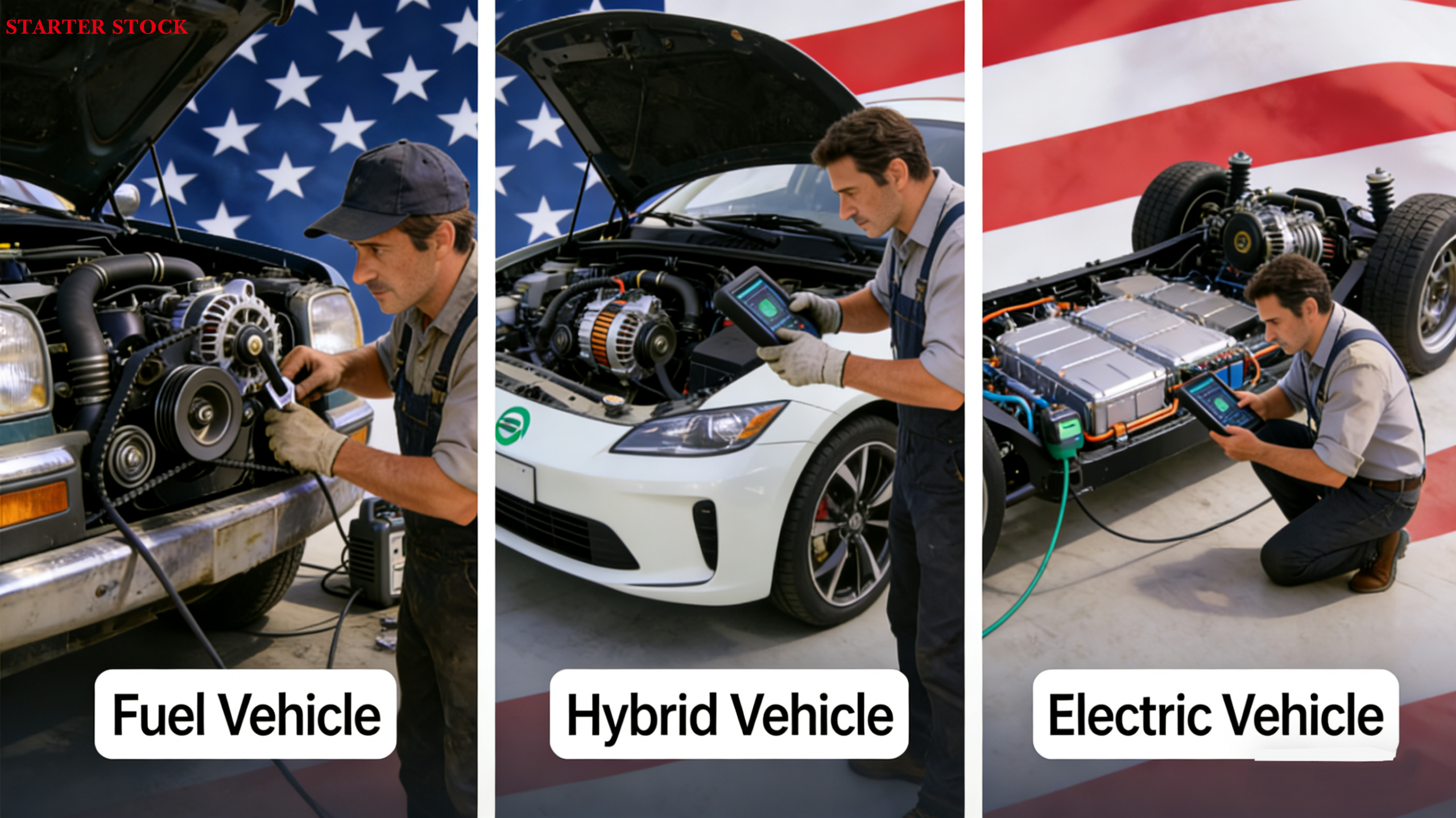
1. Fuel Cars: The "Only Power Guy" Alternator
A fuel car’s alternator is an engine-driven "full-time power supplier": When the engine runs, a belt spins the alternator’s rotor. This turns mechanical energy into electricity — charging the battery and powering all the in-car stuff (lights, AC, the screen).
Key Stuff:
● Needs the engine: When the engine’s off, the alternator stops. Only the battery powers things.
● Simple design: Made of a stator, rotor, and rectifier — it’s the most basic alternator type.
Maintenance Tips:
1. Check belt tightness often: A slipping belt cuts power. Look at it every 20,000 km. Replace worn belts (cost: $7–$30).
2. Clean the wiring ends: Oxidized ends (between battery and alternator) mess up power. Sand ’em and add conductive grease when you get yearly service.
3. Don’t use too much power at idle: Idle = slow engine = weak alternator. Running AC + lights for long drains the battery and stresses the alternator.
2. Hybrid Cars: The "2-in-1 Smart Alternator"
Hybrid cars (gas-electric) use an ISG or MGU motor — it’s both an alternator and a helper engine. Total multi-tasker.
Key Differences:
● Two jobs:When engine runs: It’s an alternator (charges battery + powers devices).
○ In EV mode: It’s a motor (helps drive the wheels, for some models).
○ When braking/gliding: It’s an energy saver (turns movement into electricity for the battery).
● No belt: Most hook straight to the engine crankshaft — works better.
Maintenance Tips:
1. Calibrate the software: Hybrid alternators are controlled by the car’s computer. After replacing it, use a special tool to sync it to the car. Else, power output will be off.
2. Check battery health: Alternator and hybrid battery work close. An old battery makes the alternator charge harder. Test battery capacity every 3 years.
3. Skip hard acceleration/braking: Crazy driving makes the alternator switch modes (charge/drive) too much. Wears parts faster.
3. EVs: No Alternator — But "Replacements"
Pure electric cars don’t have a regular alternator — their power system’s totally different. The battery’s the only power source. To "fill it up," they use an OBC (On-Board Charger) and regenerative braking.
How It’s Different:
● OBC ≠ alternator: It turns charger AC power into battery DC power — like a "power adapter."
● Regenerative braking = temp alternator: When braking/gliding, the drive motor runs backward. Turns movement into electricity to recharge the battery.
Maintenance Tips:
1. Keep the OBC cool: The OBC hates heat. Don’t charge in direct sun. Don’t run AC while charging (stresses the OBC).
2. Use regenerative braking smart: Strong regen (like "max" mode) overworks the motor. Stick to "standard" mode for daily drives.
3. Don’t drain the battery too low: Below 20% charge, the car triggers "low-voltage protection." Messes with device power — and hurts OBC/motor over time.
Quick Care Recap
● Fuel cars: Focus on the belt alternator — check the belt, clean ends, skip heavy power at idle.
● Hybrids: Care for the ISG/MGU motor — calibrate its software, test the battery, skip crazy driving.
● EVs: Look after OBC and drive motor — keep OBC cool, use mild regen, don’t drain the battery too low.
Good upkeep saves cash: A fuel car alternator costs $100–$250 to replace. An EV’s OBC? $400+ if it breaks.