
-
126
-
2025-12-19 10:05:44
In snowmobile service work, ignition problems are never simple. When a machine won’t start, cuts out at speed, or dies without warning, the ignition system is often blamed—but rarely understood correctly. For dealers, rental operators, and workshops, ignition failures create the worst kind of downtime: unpredictable, hard to diagnose, and expensive during peak season.
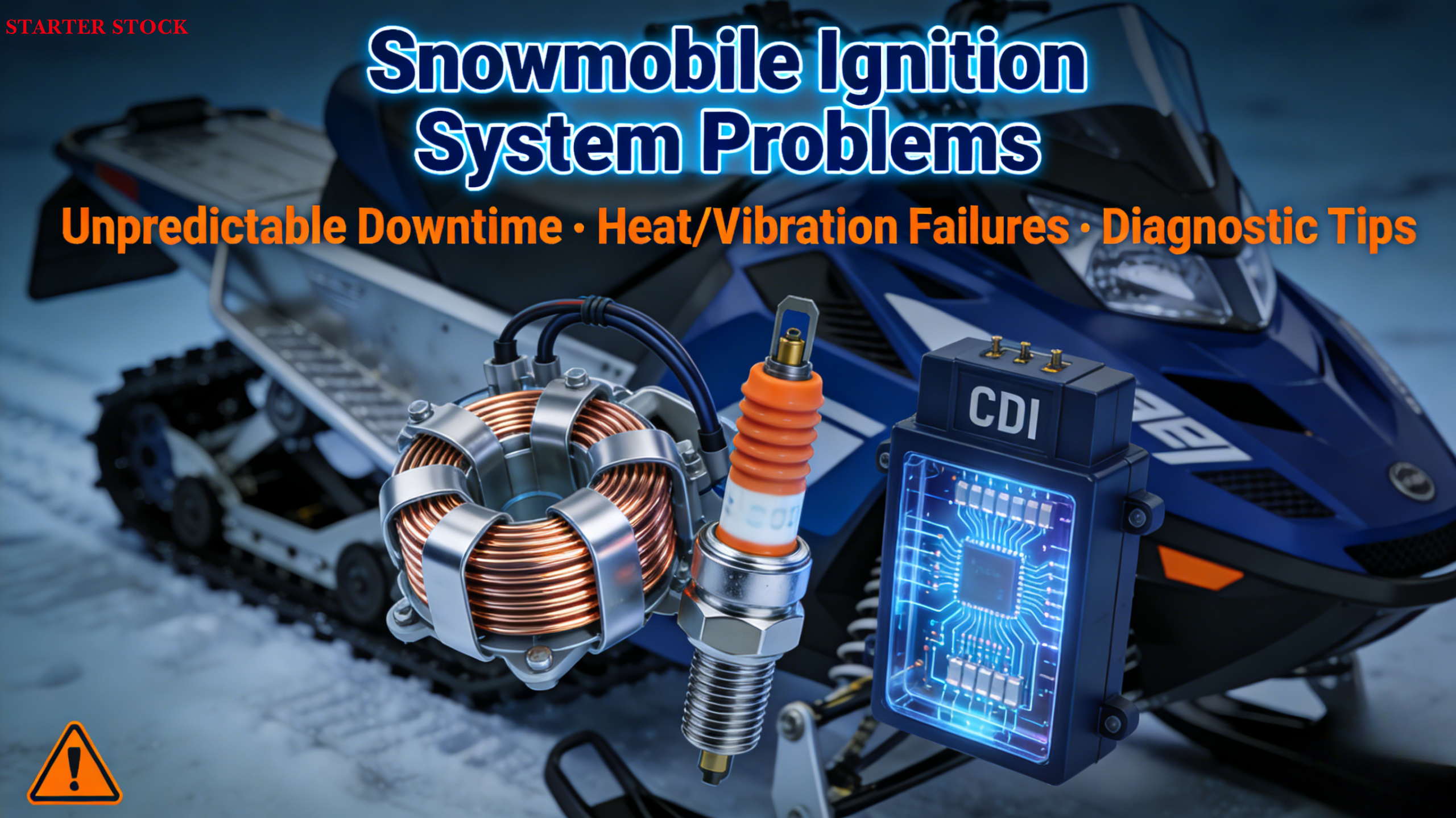
This article doesn’t list textbook faults. It reflects what technicians and buyers actually see in the field, and what usually causes those failures over time.
When “no start” is not the real problem
A snowmobile that won’t start often ends up with new spark plugs first. Sometimes that works. Often it doesn’t.
In many cases, spark is present—but it’s weak, inconsistent, or disappears once the engine warms up. The machine may start cold, then stall after a short ride. Or it may refuse to fire until it sits for an hour.
That points to ignition components breaking down under heat, not total failure.
Most commonly:
Ignition coils losing output as temperature rises
CDI units drifting out of spec when hot
Internal stator windings opening under load
These parts pass basic bench tests. They fail only in real use. That’s why intermittent ignition problems cost fleets so much time.
Coils that look fine but don’t work
Ignition coils are often replaced too late. From the outside, they look perfect. No cracks. No burn marks. Resistance values are “acceptable.”
But output voltage drops long before total failure.
In rental fleets and tour machines, coils see:
Constant vibration
Long periods at mid-to-high RPM
Repeated heat cycles
Lower-grade coils simply cannot maintain consistent spark under those conditions. They still fire at idle, which misleads technicians.
For buyers, coil quality matters more than branding. Ask suppliers how coils are tested—continuous run testing tells you more than static measurements.
Wiring causes more problems than people admit
Many ignition issues are not component failures at all. They are wiring problems.
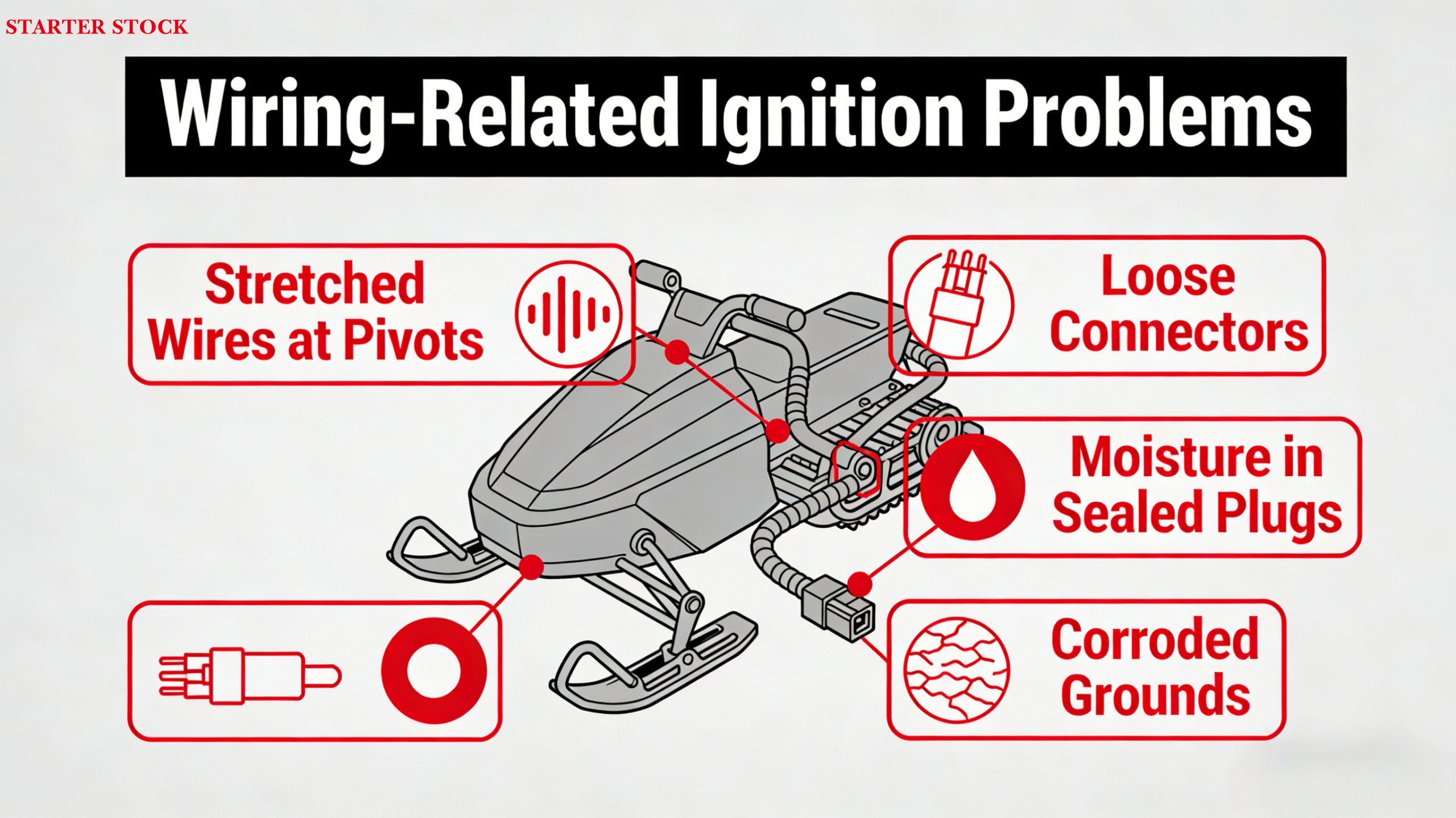
Common examples:
Wires stretched near steering pivots
Connectors slowly pulled loose by vibration
Moisture trapped inside “sealed” plugs
Ground wires corroded under paint or rust
A machine may run perfectly on the stand and fail on the trail. That’s because vibration completes the fault.
In commercial use, wiring quality is just as important as the ignition module itself. Thick insulation, proper strain relief, and solid connectors reduce failure rates more than most people expect.
Cold weather exposes weak ignition systems
Cold starts reveal ignition weaknesses fast.
In low temperatures:
Spark voltage demand increases
Battery output drops
Plug wires stiffen and crack internally
Marginal coils fail to fire consistently
Machines stored outdoors overnight show these problems first. Rental operators see it every morning.
This is where ignition systems designed for mild climates fall short. Buyers should not assume “tested” means “tested cold.” Ask suppliers directly about low-temperature performance.
Stators and trigger coils fail quietly
When stators fail, they rarely fail all at once.
Instead:
Output weakens gradually
Timing becomes unstable
Engine cuts out only at certain RPM
Restart may be impossible until cooled
Because symptoms vary, stator issues are often misdiagnosed as fuel problems or ECU faults. By the time the stator is replaced, other parts may already have been changed unnecessarily.
For fleets, tracking engine hours helps. Stators often fail within predictable hour ranges under commercial use.
CDI and ECU problems are not always “dead units”
Control units rarely fail completely. More often, they behave incorrectly.
Typical complaints:
Engine runs but lacks power
Throttle response disappears
Random shutdowns without fault codes
Timing feels inconsistent across RPM
These failures are hard to prove. Voltage spikes, poor grounding, or moisture ingress can damage internal circuits slowly.
From a purchasing perspective, CDI quality control and warranty response are critical. A cheap unit with no support costs more in the long run.
Grounding is ignored until everything else fails
Bad grounds cause good ignition systems to behave badly.
Painted frames, loose straps, and corroded contact points reduce return current. The result is weak spark, unstable timing, and sensor errors.
Many “mystery” ignition problems disappear once proper grounding is restored. This is basic work—but often skipped.
For workshops, ground inspection should be standard during ignition diagnosis.
Why ignition problems hit fleets harder
Private owners can tolerate occasional failures. Fleets cannot.
Ignition faults cause:
Missed tours
Delayed rentals
Customer complaints
Emergency parts orders
Repeated diagnostic labor
That’s why fleet buyers should evaluate ignition systems differently. The goal is not peak performance—it’s consistent behavior over time.
What B2B buyers should demand from ignition suppliers
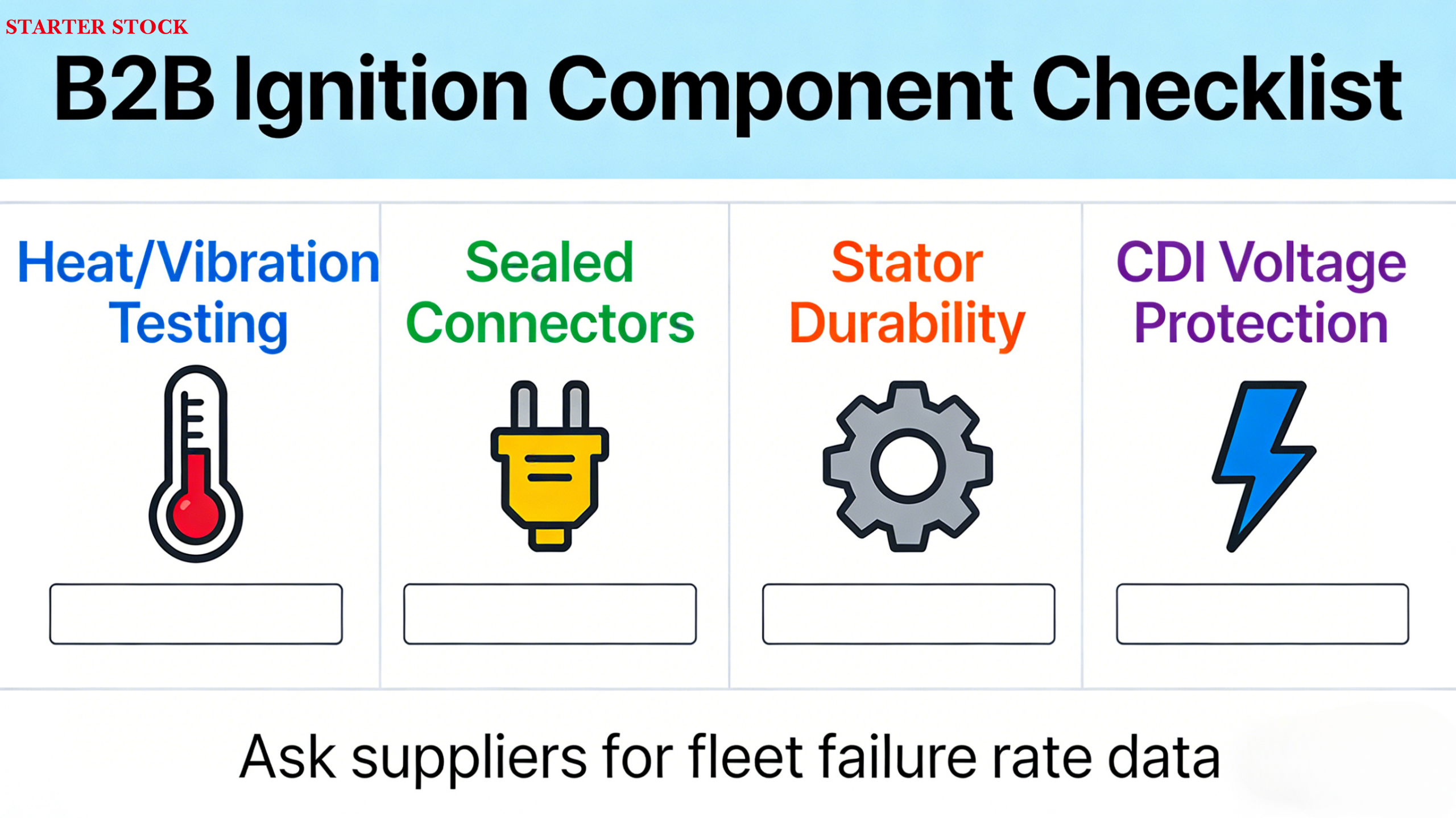
If you source ignition components in volume, ask these questions:
Are coils tested under heat and vibration?
Are connectors sealed for moisture and cold?
Are stators oil-resistant and vibration-tested?
Is wiring reinforced at stress points?
Are CDI units protected against voltage spikes?
What is the real failure rate in fleet use?
Suppliers who can answer clearly usually understand commercial conditions. Those who avoid details usually don’t.
Practical stocking advice for businesses
To reduce downtime:
Keep spare coils and plug wires in stock
Carry at least one CDI unit per fleet type
Stock connectors and ground straps
Replace marginal parts before peak season
Ignition problems rarely fix themselves. Early replacement saves time.
Final note
Ignition system problems are common, but they are not random. They follow patterns tied to heat, vibration, wiring quality, and component consistency.
For dealers, workshops, and fleet operators, understanding those patterns leads to better purchasing decisions. Reliable ignition parts reduce repeat repairs, improve uptime, and protect your reputation with customers.
If you are sourcing ignition coils, stators, CDI units, or complete ignition systems for snowmobiles and want to evaluate options based on real operating conditions, feel free to reach out. Choosing the right ignition components starts long before the machine fails.