
-
110
-
2025-12-22 13:51:49
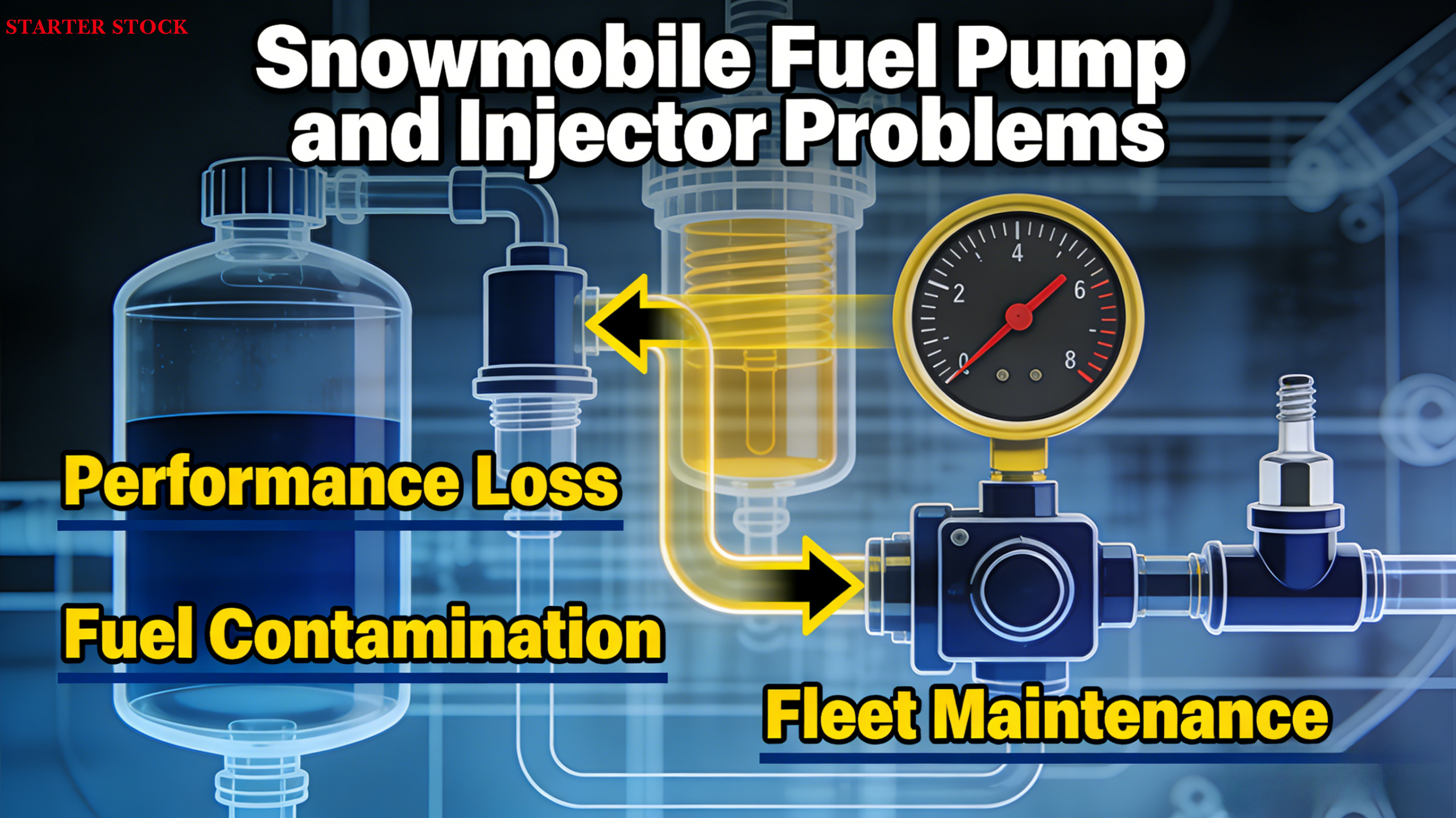
Fuel system problems are rarely obvious at first. A snowmobile usually still starts. It still idles. Customers say it “just feels weak” or “doesn’t pull like before.” That is how fuel pump and injector issues normally begin.
For dealers, workshops, and fleet operators, these problems are expensive because they waste time. Machines come back more than once. Parts get replaced in the wrong order. The real issue stays hidden until peak season pressure forces a fast decision.
The engine runs — but not the way it should
Most fuel pump and injector failures do not stop an engine immediately. Instead, performance slowly drops.
Technicians hear complaints like:
“It hesitates on hills.”
“Throttle response feels delayed.”
“Fuel use seems higher than last season.”
“It starts fine cold, but struggles after a short stop.”
At this stage, many people look at clutches, belts, or ignition first. Fuel delivery is often checked last, even though it should be near the top of the list.
Fuel pumps rarely die suddenly
Electric fuel pumps almost never fail all at once. They weaken.
Pressure drops. Flow becomes unstable. At idle, everything looks normal. Under load, the engine runs lean and loses power. On the bench, the pump still spins, so it gets blamed less than it should.
What usually damages pumps over time:
Running low fuel too often
Dirt or water passing through the filter
Heat buildup inside the tank
Voltage loss through old wiring
In rental and tour fleets, low fuel operation is common. Machines come back nearly empty. Pumps overheat, especially during long days.
For B2B buyers, pump lifespan matters more than advertised pressure numbers.
Injectors fail quietly and unevenly
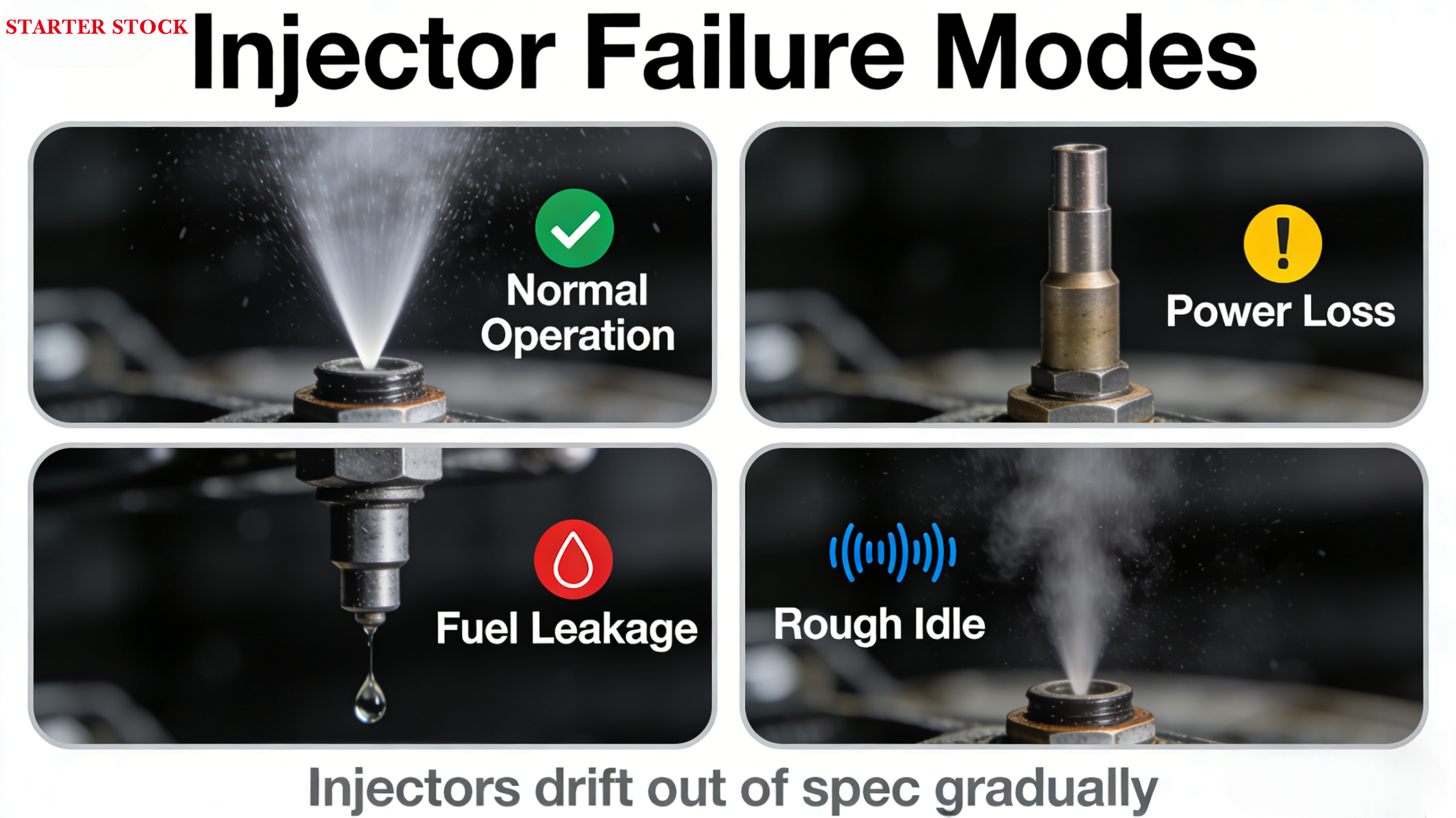
Injectors do not “break.” They drift out of spec.
One injector sprays slightly less. Another drips after shutdown. Spray patterns become uneven. Cylinders stop receiving the same fuel amount.
The engine still runs, but:
Power drops at higher RPM
Idle becomes rough after warm-up
Cold starts take longer
Exhaust smells richer or uneven
Because injectors fail slowly, they are often blamed last. Many machines receive new plugs, belts, sensors, and filters before injectors are replaced.
Workshops that service fleets usually learn this lesson the hard way.
Fuel quality causes more damage than people admit
Fuel problems are not only about the fuel itself. They are about storage and handling.
Common real-world issues:
Water entering tanks through condensation
Ethanol separating during cold storage
Dirt entering during refueling
Machines sitting unused with untreated fuel
Once contamination reaches the system, pumps and injectors take the damage first. Filters help, but they are not perfect.
For commercial operators, fuel handling discipline matters as much as component quality.
Electrical supply is often the hidden problem
Fuel pumps depend on stable voltage. Many do not get it.
Common electrical issues:
Corroded connectors
Weak grounds
Voltage drop through old harnesses
Relays that fail only in cold conditions
A pump running at reduced voltage still works—but pressure drops. The engine runs lean, heats up, and loses power under load.
From a purchasing standpoint, connector quality and wiring design matter as much as the pump itself.
Cold weather makes marginal systems fail
Cold temperatures expose weak fuel systems fast.
In low temperatures:
Fuel thickens
Pump resistance increases
Injectors respond slower
Batteries deliver less power
Machines stored outdoors overnight show problems first. Pumps struggle to build pressure. Injectors stick briefly. Engines crank longer than normal.
Components designed for mild climates often fail early when used in cold regions.
Why fleets feel fuel problems more than private owners
A private owner may tolerate reduced performance. A fleet cannot.
Fuel system issues cause:
Inconsistent ride quality
Higher fuel cost per hour
Missed tours
Emergency repairs
Repeat diagnostic labor
Because symptoms appear slowly, machines often cycle through service several times before the real issue is addressed.
Fleet operators who replace pumps and injectors on schedule save money, even if the parts still “work.”
What experienced buyers look for in fuel system parts
When sourcing fuel pumps and injectors in volume, experienced buyers ask different questions.
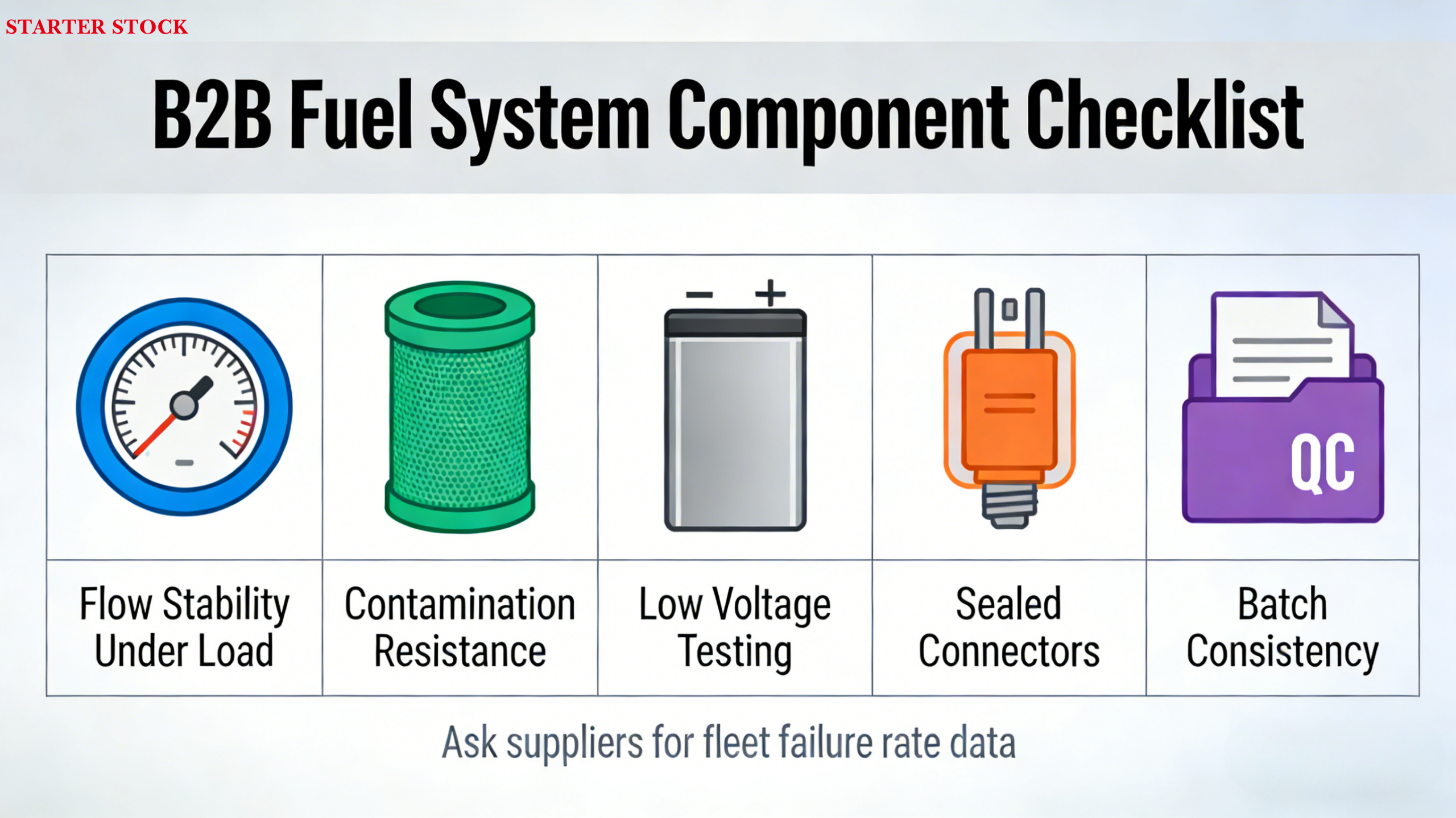
They want to know:
How stable is flow under continuous load?
How sensitive is the injector to contamination?
Are pumps tested at low voltage?
Are connectors sealed properly?
Are replacement parts consistent batch to batch?
What failure rate does the supplier see in fleet use?
Suppliers who understand commercial use can answer clearly. Others cannot.
Stocking parts is part of fuel system strategy
Workshops that handle fleets do not wait for failure.
They keep:
Pumps matched by engine family
Injectors in sets, not singles
Filters and regulators on hand
Fuel line kits ready for replacement
Predictive replacement reduces downtime more than emergency repairs ever will.
Final thoughts for B2B platforms
Fuel pump and injector problems rarely look serious at first. That is what makes them costly. By the time performance loss becomes obvious, revenue has already been lost.
For B2B buyers, the value of a fuel system is not only in the component itself, but in consistency, durability, and supply support. Platforms that understand real operating conditions—and stock parts accordingly—become long-term partners, not just suppliers.
If you are sourcing fuel pumps, injectors, or complete fuel delivery assemblies for snowmobiles and want components suitable for commercial and fleet use, our B2B platform is built for that purpose. Reliable fuel delivery starts with informed purchasing and dependable supply.