
-
113
-
2025-12-25 15:46:08
What are the differences between brushless motors and brushed motors? How significant are the differences in practical operation? Which is better?
Differences in Working Principles between Brushless and Brushed Motors
Working Principle of Brushed Motors
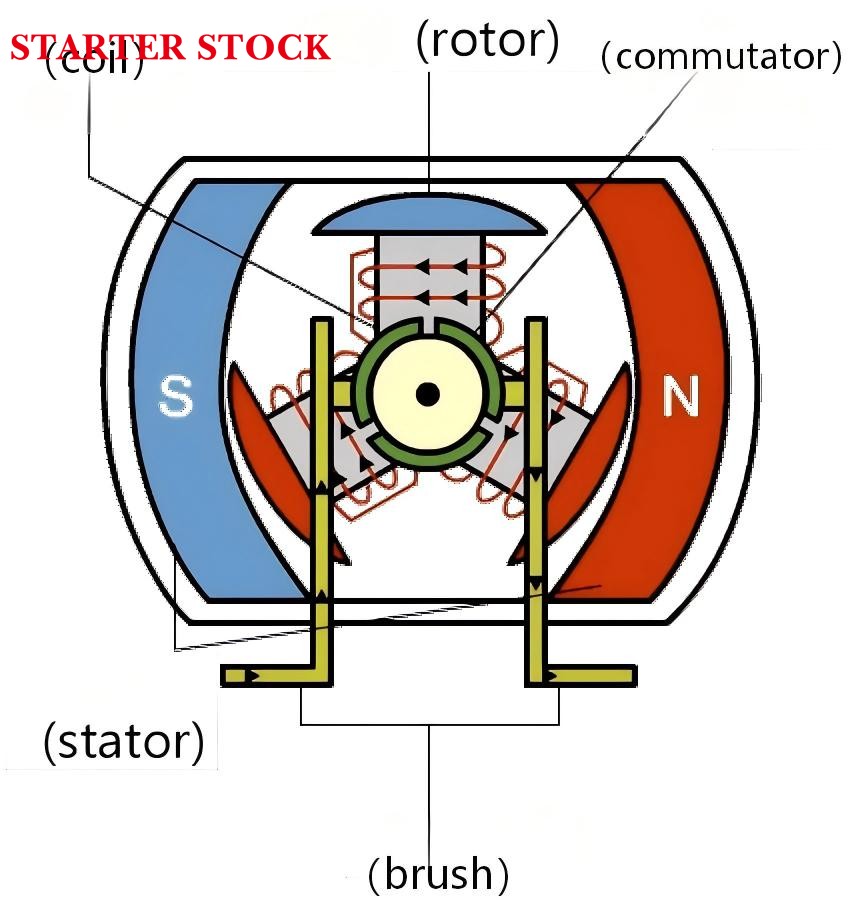
The main structure of a brushed motor is stator + rotor + brushes. During operation, the coils and commutator rotate, while the magnets and carbon brushes remain stationary. The alternating change in the direction of the coil current is accomplished by the commutator and brushes, which rotate with the motor.
In a brushed motor, this process involves arranging the two power input terminals of each group of coils into a ring, separated by insulating material, forming a cylindrical structure integrated with the motor shaft. Power is supplied to one group of coils through two small carbon brushes (carbon pins), which, under spring pressure, press against two specific fixed points on the coil power input ring cylinder from two specific fixed positions.
As the motor rotates, different coils or different poles of the same coil are energized at different times, creating a suitable angle difference between the N-S poles of the coil generating the magnetic field and the N-S poles of the nearest permanent magnet stator. Opposite magnetic poles attract, and like poles repel, generating a force that drives the motor to rotate. The carbon electrode slides on the coil terminals, like a brush brushing a surface, hence the name "carbon brush."
Brushless Motor Working Principle
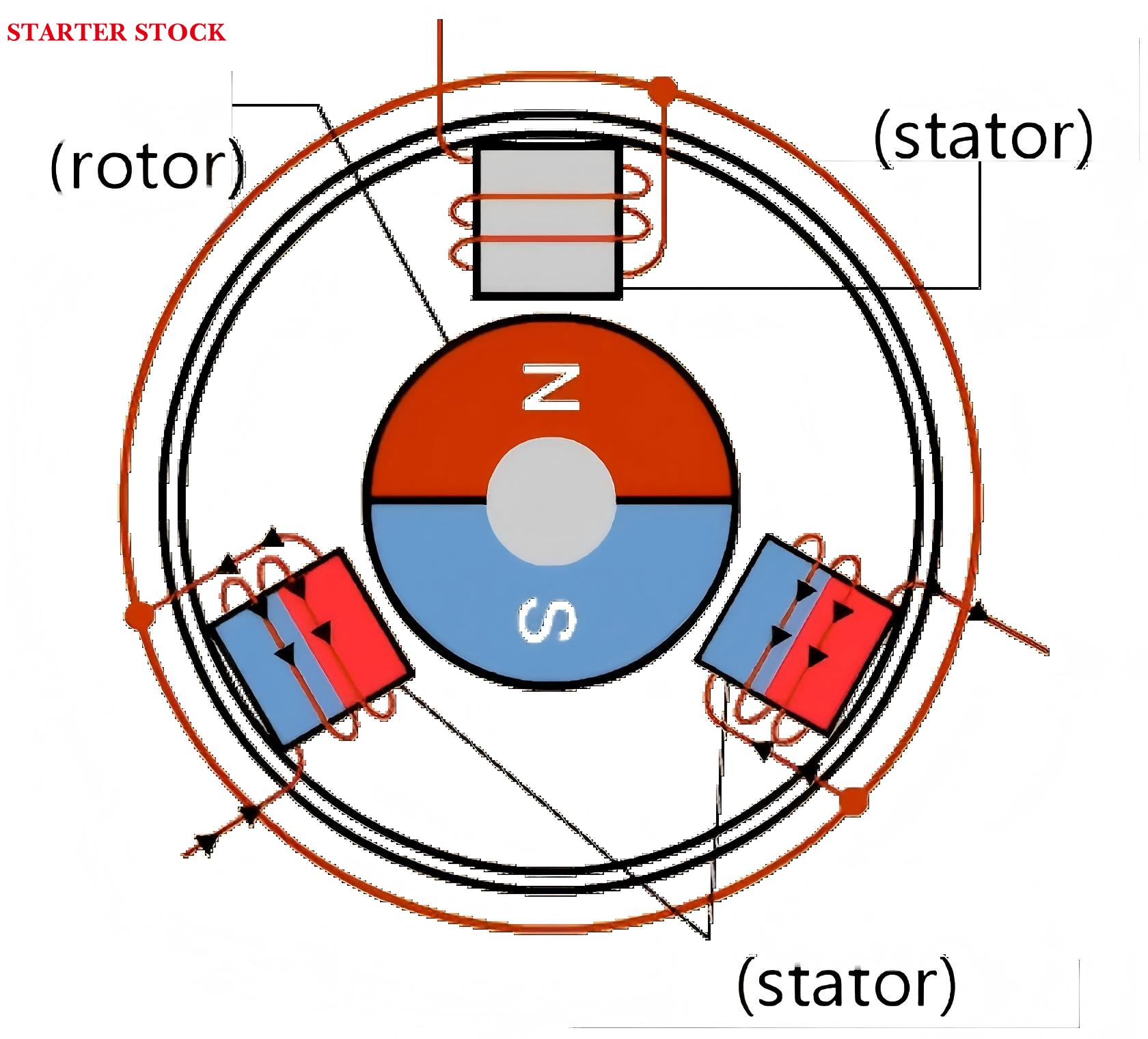
A brushless motor consists of a motor body and a driver, and is a typical mechatronic product. Because brushless DC motors operate in a self-controlled manner, unlike synchronous motors that require additional starting windings on the rotor under heavy loads with frequency conversion speed regulation, they offer advantages over wired motors, such as smaller size, reduced operating temperature, and improved durability. Currently, brushless technology is increasingly used in lithium-ion battery products to improve their efficiency.
Performance Differences Between Brushless and Brushed Motors
Brushed motors have a simple structure, a long development history, and mature technology. As early as the 19th century, when motors were invented, practical motors were brushless, namely AC squirrel-cage induction motors. These motors were widely used after the advent of AC power. However, asynchronous motors have many insurmountable drawbacks, which has slowed the development of motor technology. In particular, brushless DC motors were unable to be commercially deployed for a long time. Even with the rapid advancements in electronic technology, they only gradually entered commercial use in recent years, and in essence, they still fall under the category of AC motors.
Shortly after the invention of brushless motors, brushed DC motors were invented.
Due to their simple structure, ease of manufacturing, maintenance, and control, and their ability to provide rated torque from zero speed to rated speed, brushed DC motors were widely used immediately upon their introduction.
Brushed DC motors have a fast starting response, high starting torque, smooth speed change, and almost imperceptible vibration from zero to maximum speed. They can handle larger loads during startup. Brushless motors have high starting resistance (inductive reactance), resulting in a low power factor, relatively low starting torque, a buzzing sound during startup, and strong vibration. They can handle smaller loads during startup.
Brushed motors are regulated by voltage and speed, so they start and brake smoothly, and also run smoothly at constant speed. Brushless motors are usually controlled by digital frequency conversion, which first converts AC to DC and then DC to AC, and controls the speed through frequency changes. Therefore, brushless motors operate unstably and vibrate greatly during starting and braking, and only stabilize when the speed is constant.
DC brushed motors are usually used together with gearboxes and decoders to increase the output power of the motor and improve control accuracy. The control accuracy can reach 0.01 millimeters, allowing moving parts to stop almost anywhere they want. All precision machine tools use DC motors to control accuracy. Due to the instability during start-up and braking, the moving parts of a brushless motor will stop at different positions every time, and must be stopped at the desired position through positioning pins or limiters.
The initial procurement cost of brushed motors is relatively low, which can meet short-term, non high frequency usage needs. However, during operation, energy consumption is high, and the core component brushes are prone to wear and tear, requiring subsequent maintenance and replacement costs to be borne; Although brushless motors have a slightly higher initial investment, they have lower energy consumption and no maintenance needs caused by vulnerable parts. Under long-term high-frequency use, the saved electricity and maintenance costs will gradually offset the price difference in the early stage, resulting in a better overall cost-effectiveness.
Brushless, low interference, brushless motors remove electric brushes, and the most direct change is the absence of electric sparks generated during the operation of brushed motors, greatly reducing the interference of electric sparks on remote control radio equipment.
Low noise, smooth operation, brushless motor without brushes, greatly reduces friction during operation, smooth operation, much lower noise, this advantage is a huge support for the stability of model operation.
Long lifespan, low maintenance cost, and lack of electric brushes, the wear of brushless motors is mainly on the bearings. From a mechanical perspective, brushless motors are almost maintenance free motors, and when necessary, only some dust removal maintenance is needed.
There is no absolute superiority or inferiority between brushed motors and brushless motors. The core lies in the adaptation requirements: for short-term use and limited budget, choosing brushed motors can meet basic needs at low cost; Long term high-frequency use, emphasis on energy conservation and worry free selection of brushless technology, although the initial investment is slightly higher, the advantages of saving electricity costs and less maintenance will make the overall cost more cost-effective, and on-demand selection is the optimal solution.