
-
75
-
2025-12-26 15:57:33
Table of Contents
1. So, What Are We Actually Talking About Here?
2. Listen Up: This Ain't a Cure, It's a Test
3. Stuff You'll Want Within Arm's Reach
4. The "Get Me Home" Screwdriver Shuffle
5. The Right Way: Playing It Safe with a Remote Switch
6. The Why Behind the Clunk: Starter Solenoids 101
7. It Cranks! Great… Now the Real Work Starts
8. When Nothing Happens: The Starter's Throwing a Fit
9. I've Seen It All: Classic Goofs to Avoid
10. The Part Nobody Likes: Finding a Good Replacement
11. Wrapping It Up: Why This Stuff Matters
1. So, What Are We Actually Talking About Here?
Alright, pull up a crate. Let's talk about "jumping a starter." Most folks hear that and think of jumper cables and a dead battery. Nah. We're talking about something entirely different. It's a backdoor trick—a way to sidestep your car's whole ignition system and yell directly at the starter solenoid to do its job.
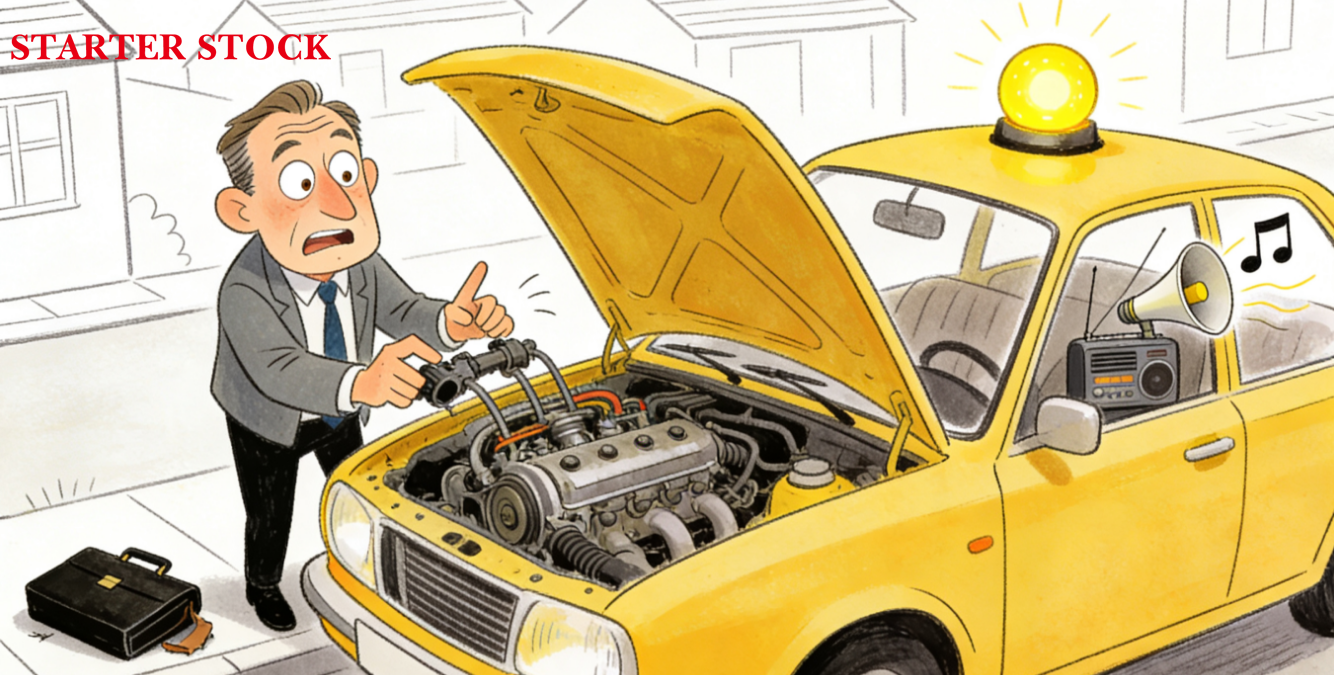
Here's the scene. It's Tuesday morning. You're late. You jam the key in, give it a turn… and get a whole lot of silence. Maybe a sad, solitary click from the depths of the engine bay. The dome light's on, the radio plays, but the engine? Dead quiet. Your gut sinks. Before you panic-call a tow truck or start blindly swapping parts, this trick lets you cut through the nonsense. You're basically leaning under the hood and asking the starter, point-blank: "Is it YOU, or is the wire from the switch busted?"
I've lost count of how many times this little dance has saved my skin. Done it in grocery store lots with rain coming down, in fields at dusk fixing a friend's tractor, and a thousand times on the shop lift. It's a first-date question for any new starting problem. Let me walk you through it like I would my new apprentice.
2. Listen Up: This Ain't a Cure, It's a Test
Look me in the eye through this page. This isn't magic. It's a diagnostic cheat code that involves playing with enough current to weld. A little healthy fear is good.
● Park It. For Real: Level ground. Parking brake ON like you mean it. Automatic? Slam it in Park. Manual? Neutral. Find a chunk of wood, a brick, anything, and chuck it behind a back tire. If this works, the engine will turn over and could lurch.
● What's Your Goal? Just testing to see if the starter cranks? Go pop the hood and pull the fuel pump fuse. No gas, no start. It's safer. Stranded and need to get moving? Buckle up, because it'll fire right up.
● Dress for the Job: No dangly stuff. Tuck in your shirt. That spinning fan doesn't care about your favorite hoodie string.
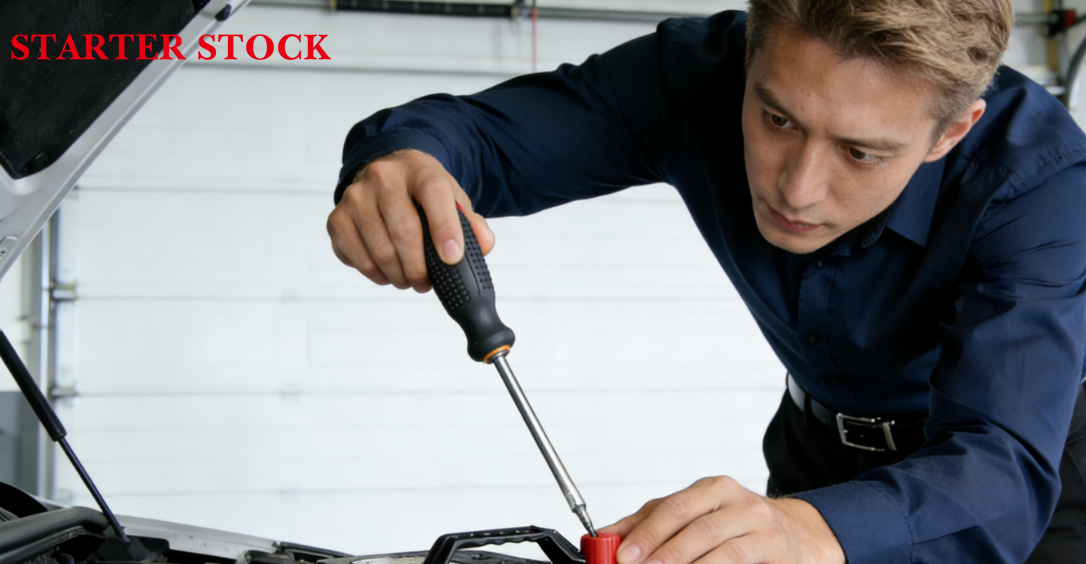
● The Screwdriver: Don't you dare use some flimsy thing with a hollow plastic handle. You need a solid, heavy-duty flathead with a full rubber grip. You're about to make a bridge that'll spark like a Fourth of July sparkler.
● You're Bypassing Safeties: Remember, the car has a "don't-start-in-gear" switch for a reason. You're going around it. And you're making sparks right near the battery. No flames, no fumes.
Think of this like using a defibrillator. It's for diagnosis or a one-time emergency jolt. If you're doing this every day, you've got a patient that needs surgery, not more shocks. And finding the right part for that surgery? That's its own kind of headache.
3. Stuff You'll Want Within Arm's Reach
Gathering your gear isn't just preparation; it's what keeps your knuckles intact.
1. The Screwdriver: I have one in my box with a handle worn smooth from 20 years of grease and grip. That's the kind you want.
2. Eye Protection: I don't care if you're just peeking. Wear 'em. A flying bit of carbon from a brush or a hot spark has no conscience.
3. A Remote Starter Switch (Seriously, Get One): If you see yourself turning wrenches more than once a year, buy this. It's ten bucks. A button on a lead with two clips. It lets you stand back like a conductor, not a participant.
4. Know Your Engine Bay: Take 30 seconds before you're in a panic to find the starter. Follow the thick, ugly, red cable from the battery. It'll lead you to a cylindrical metal can bolted to the engine. That's your target.
4. The "Get Me Home" Screwdriver Shuffle
This is the classic. It feels a little cowboy, and it is. Use it with the respect a lit fuse deserves.
1. Find the Solenoid. That metal can the battery cable connects to? That's it. You'll see:
a. The Big Ugly Stud with the Battery Cable: That's pure, unfiltered battery juice.
b. Another Big Stud: This one feeds the starter motor.
c. The Little Spade Connector (The "S" Terminal): This is the trigger wire. That's your ignition switch's voice.
2. Target Acquisition. Our mission: momentarily connect the big battery stud to the little "S" spade. We're faking the ignition signal. FOR THE LOVE OF ALL THAT'S HOLY, DO NOT TOUCH THE TWO BIG STUDS TOGETHER. That's a direct short. You'll get a blinding blue arc, a melted screwdriver, and a likely trip to the parts store for more than just a starter.
3. The Moment of Truth. Key in the ON position (you want it to start if it can). Plant the metal shank of your screwdriver so it's touching the side of the big battery stud and the small spade terminal. Do it firm and quick.
a. The Good Result: A bright spark, a solid metallic CLUNK from the solenoid, and the engine cranking over fast and clean.
b. If It Cranks: Perfect. Your starter and solenoid are innocent. The fault is in the wiring, the ignition switch, or a safety switch. The hunt continues elsewhere.
c. If It Just Sparks and Sits There: The solenoid is dead. It heard the yell but can't answer.
d. If It Grinds Like a Bag of Nails: Abort. The starter gear isn't meshing. You've got bigger problems.
5. The Right Way: Playing It Safe with a Remote Switch
This is shop practice. It's clean, it's smart, and you don't smell like ozone afterwards.
1. Hook It Up. Clip one switch lead (red) to the little "S" terminal. Clip the other (black) to the big battery stud. The button is now in your hand.
2. Step Back. Literally. Take a step away from the engine bay.
3. Key to ON. Fire up the dash.
4. Press the Button. Hold it. The engine cranks. Release it, it stops. You can crank it while your buddy listens for the fuel pump or checks a spark plug wire. It's control. It's how the pros do it.
6. The Why Behind the Clunk: Starter Solenoids 101
Let's break it down simple. Your starting system is a bucket brigade.
1. You light the fire (turn the key).
2. The Ignition Switch picks up the bucket (sends a small signal).
3. The Safety Switch (Park/Neutral) has to pass the bucket along.
4. It finally reaches the Solenoid. This guy has two jobs: use the signal to slam a giant internal switch closed, and use a lever to throw the starter gear into the engine's flywheel.
5. That giant switch lets the tidal wave of battery power hit the Starter Motor, which spins the engine.
"Jumping the starter" is you running to the front of the line, handing the bucket directly to the solenoid, and saying "DUMP IT!" You're checking if the bucket brigade's last two guys are still strong enough to work.
7. It Cranks! Great… Now the Real Work Starts
Success! The starter works. So, the problem is not the starter. Your diagnosis just got sharper. The villain is in the wiring before the starter. Your new suspects:
● Ignition Switch: The all-time champion of failure. Those little contacts wear out after ten thousand key turns.
● Neutral Safety Switch (Autos) / Clutch Switch (Manuals): The gatekeepers. They fail all the time. If they don't get the message the car is safe to start, they block the signal.
● A Tiny Relay: Look in your under-hood fuse box for a "Starter Relay." It's a $15 cube that clicks. They fail often and are easy to swap.
● A Broken Wire or Green Gunk: Corrosion in a connector, or a wire that's rubbed through and broken, can kill the signal dead.
8. When Nothing Happens: The Starter's Throwing a Fit
You gave the direct order and got a weak sizzle or a pathetic click? Then the problem is local. The starter crew has mutinied.
● Solenoid is Toast: The internal coil is dead, or the big copper disc inside is burnt to a crisp.
● Starter Motor is Locked Up: The bearings are seized, or the armature is jammed against the field coils.
● Brushes are Gone: The carbon brushes that carry current inside have worn away to nothing.
● It's Fried: The windings have shorted together into a melted paperweight.
Time for a replacement. And here, my friend, is where the real-world annoyance kicks in for folks like us.
9. I've Seen It All: Classic Goofs to Avoid
I've got the scars and stories. Don't be the next one.
● The Unholy Spark: Jumping the two big terminals. I saw a kid do this once. The arc welded the screwdriver tip to the terminal. The sound was unforgettable. The starter was toast.
● The Rolling Disaster: Not setting the brake or chocking a wheel. A car that lurches in gear can run over your foot, or worse.
● The Melted Handle: Using a cheap tool. The voltage won't shock you, but the amperage will turn a plastic handle into hot goop in your hand.
● Living on a Prayer: Using this as a permanent fix. If you need a screwdriver to start your car, you don't have a car. You have a time bomb.
10. The Part Nobody Likes: Finding a Good Replacement
So you played detective, and you need a new starter. Welcome to the modern parts jungle. Your options stink:
● The Stealership: Pay double, wait a week, get the exact part that failed in the first place.
● The Bargain Bin: Roll the dice on a no-name brand. It might last a year. Might last a month.
● The Ghost Hunt: Scour the internet for a trustworthy source for your '85 Kawasaki Jet Ski or your Italian motorcycle. Good luck.
This mess is why I got cynical. We needed a source that acted like the old-world parts counter guy—someone who knew their stock and stood by it.
That's why I was so relieved to stumble on a different approach. It's built by people who don't just sell parts; they probably use them too.
● For the Rest of Us: Need one single starter for a prototype or a restoration? They get it. They work with factories that don't laugh at small orders. Real projects start with one part.
● No More Roulette: Every maker on there has been vetted. You can see their shop, their certs. It kills the "what's in this box?" anxiety.
● You're the Boss: The whole process is clear. And for critical parts, you can pay a little extra to have an independent set of eyes check it before it ships. After getting a "new" starter with a cracked housing, I will never not use this.
● The Coffee Shop: My favorite part. Their blog and forums aren't fluff. It's real people solving real problems. You pick up tricks, learn what fails on certain models, and share your own wins. It's the community bench talk, online.
It turned the worst part of the job—the sourcing—from a crapshoot into a straightforward task. Now I can spend my time fixing, not searching.
11. Wrapping It Up: Why This Stuff Matters
Learning to jump a starter isn't about a parlor trick. It's about taking a little power back from the machine. It's about understanding the chain of events so a simple "no-start" doesn't mean a huge bill or a day lost.
Wield this knowledge right. The safety stuff isn't decoration. This is a test, not a lifestyle. And when your sleuthing points to a bad component, go find a good one. Your machine, whatever it is, deserves that much.
Now you're not just turning a key and hoping. You're diagnosing. Go see what you find.