
-
120
-
2025-12-30 16:21:53
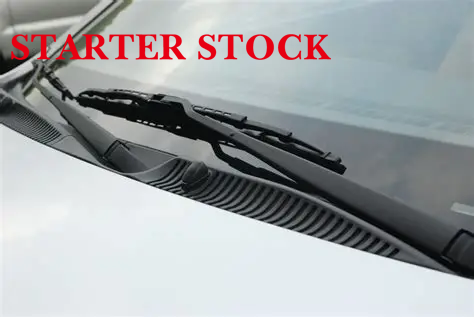
If you've ever replaced a chattering wiper motor, you might have wondered:
is the unit behind an automatic, rain-sensing system any different from the one in a basic car? As a technician who has rebuilt both, I can confirm the difference is profound. It's not merely an added sensor; it's a fundamental shift in design philosophy, from a simple rotary actuator to an integrated, digitally-managed motion system.
Based on our workshop teardowns and circuit analysis, the distinction lies in four key areas: core functionality, control intelligence, internal build, and application philosophy.
1. Core Function & Design Philosophy
A standard wiper motor is a reactive workhorse. Its design brief is simple: receive a 12V signal (for low, high, or intermittent delay) and convert it into reliable, consistent rotary motion for the linkage. Its performance is constant, unaffected by external conditions. Think of it as a loyal soldier executing one of three fixed commands.
An automatic wiper motor, however, is part of a perceptive system. While the motor itself provides motion, its operational parameters are now dynamic. It must respond seamlessly to variable-speed commands from a control module. Its design prioritizes smooth operation across a wide speed range, not just at two or three set points. The motor is engineered to be the finely-tuned instrument of a larger orchestra.
2. Control Logic & Intelligence Integration
This is the most significant divergence. The standard motor is controlled via a switch and a simple relay or timer circuit. The intermittent function works by cutting power on a fixed cycle. The motor itself is "dumb"; it runs or stops.
The automatic system employs Pulse-Width Modulation (PWM). The control module doesn't just turn the motor on/off; it sends rapid electrical pulses, varying their width to precisely control speed and torque. This allows for infinite variability between slow and fast wipes. The motor in these systems is designed to accept this pulsed signal without stuttering or excessive coil heat build-up, a consideration far less critical in a basic on/off design.
3. Internal Components & Durability Demands
While both share a core architecture (armature, coils, brushes), the specs differ.
Brush Material & Grade: Automatic motors often use higher-grade electro-graphite brushes designed for smoother commutation at varying speeds, reducing electrical noise that could interfere with sensitive sensor feedback circuits.
Bearing & Gear Tolerance: To handle the subtle start-stop cycles and speed variations without excessive wear or noise, automatic motor assemblies frequently have tighter tolerances in their gearboxes and bearings.
Thermal Management: The potential for prolonged low-speed operation in drizzle places a different thermal stress profile on the motor windings compared to fixed high/low cycles.
4. Application & Cost Perspective
You cannot simply add a rain sensor to a standard motor and expect "automatic" function. The standard motor lacks the control interface to receive variable-speed commands. The upgrade requires the sensor and a compatible motor/control module system.
From a parts perspective, the automatic motor assembly is inherently more complex, integrating or interfacing with the control logic. This is reflected in its cost, which can be multiples of a standard replacement motor. For a repair, this means diagnosis must determine if the fault lies in the "muscle" (the motor itself) or the "brain" (the integrated circuit or external control module)—a nuance absent in standard motor repair.
Conclusion: A System, Not Just a Component
The difference transcends the hardware. A standard wiper motor is a component. An automatic wiper motor is a subsystem within a vehicle's network. It communicates with a body control module, processes real-time analog sensor data, and executes complex, variable output.
For the technician, this means moving from a world of continuity tests and relay checks into one of diagnosing communication buses, PWM signals, and sensor calibration. For the driver, it represents the transition from manual control to contextual automation. Understanding this distinction is key to accurate diagnosis, correct parts replacement, and appreciating the engineered intelligence hidden behind a seemingly simple chore of keeping the glass clear.