
-
80
-
2026-01-15 13:23:12
Table of Contents
1. The Myth of the Lone Genius: Beyond Henry Ford
2. The Road to 1903: A History of Beautiful Failures
a. The Detroit Automobile Company
b. The Henry Ford Company (And how it became Cadillac)
3. The 12 Apostles of the Assembly Line: Who Really Funded Ford?
4. The Technical Hurdle: How Do You "Start" a Revolution?
a. From Bone-Breaking Hand Cranks to Electric Dreams
b. The Evolution of the Bendix Drive
5. The Sourcing Struggle: What Henry Ford and Modern Innovators Have in Common
6. StarterStock: Empowering the Next Generation of "Fords"
a. The Small-Batch Solution for Big Ideas
b. Navigating the Global Factory Floor with Confidence
c. Transparency: The Death of the "Black Box" Procurement
7. Mature Networks: Why We Focus on More Than Just Cars
8. The Power of Community: Knowledge is the Ultimate Fuel
9. Conclusion: Will You Build the Next Legacy?

1. The Myth of the Lone Genius: Beyond Henry Ford
If you walk into any pub in Detroit or any boardroom in Silicon Valley and ask, "Who started Ford Motor Company?" you’ll get a one-word answer: Henry. But as any veteran engineer or procurement specialist will tell you, a product is only as good as the team—and the supply chain—behind it. While Henry Ford was the visionary who wanted to "build a motor car for the great multitude," he didn't do it in a vacuum. He was a man who failed twice before he ever succeeded.
In the world of mechanical innovation, the story of Ford isn’t just about a car; it’s about the brutal reality of sourcing parts, managing investors, and finding reliable suppliers. It’s a story that mirrors the struggles I see every day in modern hardware development. At StarterStock, we study these historical pivots because they remind us that even the giants of industry once struggled to find the right "spark."
2. The Road to 1903: A History of Beautiful Failures
Before the Ford Motor Company we know today was incorporated on June 16, 1903, Henry Ford was a bit of a "serial quitter" in the eyes of his early investors.
The Detroit Automobile Company (1899–1901)
Henry’s first real shot was backed by heavy hitters, including the Mayor of Detroit. But here was the problem: Henry was a perfectionist. He kept tinkering with the prototypes while the investors screamed for a sellable product. The company folded because they couldn't bridge the gap between "prototype" and "production."
The Henry Ford Company (1901–1902)
His second attempt saw him partner with C.H. Murphy. Again, Henry’s obsession with racing and constant iteration frustrated his backers. When Henry left, the investors brought in Henry Leland to appraise the factory. Leland stayed, and that company became Cadillac.
The Lesson: Having a great motor design is useless if you can't manage the "business of parts." This is the exact pain point we solve at StarterStock. We help the perfectionist engineers get their prototypes to market by connecting them with suppliers who understand the "iteration" phase.
3. The 12 Apostles of the Assembly Line: Who Really Funded Ford?
When the Ford Motor Company finally stuck in 1903, it was thanks to a diverse group of 12 investors who put up $28,000 in cash.
● John and Horace Dodge: These guys were "motor guys" to the core. They didn't just invest; they were the primary suppliers of the engines and chassis for the early Ford models.
● Alexander Malcomson: A coal dealer who provided the financial backbone Henry desperately needed.
● James Couzens: The man who brought the "business discipline" that Henry lacked.
This was a primitive version of a mature supply network. The Dodge brothers were essentially Ford’s first "vetted suppliers." Today, hardware innovators don't have a Dodge brother in their back pocket—they have StarterStock. We provide that same foundational partnership, ensuring that your "investors" (or your own bank account) aren't wasted on unreliable manufacturing.

4. The Technical Hurdle: How Do You "Start" a Revolution?
As an expert in rotating electrical components, I find the early "start-up" process of these cars fascinating.
The Bone-Breaking Hand Crank
Early Ford cars didn't have a starter motor. You had to stand in front of the car and manually turn a crank. If the engine kicked back, it could (and often did) break your arm. This "barrier to entry" meant that women and the elderly were largely excluded from driving.
The Electric Dream
It wasn't until 1912 (on Cadillacs) and later on Fords that the electric starter motor changed everything. By utilizing a high-torque DC motor to engage the flywheel, the car became a consumer product rather than a dangerous hobby.
The engineering of these early starters—the brushes, the solenoids, the Bendix drive—set the stage for everything we source at StarterStock today. Whether it’s a starter for a vintage Model T restoration or a high-performance magnetic motor for a new ATV design, the fundamental physics remain the same.
5. The Sourcing Struggle: What Henry Ford and Modern Innovators Have in Common
If Henry Ford were alive today and trying to build a new electric UTV or a high-performance mower, he would face the same "Sourcing Wall" that many of our clients face:
1. The Volume Trap: Big factories don't want to talk to you unless you're ordering 10,000 units.
2. The Quality Gamble: Buying from unverified vendors online is like playing Russian Roulette with your reputation.
3. The Transparency Gap: Not knowing who is actually winding your armatures or what grade of copper is being used.
Henry Ford eventually solved this by "Vertical Integration"—buying his own mines, forests, and glass factories. But unless you have a billion dollars, you can't do that. You need a platform that gives you the power of a giant with the agility of a startup.

6. StarterStock: Empowering the Next Generation of "Fords"
This is why we built StarterStock. We aren't just a website; we are the "John and Horace Dodge" for the 21st century.
The Small-Batch Solution for Big Ideas
We specialize in the "missing middle." Most B2B sites are for massive wholesalers. We focus on the innovators who need 20, 100, or 500 units. We’ve hand-selected suppliers who are eager to grow with you. If Henry Ford had StarterStock in 1899, the Detroit Automobile Company probably wouldn't have failed.
Navigating the Global Factory Floor with Confidence
Our platform isn't an open market where anyone with a laptop can sell. Every supplier is vetted. We look at their technical certifications, their factory clean-room standards, and their past project history. When you source a starter, a relay, or a regulator through us, you're buying peace of mind.
Transparency: The Death of the "Black Box"
In the old days, you sent a wire transfer and prayed. At StarterStock, we offer:
● Full Document Control: Technical specs and certifications are stored right in your dashboard.
● Third-Party Inspection: We can put a professional inspector on the factory floor before your order ships.
● Integrated Logistics: We bridge the gap between the factory gate and your doorstep.
7. Mature Networks: Why We Focus on More Than Just Cars
While Henry Ford changed the world with the Model T, modern innovation is happening in the "niches."
We have spent years building a mature supply network that covers:
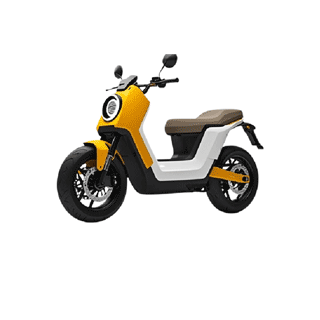
● Motorsports: High-performance starters for ATVs and motorcycles.
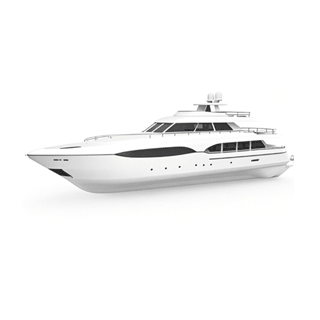
● Marine: Ignition-protected motors for inboard and outboard engines.
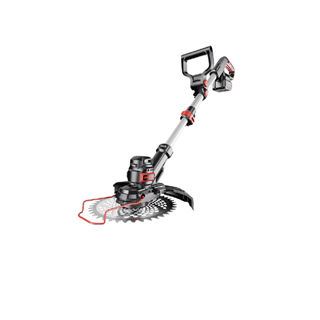
● Outdoor Power: Ruggedized components for lawnmowers and snowblowers.
● New Energy: Supporting the components needed for the hybrid revolution.
By mastering these categories, we allow our buyers to find precise replacements or engineering upgrades without having to "reinvent the wheel" (or the motor).
8. The Power of Community: Knowledge is the Ultimate Fuel
Henry Ford was a great believer in the exchange of ideas (even if he was a bit stubborn). He surrounded himself with thinkers like Thomas Edison and Harvey Firestone.
We’ve replicated this through the StarterStock Community. It’s more than a blog; it’s a knowledge exchange where global technicians, engineers, and hobbyists share:
● Maintenance Hacks: How to extend the life of a starter in high-dust environments.
● Selection Guides: Choosing the right kilowatt rating for high-compression engines.
● Industry Trends: Where the world of "smart motors" is headed.
We believe that when our users are smarter, the industry as a whole moves forward.
9. Conclusion: Will You Build the Next Legacy?
So, who started Ford Motor Company? A group of 12 investors, a pair of brilliant brothers, and one incredibly persistent (and occasionally difficult) man named Henry.
The story of Ford is proof that innovation requires a village—or more accurately, a supply chain. You have the vision. You have the drive. But do you have the parts?
At StarterStock, we’re here to make sure you never have to "crank" your business by hand. Whether you’re replacing a single motor or launching a new product line, we provide the global infrastructure to help you start something great.
Are you ready to stop searching and start building? Explore our verified supplier network today, or join our community to discuss your next technical challenge.