

-
112
-
2026-01-15 15:11:12
When you’re hunting for a used car, most folks zero in on the engine and transmission. Makes sense—they’re big-ticket parts. But a lotta people sleep on the alternator. That’s your car’s power hub, y’know? It keeps the battery juiced and runs all the electric stuff: lights, AC, the radio. If it craps out, you’re stuck on the side of the road. And it might kill your battery or fry other parts too. For used cars, how beat up the alternator is tells you how the car was treated. Nail these checks, and you won’t end up with a lemon.
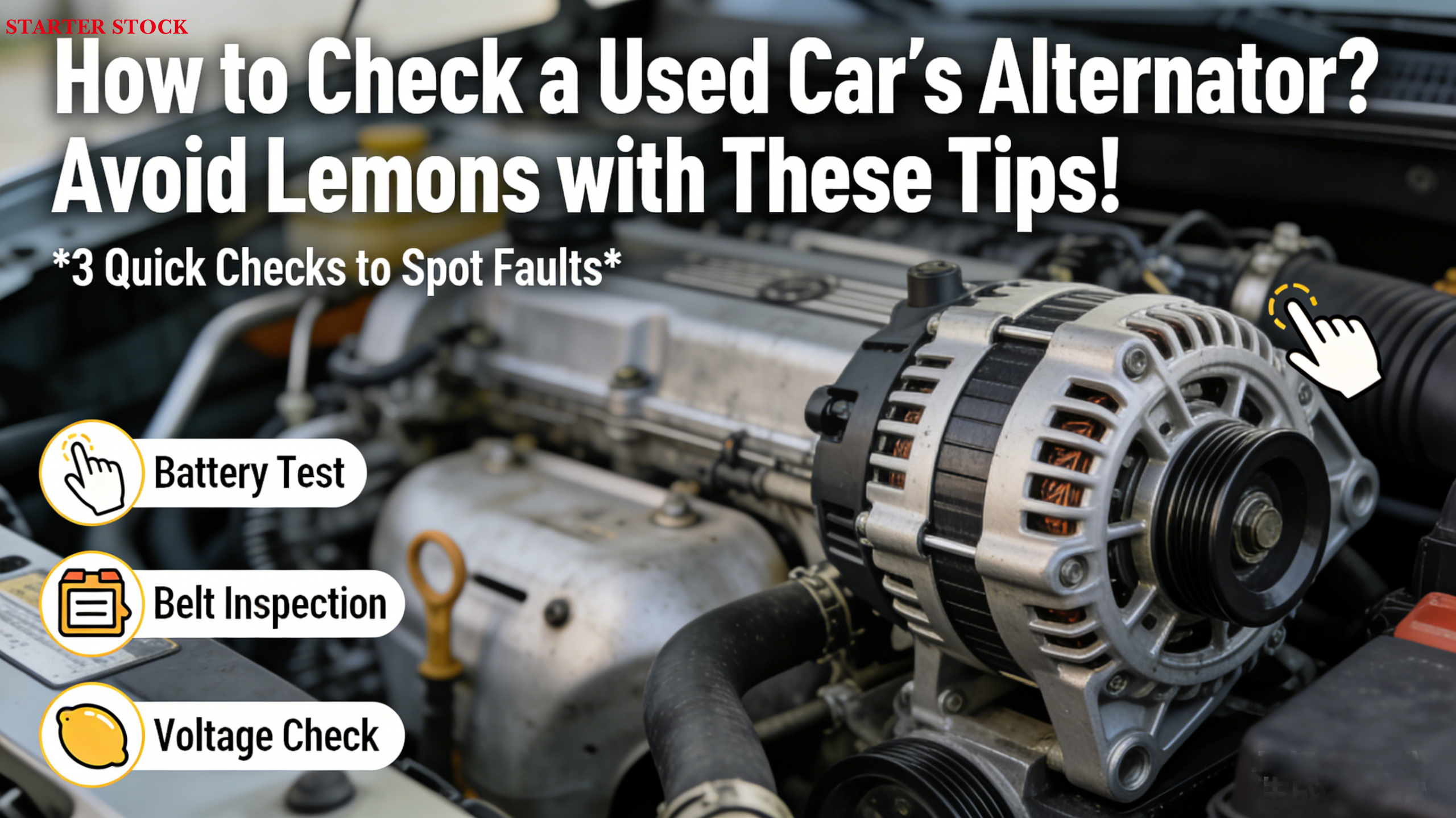
I. First Off—Why the Alternator Matters So Much
1. It’s non-negotiable: Once the car starts, the alternator’s powering everything. No alternator? No working headlights, no AC, nothing. And it recharges the battery—super important.
2. Fixes are pricey: A new factory alternator? Could run you thousands. If it dies sudden, you’re paying for a tow too. And it might mess up other parts, costing even more.
3. It’s a车况 clue: A beat-up alternator usually means the car wasn’t taken care of. A clean one? Way better sign.
II. Step 1: Look It Over (No Tools Needed)
First, find the alternator. It’s in the engine bay, hooked to the engine with a belt. Usually has “ALT” on it—hard to miss. Check these four things:
1. The Case: Any Dents or Damage?
● What to spot: Dents, cracks, or paint that’s chipped off bad.
● Bad sign: If the case is banged up, the car probably had a crash. Or the mechanic was rough with it. Inside parts are probably messed up too.
2. The Terminals: Green or White Gunk?
● What to check: The metal posts where wires plug in. They should be clean—no green or white powder.
● Bad sign: That gunk’s corrosion. Means either the connection’s bad, or the alternator’s leaking fluid. The inside coils are probably shot too.
3. The Belt: Tight Enough? Worn Out?
● Tightness: Press the middle of the belt. Should give about 1 to 1.5 inches. Too loose, it won’t make enough power. Too tight, it’ll wear out the bearings fast.
● Wear: If it’s cracked, frayed, or covered in oil—replace it soon. Or the alternator’s leaking, which is worse.
4. The Bolts: Been Taken Apart?
● What to look for: Scratches on the bolts that hold the alternator down. That means someone took it off.
● Ask this: “Why’d you take the alternator out?” If they hem and haw, walk away. Don’t let ’em hide problems.
III. Step 2: Test It (Make Sure It Works)
If it looks good, test it out. Three ways—easy to hard:
1. The Dashboard Light: Quick Check
● Before starting: The battery light on the dash should come on. That’s normal.
● After starting: Light gotta go off right away. If it stays on, flickers, or pops on while driving—alternator’s bad.
2. Multimeter Test: Get Exact Numbers (Bring One If You Can)
● How to do it: Start the car, let it idle. Set multimeter to DC voltage. Red lead on battery positive, black on negative.
● Good range: 13.5 to 14.5 volts. Below 13? It’s not charging the battery. Above 15? It’s overworking—will ruin the battery and electronics.
● Extra test: Turn on AC and headlights (uses lots of power). Voltage should stay steady—don’t let it drop more than 0.5 volts. Big swings mean the regulator’s broken.
3. Listen to It: Weird Noises = Trouble
● Good sound: Smooth hum, no extra noise.
● Bad sounds: Squealing? Bearings are worn out. Tapping? Coils loose inside or a worn commutator. Either way, it’ll die soon.
IV. Step 3: Get Backup (Don’t Trust Just Yourself)
Not a car pro? No problem. Use these tricks:
1. Service Records: See Its Past
● Ask for: Dealer service papers or third-party reports. Don’t take “I lost ’em” for an answer.
● What to want: A recent alternator replacement (from a real shop) is better than an old one. If it’s been fixed multiple times? Run.
2. Mechanic Check: Worth Every Penny
● Do this: Take the car to a mechanic for a load test.
● Why: They can test how well it works under different loads. They’ll check brushes and rectifiers too—parts that tell how much life’s left.
3. Check the Battery Too: Don’t Mix Up Problems
Batteries over 3 years old start to fail. Even a good alternator can’t fix that. A dead battery might seem like an alternator issue, so test both together.
V. Quick Recap: Alternator Check Rules
Look: Case, terminals, belt, bolts. Test: Light, voltage, noise. Backup: Records, mechanic. Cover all this, and you’re set.
With used cars, the small stuff shows the real story. Don’t skip the alternator ’cause it’s not flashy. Ten minutes checking now saves you thousands later—and keeps you from being stuck. Remember: Used car = no surprises. That’s the goal.