
-
106
-
2026-01-16 10:32:39
Drive chains are one of those parts that everyone thinks they understand, until problems keep coming back. In theory, a chain is simple. In reality, it’s one of the most abused components on a motorcycle.

Most chains don’t fail because of a single mistake. They fail because small issues are ignored for too long.
Chains usually start wearing long before anyone notices
In workshops, it’s common to hear riders say the chain “suddenly” got noisy or started jerking. The truth is, nothing sudden happened.
Chain wear starts quietly. It might be a little extra slack one week, a bit of vibration the next. Because the bike still moves normally, no one pays attention. By the time the chain becomes obvious, the wear has already settled in.
This is why many chains are replaced too late—and why some new chains don’t last as long as expected.
Lubrication is often done, but not done well
Most riders lubricate their chains. The problem is how and when.
A very common habit is spraying lubricant before riding. It feels logical, but in practice, the lubricant gets thrown off quickly once the chain heats up. Whatever remains collects dust.
Another issue is using too much lubricant. A chain covered in sticky oil looks protected, but on dusty roads it turns into a grinding surface. Over time, dirt works its way past the seals and the damage starts inside.
Good lubrication is boring. It doesn’t drip, it doesn’t shine, and it doesn’t attract attention.
Tension problems are more common than broken chains
Broken chains are rare. Incorrect tension is not.
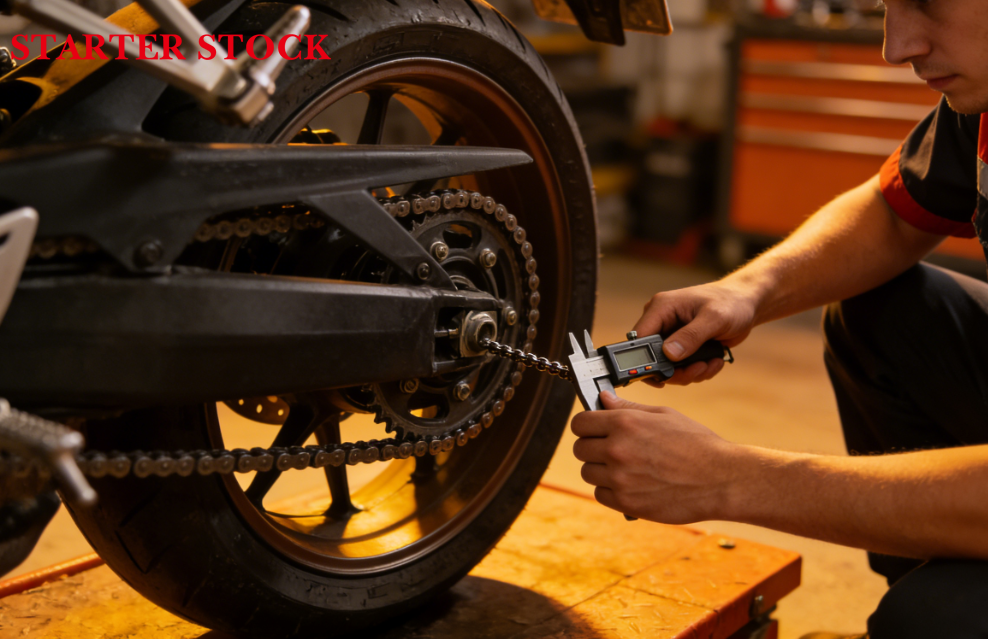
Chains that are adjusted too tight are under constant stress. Chains that are too loose get hammered every time the throttle is opened or closed. Both situations shorten chain life, just in different ways.
What makes this tricky is suspension movement. A chain that looks fine on a stand may be too tight once the bike is loaded. Many riders never check this, and many chains pay the price for it.
Alignment is usually “close enough”
Rear wheel alignment is often done by eye or by marks on the swingarm. Those marks are not always accurate.
A slightly misaligned wheel doesn’t cause immediate problems. Instead, it slowly forces the chain to run at an angle. Rollers wear unevenly. Seals deform. Eventually, the chain starts stretching in sections.
Once that uneven wear sets in, no amount of adjustment brings the chain back to smooth operation.
Weather and road conditions do more damage than mileage
Two bikes with the same mileage can have completely different chain conditions.
Rain, road salt, sand, and dust all attack the chain in ways that lubrication can’t fully prevent. Riding through water without re-lubricating afterward is especially hard on sealed chains.
Corrosion often starts inside the links. By the time rust shows outside, internal wear is usually already there.
The first signs are easy to dismiss
Early chain wear rarely looks dramatic.
It might show up as:
Slight vibration at steady speed
Uneven slack when turning the wheel
A faint clicking sound
A few stiff links that keep coming back
These signs don’t stop the bike from running, so they’re often ignored. Unfortunately, they don’t go away on their own.
Chains and sprockets don’t age separately
Replacing only the chain while keeping old sprockets is a common shortcut. It rarely works well.
Worn sprockets don’t always look damaged. Tooth profiles change slowly. A new chain on worn teeth never seats properly, and wear accelerates immediately.
In many cases, this is why a “new” chain feels worn much sooner than expected.
Quality differences show up later, not immediately
From a parts perspective, chain quality issues are hard to spot at first.
Many chains look fine out of the box. Problems appear after real use:
Uneven stretching
Early seal failure
Rapid tension changes
These issues are often linked to inconsistent materials or manufacturing tolerances. They don’t show up during installation, only after months of riding.
What actually helps chains last longer
There’s no trick, and no perfect chain.
What consistently helps is:
Lubricating after riding, not before
Checking tension regularly, not once
Cleaning gently and infrequently
Replacing chains and sprockets together
Using chains suited to actual riding conditions
Chains wear no matter what. The goal is to make that wear predictable, not sudden.
Knowing when it’s time to replace
At some point, maintenance stops helping.
If slack varies a lot, tight spots stay stiff, or vibration increases, replacement is usually the only sensible option. Waiting longer often leads to damage elsewhere, turning a simple replacement into a larger repair.
Final thoughts
Drive chains don’t fail randomly. They reflect how a bike is used, maintained, and set up over time.
For riders, understanding this avoids surprises. For workshops and parts suppliers, predictable wear is easier to manage than early failure. A chain that wears evenly and reaches a reasonable service life rarely causes complaints.
A good chain doesn’t make noise. It doesn’t draw attention. It just does its job—until it doesn’t anymore.