
-
87
-
2026-01-23 11:10:52
Brake pads are one of those motorcycle parts that everyone thinks they understand. They get worn, you replace them, end of story. In reality, brake pads cause more arguments, complaints, and repeat visits than many bigger components.
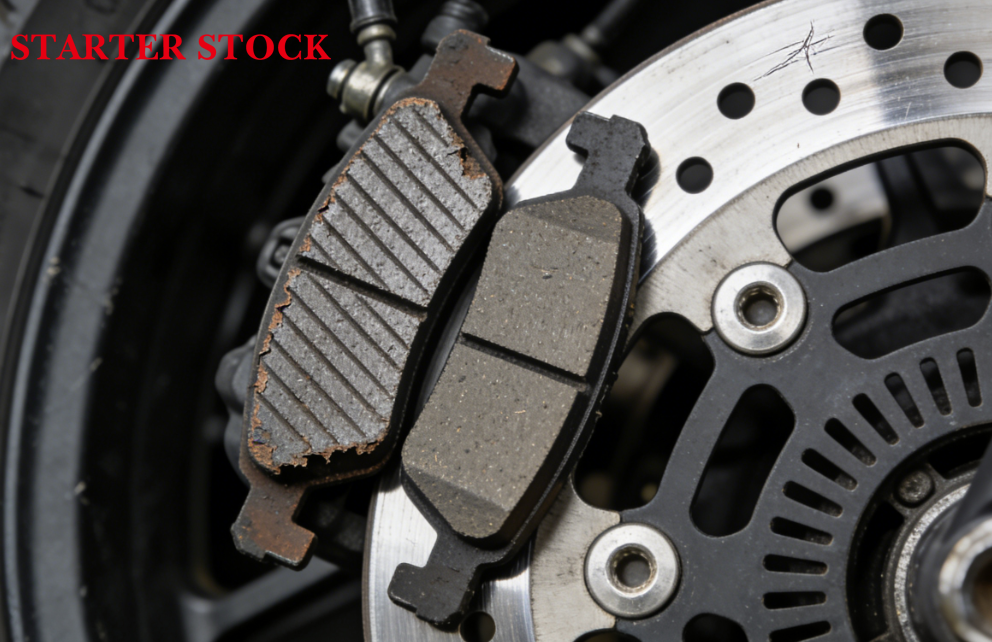
Noise and uneven wear come up all the time. Not dramatic failures. Just that annoying squeal when slowing down, or the moment when a mechanic pulls the pads out and notices one side is almost gone while the other still looks fine.
If you deal with motorcycles long enough, you start seeing the same situations repeat.
Most riders say the same thing: “The pads aren’t old.”
Most workshops say: “They were installed correctly.”
Both can be true.
Noise Usually Shows Up First
Almost nobody checks brake pads because they feel like it. People come back because the bike sounds wrong. Low-speed squealing, light scraping, sometimes a vibration through the lever. Braking power is still there, so the bike keeps getting ridden.
By the time the pads are removed, uneven wear is already visible.
That order matters. Noise comes first. Wear follows.
One Pad Always Tells the Story
If you want to understand uneven brake pad wear, don’t look at the pad material first. Look at the difference between the inner and outer pads.
When one pad is thinner, it usually means the caliper hasn’t been moving the way it should. Not seized, not broken—just not smooth anymore.
Dirt builds up. Heat cycles add up. Slide pins dry out. Pistons retract a little slower than they used to. None of this stops the brake from working, but it changes how pressure is applied.
That’s enough to create noise. And once heat builds on one side, wear speeds up fast.
Brake Discs Are Often “Accepted,” Not Inspected
In the real world, brake discs are reused until someone has a reason not to. If thickness is okay, they stay.
The problem is that thickness doesn’t tell the whole story.
A disc can look fine but still have light grooves, uneven wear zones, or old heat marks. New pads pressed against that surface don’t get a clean start. They follow whatever shape is already there.
That’s why some bikes start squealing right after new pads go in. The pads didn’t create the problem. They just revealed it.
Pad Material Isn’t the Villain People Think It Is
Hard pads get blamed for noise. Soft pads get blamed for short life. Both arguments miss the point.
What matters more is how the bike is used.
Short trips, city traffic, constant light braking—this is where noise usually shows up. The pads never really settle into a stable temperature range. Parts of the surface glaze, others don’t.
On bikes that do longer runs, the same pads can be quiet and wear evenly.
So when people say, “This pad is noisy,” the better question is: “On which bike, and how is it ridden?”
Installation Is Where Things Quietly Go Wrong
Most brake pad jobs are routine. That’s exactly why small things get skipped.
Caliper brackets aren’t always cleaned properly. Slide pins get reused dry. Old shims go back in because they “look fine.” None of this causes immediate trouble.
The bike leaves. Everyone is happy.
Weeks later, noise starts. The pads get blamed. By then, nobody connects it back to installation.
This cycle happens constantly in the aftermarket.
Why Replacing Pads Alone Rarely Fixes It
This is the part that frustrates riders the most. New pads go in, and the noise comes back.
From experience, that usually means the system wasn’t reset. The same caliper behavior, the same disc surface, the same riding pattern—only the pads changed.
Pads don’t work in isolation. They reflect everything around them.
Why This Becomes a Supply-Side Problem
For dealers and distributors, brake pad noise and uneven wear are exhausting issues. Even when the pads meet spec, complaints still arrive.
Explaining that the pad isn’t “bad” doesn’t help much. End users don’t want explanations. They want quiet brakes and reasonable lifespan.
This is why many buyers slowly move away from suppliers whose products are sensitive to conditions. Pads that only behave well in perfect setups cause too much after-sales noise.
Consistency matters more than claims.
What Actually Reduces Complaints
Over time, certain patterns become clear.
Brake pads that:
have stable friction at low temperature
use backing plates with tight dimensional control
tolerate less-than-perfect calipers
tend to generate fewer problems in the field.
They may not be the cheapest. They may not look impressive on paper. But they behave predictably once they’re out there.
That predictability is what keeps customers from coming back angry.
Final Note
When motorcycle brake pads exhibit noise and uneven wear, it’s almost never just one mistake. It’s small factors stacking up—usage, installation, system condition, and part behavior.
People who deal with these issues daily stop looking for “perfect pads.” They look for pads that work well enough across real motorcycles, real riding habits, and real workshops.
That mindset is usually what separates short-term fixes from long-term solutions.