
-
103
-
2026-01-27 14:24:12
Table of Contents
1. The "Single Click" Nightmare: An Introduction
2. The Expert's Compass: Why Physics Dictates the Location
3. The "Follow the Red" Method: Tracing the Main Artery
4. Geography by Vehicle Type: Where They Hide the Goods
a. Rear-Wheel Drive (RWD) Trucks & Muscle
b. Front-Wheel Drive (FWD) Transverse Cramp
c. The "Valley" Trap: V6 and V8 Secret Compartments
5. Powersports & Marine: Smaller Gears, Tougher Environments
a. ATVs, UTVs, and the Mud Factor
b. Outboards and the Saltwater Battle
6. Why Locating It is Only Half the Battle
7. StarterStock: Fixing the Broken Parts Sourcing Loop
a. Small-Batch Freedom for Real Innovators
b. Vetting the Factory, Not Just the Catalog
c. Transparency: Ending the "Black Box" Order
8. The "While You're There" Diagnosis: Don't Swap Too Fast
9. Conclusion: Motion Starts with a Trusted Partner
1. The "Single Click" Nightmare: An Introduction
We’ve all been there. You’ve got the coffee, the keys are in the ignition, and you’re ready to roll. You turn the key, and instead of the engine roaring to life, you get that lonely, metallic clack. That’s the sound of a dead end. Once you’ve verified your battery isn't a paperweight, your eyes naturally wander to the engine bay, hunting for that heavy, cylindrical brawler: the starter motor.
But here’s the rub: finding the starter isn't always like finding the oil dipstick. As someone who’s spent years knee-deep in engine swaps and industrial maintenance, I’ve seen starters tucked into places that would make a contortionist cry. Whether you're a DIYer stuck in a driveway or a procurement lead at a hardware startup, you need to know exactly where this beast lives.
At StarterStock, we’re obsessed with the "how" and "where" of motors. We don’t just move boxes; we understand the hardware. Let’s map this out so you can stop staring at the intake manifold and actually get to work.
2. The Expert's Compass: Why Physics Dictates the Location
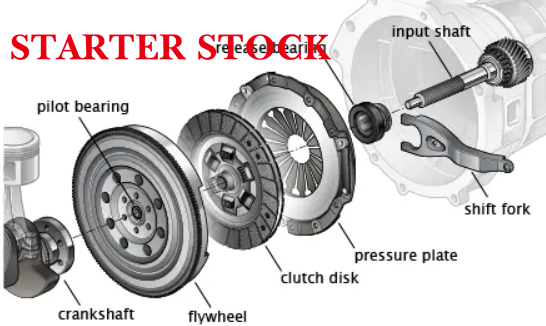
You don’t need to be a mechanical engineer to find a starter, you just need to understand its job. The starter motor has one goal: to spin the flywheel (the big, geared disc at the back of the crankshaft). Because the flywheel is massive and requires huge torque to turn, the starter has to be right next to it.
The Golden Rule: Look for the "Bellhousing." This is the flared part of the transmission that bolts to the engine block. The starter motor will almost always be bolted right into that circular perimeter. If you find where the engine meets the transmission, you’ve found the starter's neighborhood.
3. The "Follow the Red" Method: Tracing the Main Artery
If you’re looking at a modern, wire-heavy engine bay, the bellhousing might be buried under five layers of plastic and hoses. Don't panic. Follow the juice.
Locate your battery. Find the thickest, meanest-looking red cable attached to the positive (+) post. One lead goes to the fuse box, but the main "umbilical cord" goes directly to the starter solenoid. This is a heavy-duty copper line because it has to carry hundreds of amps. Trace that cable with your hand or a flashlight, and it will lead you straight to the solenoid sitting on top of the starter motor.
4. Geography by Vehicle Type: Where They Hide the Goods
Rear-Wheel Drive (RWD) Trucks & Muscle
On your classic F-150s, Silverados, or old-school RWD cars, the engine sits "North-South." This is the easiest scenario. Crawl under the vehicle, look at the passenger side (usually) near the back of the engine block. There it is—a heavy black or silver cylinder held on by two or three beefy bolts. You can usually have it out in 20 minutes.
Front-Wheel Drive (FWD) Transverse Cramp
Most modern sedans have "sideways" engines. Space is a nightmare here. The starter is often "sandwiched" between the engine block and the radiator, or tucked way back against the firewall. You might have to yank the airbox or the battery tray just to see it. It’s a game of "blind-wrenching" in these setups.
The "Valley" Trap: V6 and V8 Secret Compartments
Some engineers (I’m looking at you, Lexus and Cadillac) decided that the most "efficient" place for a starter was in the valley between the cylinder banks, tucked right under the intake manifold.
If you’re looking at your engine and you see the battery cable disappearing into the center-top of the block, you’ve got a "Valley Starter." It’s great for heat protection, but it means you’re pulling the entire top of the engine off just to reach it. It’s a high-stakes job where you don't want to use a cheap, unverified part.
5. Powersports & Marine: Smaller Gears, Tougher Environments
This is where the StarterStock specialized network really comes into play.
● ATVs and UTVs: These starters are compact but rugged. They’re usually mounted low on the crankcase, often hidden behind a CVT cover or a skid plate. Because they get dunked in mud and water, they rely on high-grade internal seals that cheap "white-box" parts just don't have.
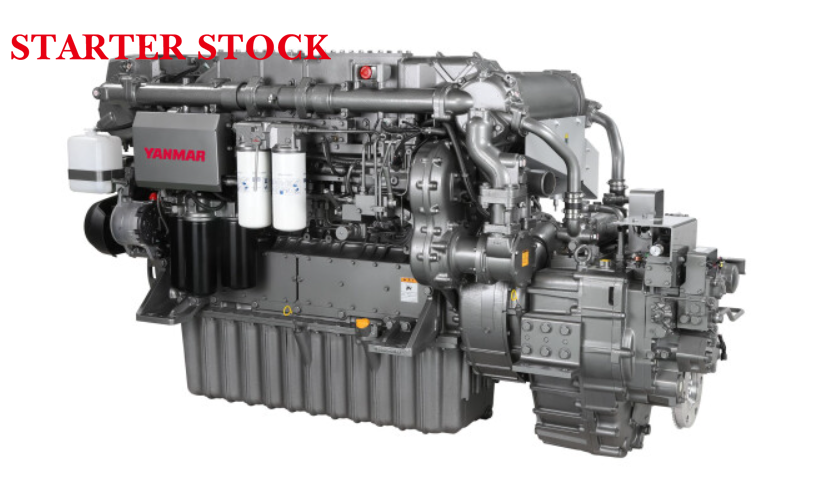
● Marine Engines: Outboards have the starter mounted vertically under the top cowling, engaging the flywheel at the top of the powerhead. Inboards are more like cars, but they must be ignition-protected. A regular car starter on a boat can spark and blow your bilge (and your boat) to smithereens.
6. Why Locating It is Only Half the Battle
Finding the motor is easy. Sourcing a replacement that won't leave you stranded again in three months is the real trick. Traditionally, you had two bad options:
1. The Dealer Tax: Paying 400% markup for an OEM part that takes three weeks to arrive.
2. The Online Roulette: Buying the cheapest thing on a massive marketplace and praying the "copper" windings aren't actually aluminum.
In hardware development and fleet maintenance, "cheap" is actually the most expensive thing you can buy when you factor in the labor of doing the job twice.

7. StarterStock: Fixing the Broken Parts Sourcing Loop
We didn't build StarterStock just to be another middleman. We built it to be a filter for innovators, fleet managers, and serious mechanics who are tired of the "flip-of-the-coin" quality in global sourcing.
Small-Batch Freedom for Real Innovators
If you’re building a prototype for a new solar-powered ag-drone or a custom line of off-roaders, you don't need 10,000 units. But try calling a Tier-1 factory and asking for 20 starters—they won't even put you on hold. We’ve spent years building a network of elite suppliers who are ready to serve small-batch orders. We empower the innovators who are iterating fast and need 10, 50, or 500 units without the "big factory" headache.
Vetting the Factory, Not Just the Catalog
We aren't an open bazaar. Every supplier on StarterStock is audited. We check their technical specs, their factory clean-room standards, and their historical defect rates. When you source a motor through us, you’re accessing a curated "inner circle" of global manufacturers who actually know how to wind an armature.
Transparency: Ending the "Black Box" Order
The old way of sourcing meant sending a wire transfer and hoping for the best. With us, you get:
● Direct Engineering Access: Talk to the people who know the technical specs.
● Pre-Shipment Inspection: We offer professional third-party inspections to verify quality before the crate leaves the dock.
● Trade Support: We handle the logistical "dark arts" so you can focus on building your product.
8. The "While You're There" Diagnosis: Don't Swap Too Fast
Before you yank the starter, do some field testing.
● The Hammer Trick: If it won't crank, give the starter body a firm (but not destructive) tap with a hammer while someone turns the key. If it fires up, your internal brushes are shot.
● Voltage Drop: Check your ground straps. A rusty ground wire will make a perfect starter look like a dead one.
● Heat Soak: Does it start fine cold but fail when the engine is hot? That’s a sign of cheap internal insulation—a classic failure in unvetted parts.
9. Conclusion: Motion Starts with a Trusted Partner
Finding your starter is the first step in mastering your machine. But the source of that part is what determines whether your project is a success or a recurring headache.
Whether you’re design-engineering a new amphibious UTV, maintaining a rental fleet of mowers, or fixing your daily driver, you deserve better than "good enough."
Join the StarterStock community. Explore our mature network of motors, relays, and regulators. Let’s stop gambling on core components and start building legacies.
Dealing with a weird engine layout or a high-compression prototype? Drop me a line—I can help you match specs or get you a custom quote from our verified supplier list.