
-
74
-
2026-01-27 14:38:06
Table of Contents
The Two-Second Revolution: An Introduction
The Definition: A Bridge Between Electricity and Fire
The Anatomy of the "Kick"
The Solenoid: More Than Just a Switch
The DC Motor: Engineered for the Sprint
The Bendix Drive: The One-Way Gatekeeper
Why Can't the Engine Start Itself?
The Modern Spectrum: From ATVs to Industrial Generators
The Procurement Trap: Why "Cheap" Motors Cost More
StarterStock: Empowering the Next Generation of Mechanical Visionaries
Quality Vetting: Beyond the Data Sheet
Small-Batch Agility for Prototypes
Global Transparency as a Standard
The Future of Starting: Smart Motors and Beyond
Conclusion: Motion Starts with Precision
1. The Two-Second Revolution: An Introduction
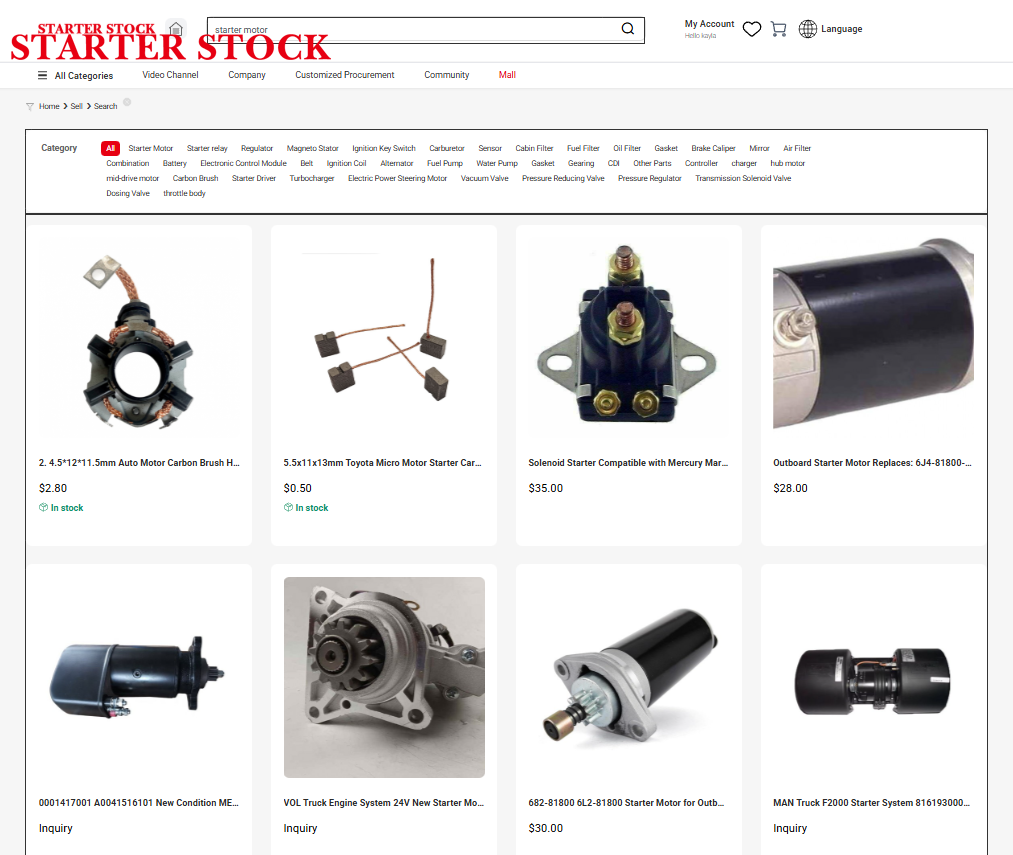
We rarely think about it, but the most violent event in a machine's daily life happens right at the beginning. You turn a key or press a button, and a cold, heavy assembly of metal pistons and oil-coated gears is forced to accelerate from zero to a thousand rotations per minute in a heartbeat.
As someone who has spent years dissecting the guts of rotating electrical systems, I’ve always found the starter motor to be the ultimate mechanical underdog. It’s a component that stays dormant 99% of the time, yet without its high-torque "shove," even the most powerful V8 or industrial turbine is nothing more than an expensive paperweight.
At StarterStock, we don't just see a spare part; we see the core of every successful engine cycle. Let’s break down what this device actually is and why it’s the most critical link in your machine's supply chain.
2. The Definition: A Bridge Between Electricity and Fire
In its simplest terms, a starter motor is an electromechanical converter. It takes the chemical energy stored in your battery (electricity) and converts it into mechanical energy (torque).
Think of it as the "bridge" between two worlds. One side is the quiet, digital world of batteries and relays; the other is the loud, chaotic world of internal combustion. The starter's job is to throw the engine over the "combustion hump"—spinning it fast enough for the spark plugs to fire and the fuel to ignite so the engine can finally take over and run under its own power.
3. The Anatomy of the "Kick"
A starter isn't just a simple motor like the one in your ceiling fan. It’s a sophisticated "power-sprint" system composed of three main parts:
The Solenoid: More Than Just a Switch
This is the smaller cylinder sitting on top. It acts as a massive relay that handles the hundreds of amps required by the motor. But it has a physical job, too: when energized, it fires a plunger forward to engage the starter’s gear with the engine’s flywheel.
The DC Motor: Engineered for the Sprint
Unlike industrial motors designed for 24/7 use, a starter is a "short-duty" beast. It uses thick copper windings and heavy-duty magnets to produce massive torque in short bursts. At StarterStock, we vet our suppliers specifically on the quality of these internal windings, as "copper-robbing" (using thinner wire) is the #1 cause of heat failure.
The Bendix Drive: The One-Way Gatekeeper
Once the engine fires, it instantly spins much faster than the starter. If the starter stayed connected, the engine would spin it so fast it would explode. The Bendix drive (or overrunning clutch) allows the starter gear to retract instantly, protecting the motor from the engine's power.
4. Why Can't the Engine Start Itself?
Internal combustion engines are "static" by nature. They rely on the movement of pistons to create vacuum and compression to pull in air and fuel. Until they are moving, they are essentially dead metal.
Back in the early 1900s, humans were the starter motors—physically turning a hand crank to get the pistons moving. It was dangerous and exhausting. The electric starter motor changed everything, turning the automobile from a specialist's tool into a universal consumer product.
5. The Modern Spectrum: From ATVs to Industrial Generators
While the physics are the same, the application changes everything. This is where a mature supply network becomes vital.
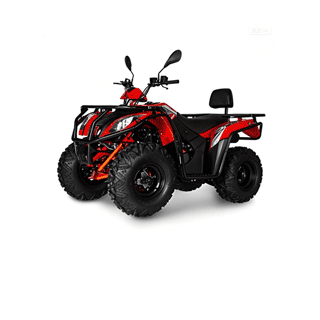
Powersports: Starters for UTVs and Jet Skis must be tiny but incredibly well-sealed against water and mud.
Marine: These require "ignition protection" to ensure they don't spark in a fuel-heavy bilge environment.
Industrial: Large generators might use pneumatic or high-voltage electric starters that can turn over engines the size of a small house.
6. The Procurement Trap: Why "Cheap" Motors Cost More
For procurement specialists and engineers, the market is a minefield. You can find starters online for $40, but as we often say in the shop: "If it’s too cheap, you’re buying it twice."
Low-quality starters use recycled magnets that lose their pull when hot and solenoids with plastic internals that melt under high-load cycles. In a fleet environment or a new product launch, a 5% failure rate isn't just a nuisance—it’s a brand-killer.
7. StarterStock: Empowering the Next Generation of Mechanical Visionaries
We built StarterStock to fix a broken industry. Traditionally, you were stuck between overpriced OEM monopolies and the "Wild West" of unverified global factories. We offer a third way.
Quality Vetting: Beyond the Data Sheet
We don't just look at a factory's catalog. We audit their technical precision. We ensure our suppliers use the correct grade of copper and high-durability brushes. When you source through us, you’re accessing a curated "inner circle" of manufacturers who actually understand rotating electrical gear.
Small-Batch Agility for Prototypes
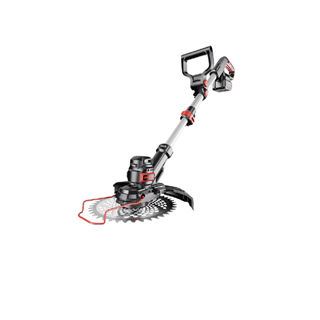
Are you building 10 units of a new hybrid mower? Most Tier-1 factories won't even talk to you. StarterStock specializes in small-batch orders, connecting innovators with elite factories that are willing to grow with your vision.
Global Transparency as a Standard
The "Black Box" era of sourcing is over. We provide integrated trade support and third-party inspections. You’ll know exactly what’s in the crate before it leaves the dock, from technical certifications to logistics tracking.
8. The Future of Starting: Smart Motors and Beyond
As we move toward hybrid systems and "start-stop" technology (where the engine shuts off at every red light), the starter motor is becoming even more advanced. Modern starters are now designed for hundreds of thousands of cycles, often integrated with the alternator into a single "ISG" (Integrated Starter Generator) unit.
Staying ahead of these trends is what we do. Our community isn't just about parts; it’s about the knowledge required to keep pace with the evolution of motion.
9. Conclusion: Motion Starts with Precision
A starter motor might be hidden away in a dark corner of your engine bay, but it is the gatekeeper of your machine's utility. Without it, you aren't going anywhere.
At StarterStock, we’re dedicated to ensuring that when you hit that button, the result is motion—not silence. Whether you're a hobbyist, a fleet manager, or a lead engineer, you deserve a sourcing partner that values technical integrity as much as you do.
Building a new project or managing a complex fleet? Join the StarterStock community today. Let’s talk about your specs and find the verified supplier that fits your scale.