

-
71
-
2026-01-30 14:04:56
The alternator is like the car's power heart. Doing your own check save money, but newbies always mess up. Below are the main mistakes and how to not do them, split into steps. Easy to follow, help you check right quick.
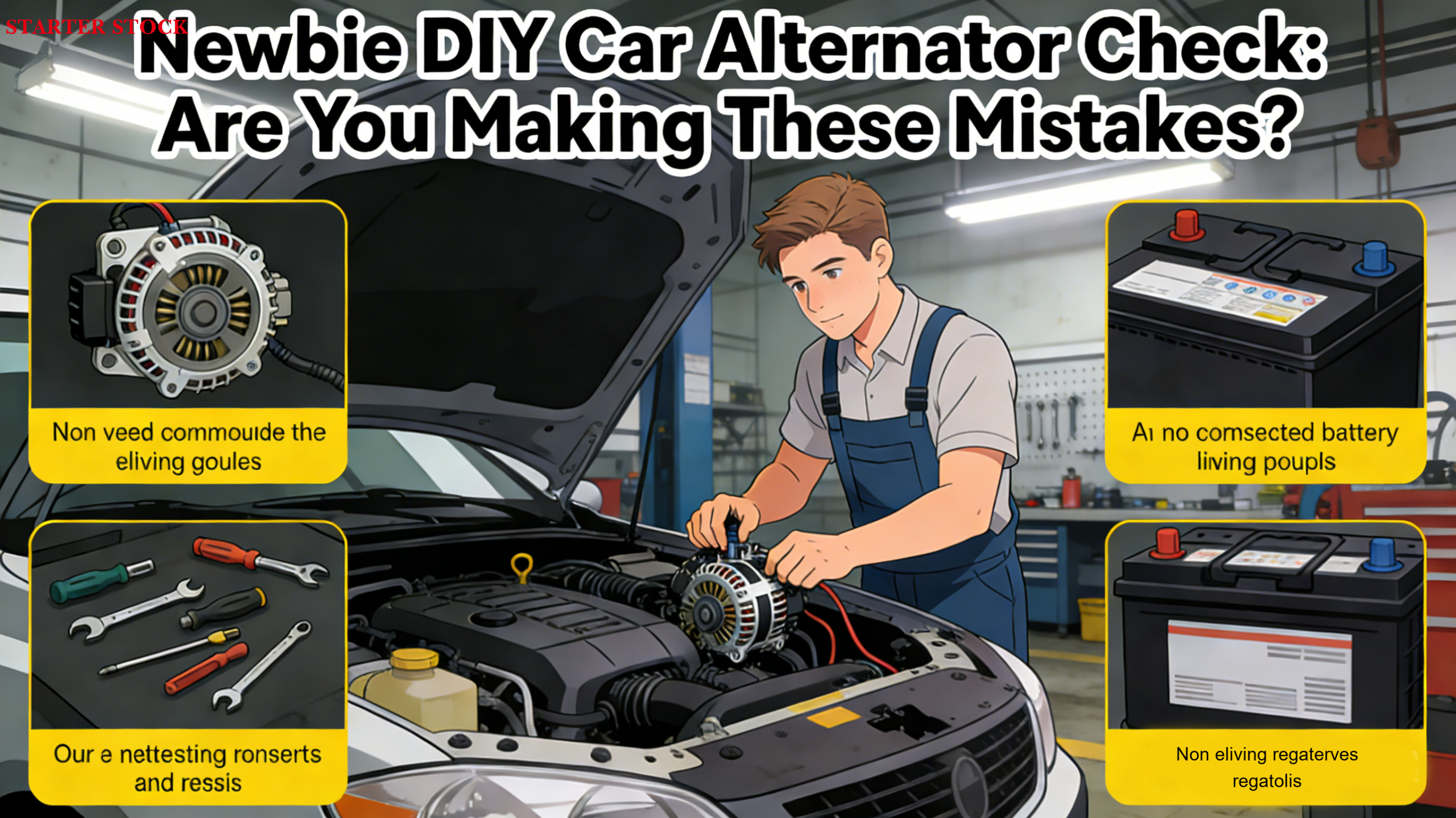
1. Prep Work: Tools and Safety Blunders
1.1 Mistake: Use a Multimeter That's Not Calibrated
Cheap or old multimeters aren't accurate. They make you think there's a problem when there isn't, or miss real issues. Then you waste money on repairs, or car break down on road.
How to avoid: Get a decent digital multimeter. Before test, check it with a battery that voltage you know. For voltage test, use DC mode, set range to 0-20V.
1.2 Mistake: Forget Safety Stuff
Not turn off power or wear protection can get you shocked, scratched by moving belts, even start a fire in the wires.
How to avoid: Wear insulated gloves, tight clothes. Before disconnect any wires, turn off engine and unhook the negative battery cable. Stay away from belts and fans that moving.
2. Checking Steps: Big Mistakes When Testing
2.1 Mistake: Ignore Battery Condition When Testing Static Voltage
Measure voltage right away, not think about if battery is old or dead. That make you judge wrong.
How to avoid: Let car sit 2 hours at least before test. A normal 12V battery's static voltage should be 12.3 to 12.7V. If lower, charge battery first then check again.
2.2 Mistake: Not Turn On Electrical Things During Dynamic Test
Only test voltage when no lights or AC on. Can't find small problems, like broken rectifier.
How to avoid: Test two times. No load voltage normal is 13.5-14.7V. Turn on big power things (lights, air con), voltage should stay steady between 13.0-14.5V.
2.3 Mistake: Guess Belt Tension by Hand / Not Check Aging
Feel the belt to see if tight, easy wrong. Forget check cracks or peeling, make alternator not generate enough power.
How to avoid: Press middle of belt. Bend 5-10mm is normal. Check belt surface too—if look old or broken, replace it at once.
2.4 Mistake: Pull Wires Randomly and Mix Up Terminals
Yank plugs hard or connect terminals wrong. Can burn alternator or car's computer.
How to avoid: Don't disconnect wires unless you have to. Take photos of how they connected before take apart. Check car manual to know what each terminal do. Handle plugs soft, don't break the clips.
3. Judge Results: Mistakes with Data and Little Signs
3.1 Mistake: Decide by One Voltage Reading
Ignore voltage changes. May think bad alternator is good, or good one is bad.
How to avoid: Take several measurements, average them. Watch voltage 1-2 minutes during dynamic test—changes within 0.5V is normal.
3.2 Mistake: Only Look at Voltage, Ignore Strange Things
Not notice weird noises, burning smell, or dashboard warning lights. Miss hidden problems, like worn bearings or hot coils.
How to avoid: Listen for buzzing, smell for burning when test. If battery warning light stay on or lights flicker, check more even if voltage normal.
4. Key Tips for Newbies
● Use good tools: Calibrated digital multimeter, right range and mode
● Safety first: Wear insulation, stay away moving parts, turn off power before work
● Follow steps: Static test first, then dynamic; no load first, then with load
● Don't guess: Use more data and strange signs
● Stop if unsure: Don't force take apart if don't know fault—send to repair shop quick