
-
83
-
2026-01-30 15:03:07
Car generator work bad in super hot, cold, or high places. Bad weather can break parts and stop power. Follow these easy tips, keep it running good.
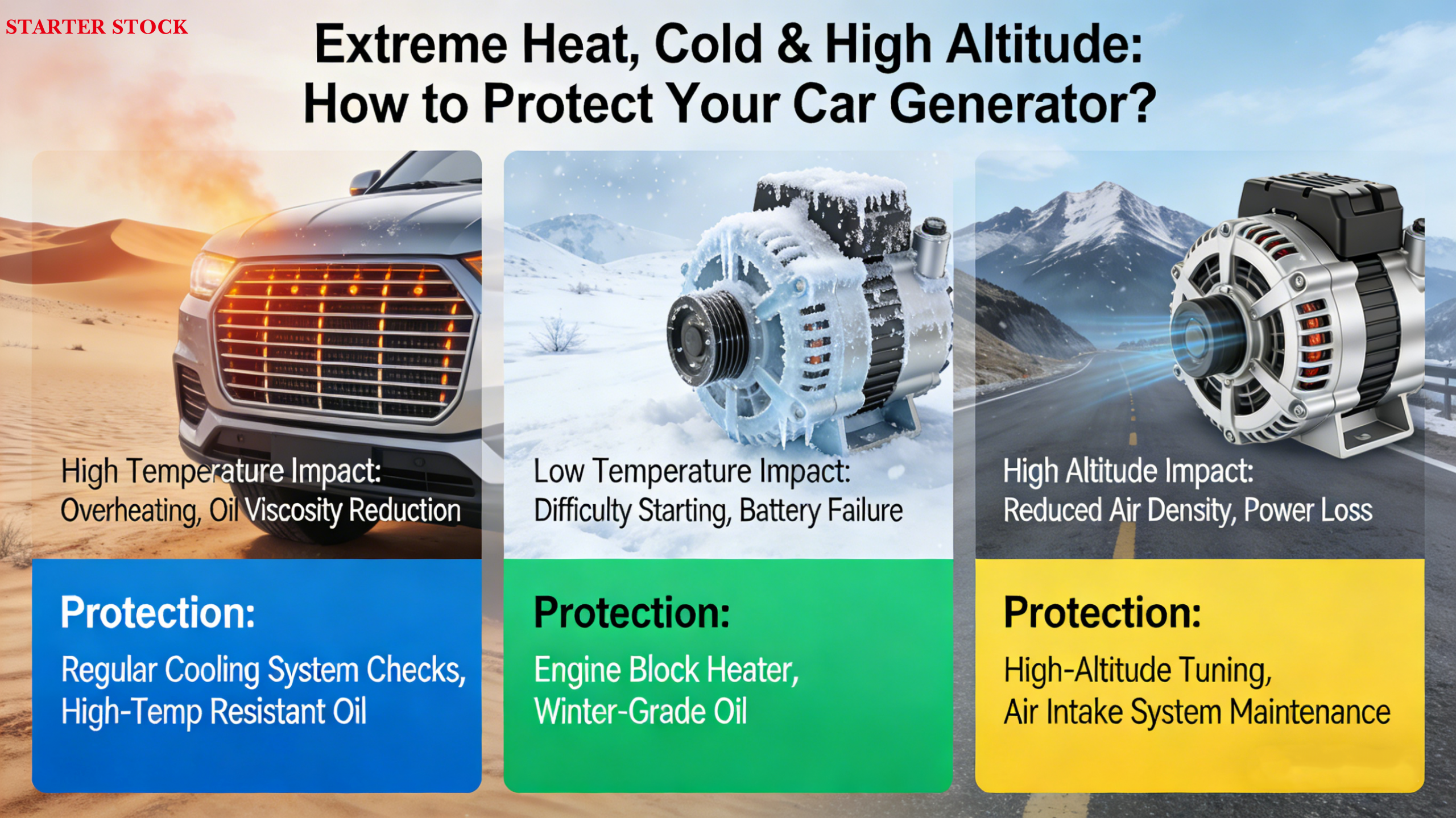
I. Hot Weather: Keep It Cool
Hot sun or tight spaces make generator hard to cool. Oil get thin, coils wear fast, battery die quick. Just focus on cooling it.
(1) Before Use
1. Check cooling system: Wipe dirt off radiator, make sure air can pass. Water-cooled ones, add same coolant—don’t use tap water. Air-cooled, check fan spin normal, blades not bent or loose.
2. Use right oil: Change to oil that handle heat, like 5W-40 or 10W-40. Check oil level, not too low or high.
3. Find good spot: Put in shade, windy place. Leave 1 meter space around. Keep far from things that catch fire.
(2) When Using
1. Don’t overload: Keep load 70%-80% of rated power. Too much load make it hot fast.
2. Watch temperature: Keep eye on warning light or gauge. Hit 90-100℃, turn off right away to cool. No gauge? Touch case (be careful burn) or look exhaust color—weird color, stop using.
3. Don’t start-stop nonstop: Need pause, let it idle 1-2 minutes first. Wait at least 5 minutes before start again.
(3) After Use
1. Clean cooling system after cool down: Rinse radiator or brush dust from fan cover.
2. Check oil and coolant: Oil dirty or thick, change it. Water-cooled ones, check for leaks, top up coolant if need.
3. Check battery: Look for bulges or leaks. 12V battery voltage below 12.3V, charge right away.
II. Cold Weather: Warm It First
Cold below -10℃ make generator hard start, parts wear fast, fuel even freeze. Just focus on warm it up and keep warm.
(1) Before Use
1. Use cold-weather oil and fuel: Pick oil flow good in cold, like 0W-30 or 5W-30. Diesel generators, use right diesel grade for temperature. Gasoline ones, make sure no water in fuel (water freeze).
2. Keep battery warm and charged: Bring battery inside to keep from freeze, charge full before use. Can’t move? Wrap with insulation cover. Clean battery terminals, put little conductive paste on them help start.
3. Warm engine: Water-cooled generators, add warm coolant or turn on preheater if have. No preheater? Spray little starting fluid (don’t use too much!) help start.
4. Check hoses and seals: Cold make rubber brittle. Look for cracks in fuel hoses and coolant lines. See cracks, replace before use.
(2) When Using
1. Idle longer: Start, let run 3-5 minutes before add load. Wait until water temp hit 60℃ and oil pressure steady.
2. Don’t overload: Keep load 70%-80% of rated power. Don’t switch loads on-off a lot—make engine temp jump.
3. Prevent freeze: Make sure coolant have enough antifreeze (usually 50/50 mix work for -35℃). Leave in cold long time, drain coolant (if not long-lasting antifreeze) or add enough antifreeze to keep from freeze.
(3) After Use
1. Clean snow and ice: Warm up a little, rinse snow and ice—don’t let melt and freeze again inside.
2. Take care battery: Charge right after use, bring inside keep warm. Non-sealed batteries, add distilled water if level low.
3. Check oil and fuel: Oil look bad, change it. Fill diesel tank full cut down condensation (water build up). Gasoline generators, make sure fuel line no water.
III. High Altitude: Lighten the Load
Above 2000 meters, air thin—less oxygen make engine burn fuel bad. Power drop, fuel use more, carbon build up fast. Just focus on lighten load and adjust fuel mix.
(1) Before Use
1. Adjust fuel system: Carburetor generators, tweak fuel-air mix add little more fuel (thin air need more fuel burn right). EFI generators, check if ECU can adjust for high altitude—no, take to shop tune.
2. Use right oil: Pick fully synthetic oil handle heat good, like 5W-40 or 10W-40. Thin air make engine run hot, good oil important.
3. Clean air filter: Dirty filter make thin air problem worse. Replace if clogged, let engine get enough air.
4. Protect from dust and sun: High altitude have strong UV and much dust. Put dust cover when not use, don’t leave in direct sun hours.
(2) When Using
1. Lighten load a lot: Keep 50%-60% of rated power. Every 1000 meters higher, generator lose 10%-15% power—overload kill it fast.
2. Keep engine speed steady: Start, idle 2-3 minutes, add load slow. Don’t rev up or shut off sudden—make carbon build up faster.
3. Watch trouble signs: Exhaust black smoke, mean burn fuel bad. Case too hot, turn off check air filter or fuel mix. Clean spark plugs often—carbon build up quick at high altitude.
(3) After Use
1. Clean air and exhaust parts: Take out air filter, tap dust out or replace if dirty. Clean carbon from exhaust pipe and muffler—too much carbon clog it.
2. Check oil and fuel: Oil turn black fast, change it (unburned fuel get into oil). Fill fuel tank full stop condensation.
3. Check spark plugs: Wipe carbon off electrodes. Plug worn out, replace it—bad plugs make start hard at high altitude.
IV. Simple Rules for Any Extreme Condition
1. Know weather first: Check temperature and altitude before go. Prepare generator for that.
2. Check often: Look oil, coolant, battery every use. Replace worn parts before break.
3. Keep load light: Extreme conditions make generator work hard—don’t push to limit.
4. Bring spares: Pack extra oil, spark plug, air filter. Something break, fix fast not stuck without power.
In short, super hot, cold, high altitude all mess generator different ways. Just focus on cool, warm up, or lighten load—whatever need. Little prep and careful use, keep it running even tough conditions. Use regular in bad environments, get generator made for that—last longer, work better.