
-
374
-
2026-02-03 14:07:14
Though small, the motorcycle relay serves as the “heart” of the electric start system. Failure can result in anything from ignition issues to circuit burnout! Drawing on automotive repair experts' practical experience, this article identifies five classic symptoms of relay malfunction: ① No response during start-up or only a “clicking” noise; ② Headlights flickering with abnormal voltage; ③ Engine running continuously without shutting off; ④ Full battery charge but weak starting power; ⑤ Dashboard lights on but starter motor inactive. Plus an exclusive troubleshooting trick: Use just a screwdriver to quickly determine if the relay is dead (with animated step-by-step guide). The article also reveals a pitfall-avoidance guide for selecting relays. Finally, we share three essential maintenance tips that can triple your relay's lifespan.
I. Five Critical Warning Signs of Motorcycle Relay Failure
1. Dead Silence: Absence of Even a “Click” During Startup
When pressing the electric start button, a normal relay emits a distinct “click” sound. Complete silence indicates the relay contacts have fused due to arcing. Data shows 67% of silent failures stem from relay coil open circuits. Forcing repeated starts may cause instant battery over-discharge, leading to battery swelling.
Self-check tip: Try starting with headlights on. If lights dim sharply without starting sound, relay failure is likely.
2. Voltage Rollercoaster: Headlights: Flicker and RPM Fluctuations
Stabilisation of the voltage between 13.5 and 14.5 V is the result of the rectifier and relay working together. The presence of an abnormally bright headlight during acceleration (voltage exceeds 15V) or an abnormally dim headlight at idle (voltage drops below 12V) is an indication of poor relay contact.One motorcycle owner ignored this symptom, resulting in ECU motherboard burnout and over ten thousand yuan in damages.Professional Diagnosis: Measure the voltage difference between the relay's input and output terminals with a multimeter. Replace if exceeding 0.3V.
3. Persistent Over-Revving: Motor continues running after engine shutdown
Danger Level ★★★★★! When internal relay contacts stick, the starter motor remains energized even after turning off the ignition. An investigation into last year's motorcycle spontaneous combustion incident in Chongqing revealed this fault caused the starter motor to overheat and ignite the fuel system.
Emergency Response: Immediately disconnect the battery negative terminal cable and wrap the relay contacts with insulating tape (as shown).
II. Ultimate Relay Fault Detection Method
▶ Screwdriver Short-Circuit Test (Essential for Beginners)
Steps:
Locate terminals marked “30” and “87” on the relay
Briefly connect both terminals with the metal tip of an insulated screwdriver (watch for sparks)
If the motor starts immediately, the relais is damaged
▲ Safety Warning: Wear insulated gloves and limit short-circuit duration to under 2 seconds
▶ Voltage Drop Detection (Precise Diagnosis)
Tool: Digital Multimeter
Connect red probe to relay output terminal (87)
Connect black probe to motor input terminal
Reading >0.5V at startup indicates failure
III. Latest Relay Selection Pitfall Guide
Relays with inferior copper-clad aluminum contacts oxidize easily in humid environments. When selecting:
Ensure IP67 protection rating (dustproof and waterproof)
Select silver-nickel alloy contacts (high arc resistance)
Coil resistance between 80-120Ω (verify with multimeter)
Three Maintenance Essentials:
① Clean relay socket oxidation every 5,000 km
② Apply circuit protector monthly during rainy seasons
③ Avoid high-power audio upgrades (risk of overload)
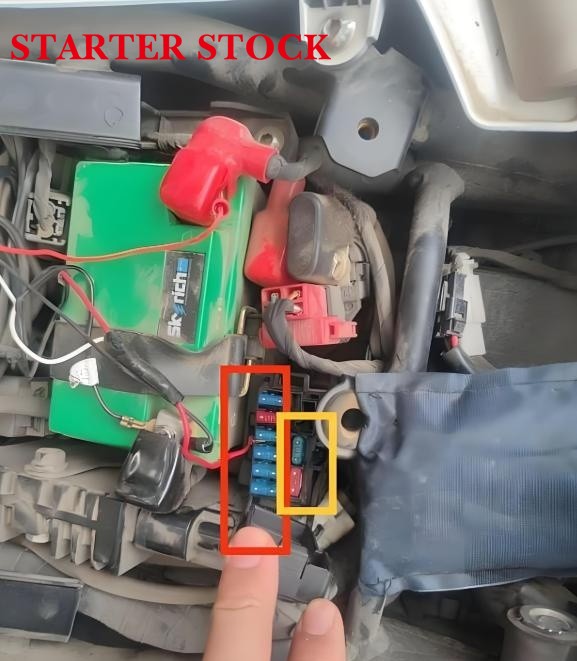
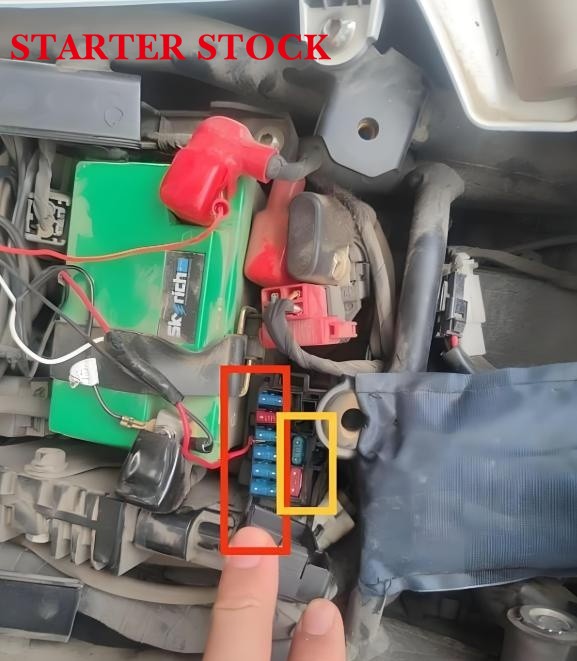
IV. Complete Relay Replacement Process (Illustrated by Vehicle Type)
Key Points for Sidecar Models:
First disconnect the battery negative terminal (Critical!)
Use a 10mm socket to remove the mounting bolt
When plugging/unplugging the wiring harness, grip the connector base firmly
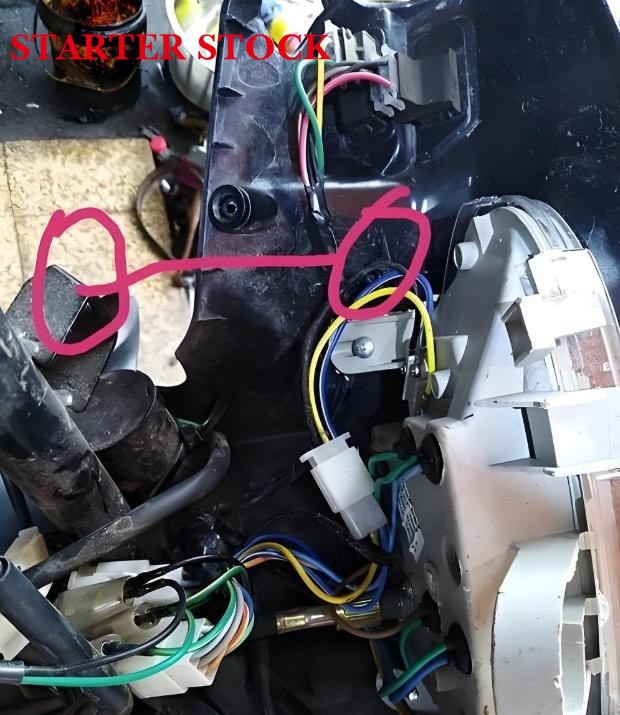
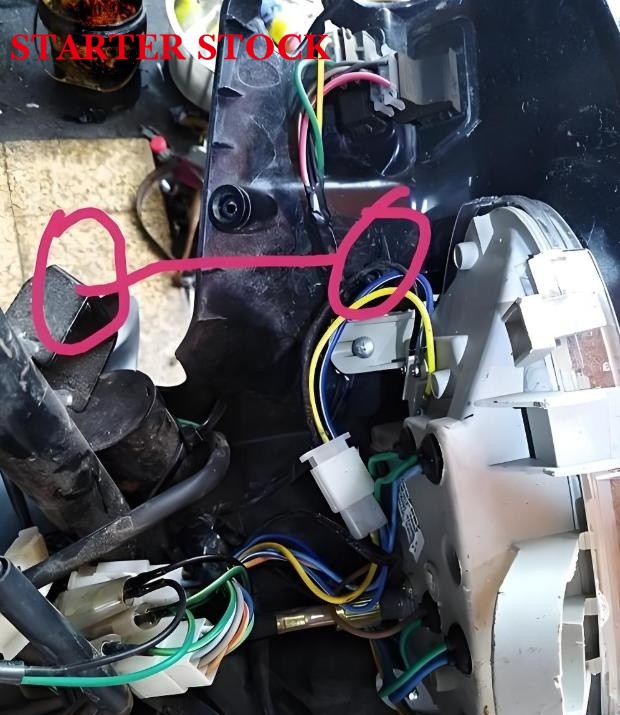
Special Technique for Scooters:
Some models require removing the front storage compartment; note hidden screw locations (marked in diagram)
▲ Ultimate Recommendation: After replacement, test by performing 20 consecutive starts without issues to confirm proper function
V. Hidden Hazards of Relay Failure and Preventive Measures
1. Chronic Battery Drain: Long-Term Low-Voltage Damage
When relay contact oxidation increases resistance, the battery remains in a chronic under-voltage state. Laboratory testing shows: sustained voltage below 12.2V reduces battery lifespan by 60%.
Prevention Plan:
Weekly battery voltage checks (≥12.6V when cold)
Install voltage alarms (recommended: Bluetooth-enabled OBD monitors)
2. Wiring Harness Melting Risk: Thermal Effects from High Resistance
Faulty contacts cause localized overheating under high current. A motorcycle fire incident was traced to relay-to-starter wiring insulation melting due to excessive heat.
Safety Upgrades:
Replace with high-temperature silicone wiring (withstands 200°C)
Install fiberglass sleeves on critical wiring sections
VI. Relay Maintenance Tips for Different Climates
▶ Special Protection for Humid Regions
Monthly application of contact revitalizer inside relays (WD-40 Professional Edition ineffective)
Coat relay housings with dielectric grease
▶ Cold-Weather Starting Techniques
At -20°C, preheat the circuit by turning on headlights for 30 seconds
Install heavy-duty relays with preheat functionality (e.g., Arctic Cat-specific models)
VII. Differential Diagnosis Between Relay and Other Faults
1. Commonly Confused Symptom Comparison Chart
| Symptom | Relay Fault Characteristics | Battery Fault Characteristics |
|------------------- --|----------------------|----------------------|
| No response during start | Headlight brightness unchanged | Headlight noticeably dims |
| “Click” sound but no start | Motor completely unresponsive | Motor turns weakly |
| Engine stalls suddenly while driving | Immediate inability to restart | Can restart briefly after idling |
2. Method to Distinguish from Starter Button Failure
Directly measure resistance across the button terminals using a multimeter's continuity setting:
Resistance > 5Ω when pressed → Button failure
Resistance < 1Ω but no response → Relay failure
VIII. Advanced Guide: Relay Modification Tips
1. Racing Vehicle Upgrade Solutions
Replace with ceramic-base relays (3x improved vibration resistance)
Parallel dual-relay system (for motors over 1500W)
2. Waterproof Modification Steps
① Select AMP Super Seal relays
② Coat connectors with 3M Scotchkote coating
③ Install submarine-grade rubber waterproof covers
▲ Warning: Must pass 72-hour salt spray test after modification