
-
90
-
2026-02-09 13:41:45
If you work with snowmobiles long enough—whether selling parts, handling service questions, or maintaining a small fleet—you start to notice that battery problems don’t behave the way manuals describe them.
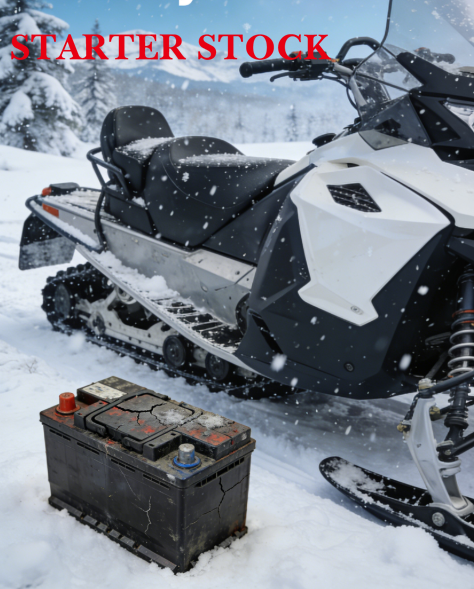
They’re rarely clean failures. More often, they’re confusing.
A sled comes in with a “starting issue.” Sometimes it cranks slowly. Sometimes it clicks once. Sometimes it starts fine after sitting all night, then refuses to start again an hour later. The battery doesn’t look completely dead, so attention shifts elsewhere.
This is usually where the real trouble begins.
Most snowmobile battery issues don’t announce themselves clearly. They sit quietly in the background and only show up when conditions are bad enough—cold mornings, short rides, long storage.
We see this pattern every season.
At the beginning of winter, battery-related questions increase sharply. Not because batteries suddenly became worse, but because snowmobiles are finally being used again after sitting idle. A battery that survived summer storage without attention often doesn’t survive the first few cold starts.
What confuses many riders is that the battery worked before. That detail matters to them. To us, it usually doesn’t.
A battery can work and still be on its way out.
Cold weather reduces available current. A battery that’s already lost some capacity doesn’t get much margin. One or two hard starts are enough to push it past the point where the starter can turn the engine properly.
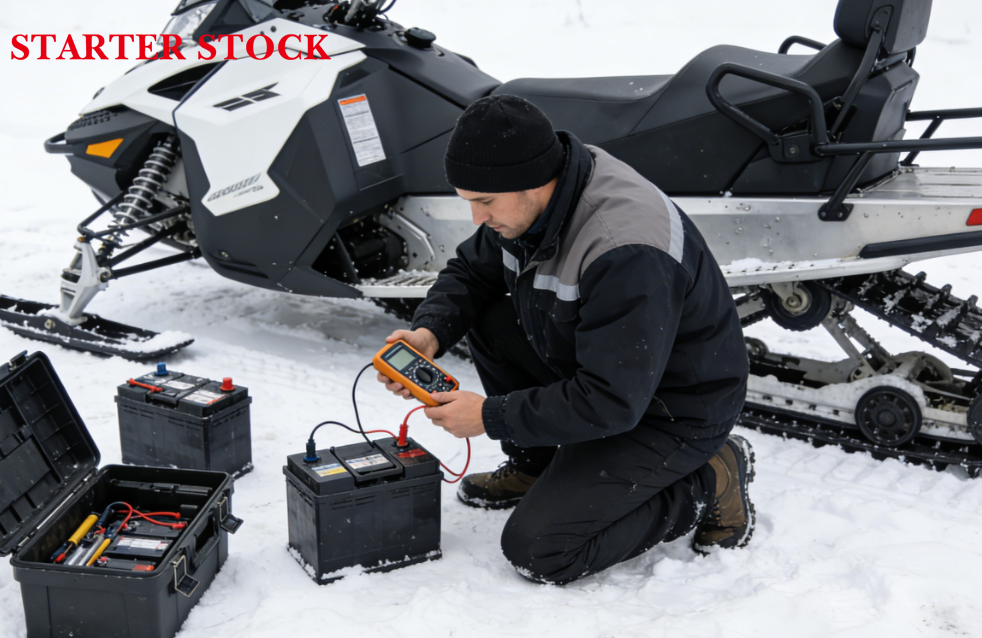
At this stage, voltage readings are misleading. The battery may show normal voltage when nothing is happening. Under load, it collapses. That’s when people start suspecting relays, starters, or wiring.
And sometimes they’re right—but often they’re not.
Another thing we see a lot is short-use behavior. Start the sled, ride a short distance, shut it down. Do that repeatedly, and the battery never fully recovers the energy used during starting. Over time, capacity drops quietly.
Nothing feels wrong until one day it is.
From a rider’s point of view, the failure feels sudden. From an industry point of view, it isn’t.
Storage plays a bigger role than most people expect. Batteries left partially discharged for weeks or months lose capacity permanently. Even a decent-quality battery can be damaged this way. Once that happens, charging it again doesn’t bring it back to what it was.
This explains why replacing a battery sometimes fixes the problem—and sometimes doesn’t.
Connections add another layer of confusion. Loose terminals, oxidized cable ends, or aging wires increase resistance. In cold conditions, even small resistance losses matter. The starter draws high current, and the system can’t deliver it efficiently.
To the person troubleshooting, it still looks like a battery problem. Replace the battery, and things improve for a while. But if the connection issue isn’t fixed, the new battery starts aging faster than it should.
This is one reason we see repeat battery replacements on the same machine.
Battery quality also matters more in snowmobiles than many expect. On paper, many batteries share similar specifications. In actual winter use, differences show up quickly.
Fleet operators tend to notice this first. When multiple sleds are used in similar conditions, patterns become obvious. Some batteries hold up season after season. Others struggle early, especially in colder regions.
Over time, purchasing decisions shift away from price and toward consistency.
Repeated battery failures usually mean something else is wrong. A weak starter motor, worn relay contacts, or excessive resistance somewhere in the system forces the battery to work harder. The battery fails first, but it isn’t the root cause.
Replacing it without checking the rest of the starting system only delays the next failure.
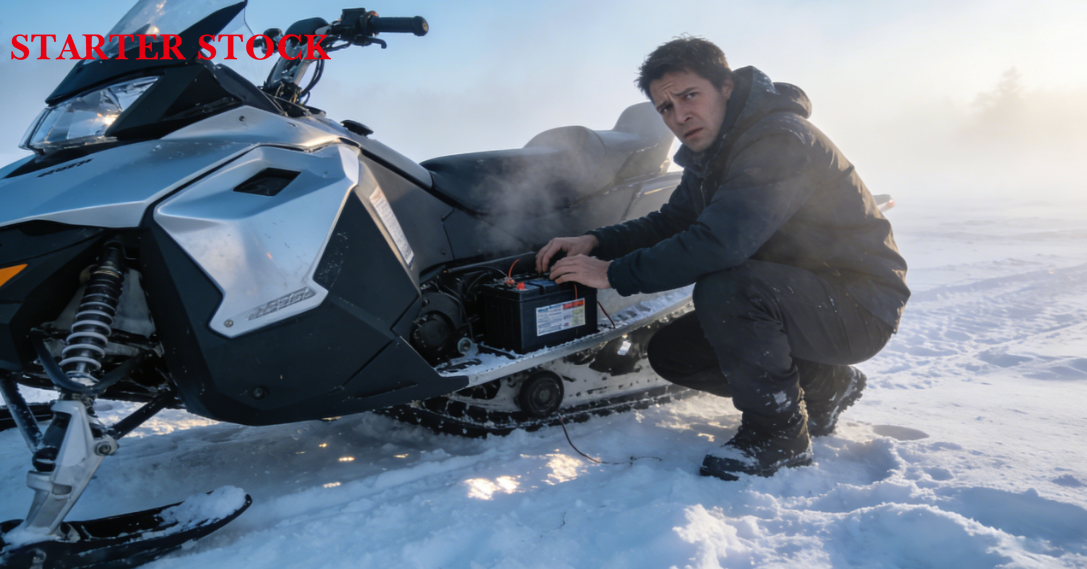
From a parts platform perspective, battery-related inquiries are constant. Buyers want to know whether the battery is really the issue, whether a replacement will solve it, and how to avoid the same problem next season.
Clear, experience-based guidance matters more than technical descriptions here. People aren’t just buying a battery—they’re trying to avoid downtime in the middle of winter.
Snowmobile battery problems rarely come from a single mistake. They build up quietly, shaped by storage habits, usage patterns, cold temperatures, and the condition of the surrounding components.
Understanding that context makes troubleshooting faster and reduces unnecessary part replacements. It also explains why battery questions never really go away in this industry.
They’re simple parts, but they live in one of the most demanding environments there is.