
-
78
-
2026-02-27 15:08:41
Table of Contents
1. That Lonely Sound: Is it a Death Sentence or a Head Fake?
2. Phase 1: The Battery "Phony" (Don’t Trip on the Small Stuff)
3. Phase 2: The Ground Strap—The Hidden Backstabber
4. Phase 3: Solenoid Stethoscoping—Is it Actually Kicking?
5. Phase 4: The Internal Wall—When the Brushes Throw in the Towel
6. The Hammer Trick: Why Vibration is a Temporary Miracle (and a Warning)
7. StarterStock: Why We’re Paranoid About What’s Inside the Casing
8. Conclusion: Solve the Crime, Don’t Just Pay the Parts Store
1. That Lonely Sound: Is it a Death Sentence or a Head Fake?
Let’s be real—we’ve all been there. You’ve got the crew loaded, the job site is waiting, and you twist that key. Instead of the engine’s roar, you get one sharp, heart-sinking metallic clack.
In my world, we call this the "Single Click Mystery." It’s the ultimate mechanical tease. It tells you the "brain" (your ignition) sent the signal, but the "muscles" (the starter) didn't twitch. Most guys freak out and sprint to the parts store to drop three hundred bucks on a new unit, only to crawl back under the chassis, swap it out, and hear the exact same clack.
At StarterStock, we don't just move boxes of motors. We live for the teardown. Before you throw your wallet at the problem, walk through my personal "dirt-under-the-nails" checklist to see where that electricity is actually bleeding out.
2. Phase 1: The Battery "Phony" (Don’t Trip on the Small Stuff)
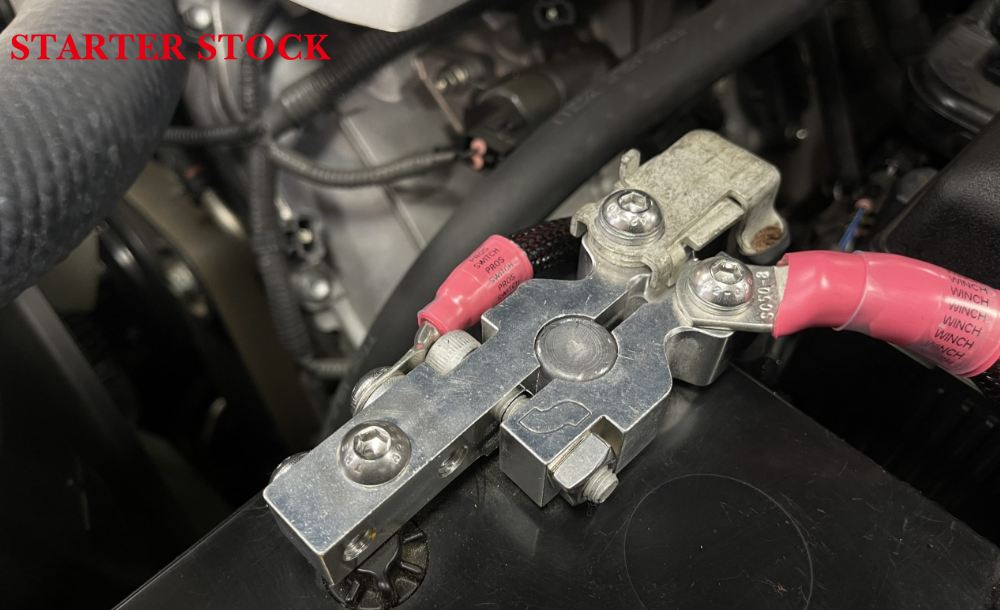
I’ve lost count of how many "dead" starters I’ve tossed on the bench only to find out the battery terminals were just gross. A starter motor is a high-amp sprint athlete. It doesn't sip power; it chugs it. If your terminals have even a light dusting of that green, crusty oxidation, you might have enough juice to run the radio, but zero chance of shoving that drive gear into the flywheel.
The Pro Tip: Scrape them down with a wire brush until they’re shiny as a new dime. If it still just clicks, we dig deeper.
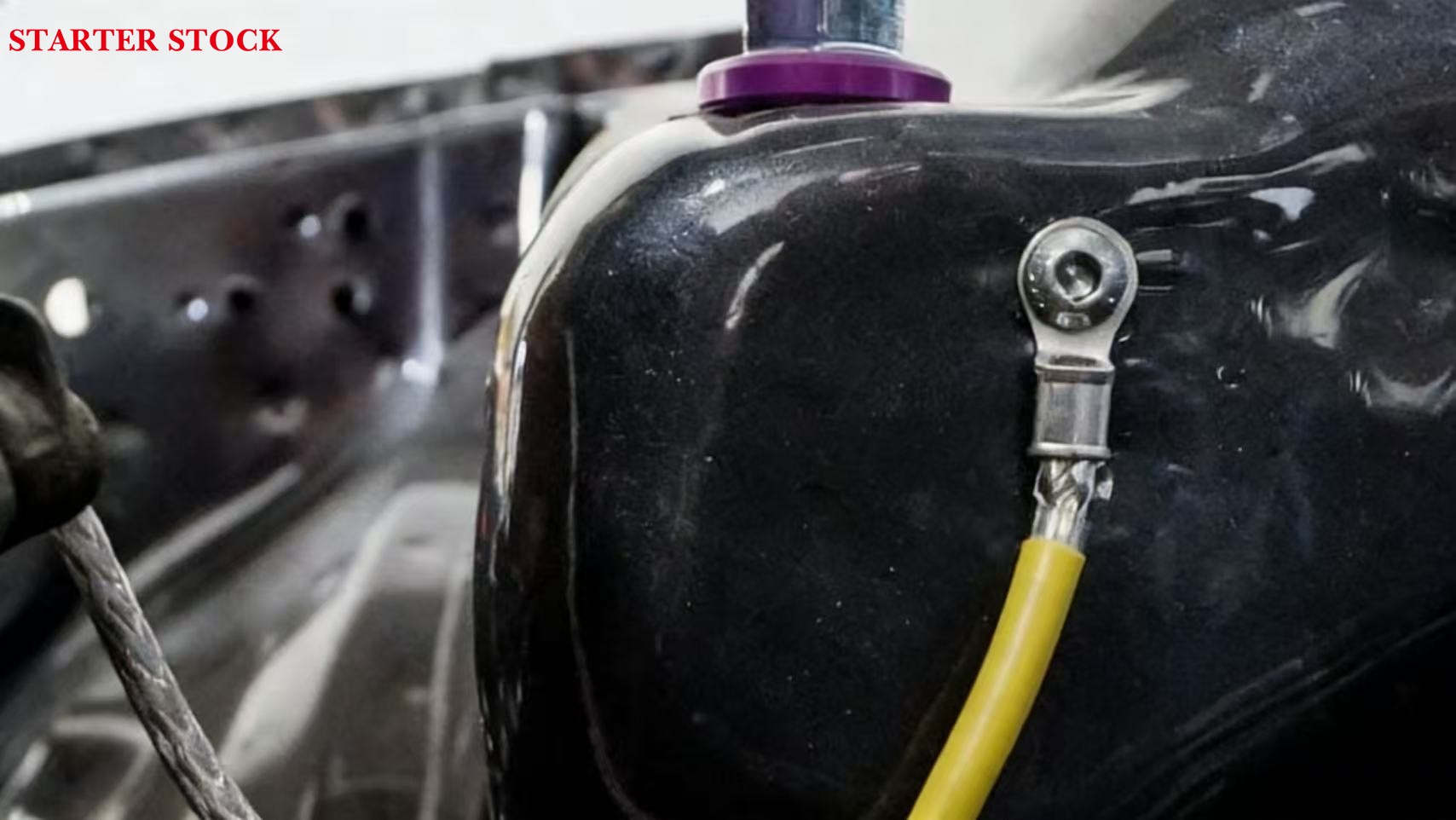 3. Phase 2: The Ground Strap—The Hidden Backstabber
Electricity is a loop. It goes from the battery to the starter, but it’s gotta find its way home through the engine block and the frame.
If your ground strap—that thick, braided cable everyone ignores—is frayed, loose, or rusted to the frame, the starter can't "dump" its energy. It’s like trying to flush a toilet through a cocktail straw. A bad ground is the #1 reason a perfectly healthy motor gets misdiagnosed as junk.
4. Phase 3: Solenoid Stethoscoping—Is it Actually Kicking?
Now we’re listening for the "quality" of the click. If you hear a loud, violent THUNK, that’s the solenoid plunger physically firing. It’s trying.
But if you get a rapid-fire machine gun sound (click-click-click-click), your voltage is so low the magnetic field is collapsing the second it hits the load. Worst case? You hear a solid THUNK but the motor stays silent. That usually means the internal copper contacts are fried—the bridge dropped, but the road is gone.
5. Phase 4: The Internal Wall—When the Brushes Throw in the Towel
If the solenoid is firing but the motor won't spin, the brushes are usually the culprits. These are just blocks of carbon feeding power to the spinning heart of the machine.
Over time, they wear down until they’re barely kissing the commutator. This creates a "dead spot." This is why a machine might fail to start nine times, then fire up on the tenth like nothing’s wrong—the motor just happened to stop in a position where the brushes had one last bit of grip.
6. The Hammer Trick: Why Vibration is a Temporary Miracle (and a Warning)
We’ve all seen the guy who whacks the starter with a wrench while someone turns the key. Yeah, it works. That vibration jars the stuck brushes or the gummed-up plunger just enough to make a connection for one last start. But listen to me: If a hammer "fixes" your starter, your motor is officially a zombie. It’s dead; it just hasn't realized it yet. Use that one "free start" to get to the shop, not to drive deeper into the mud.
7. StarterStock: Why We’re Paranoid About What’s Inside the Casing
This is exactly why we built StarterStock. We got tired of the "Mystery Click" happening on brand-new parts that were supposed to be "quality."
● No More "Batch Failure" Nightmares: In procurement, there’s nothing worse than ordering 50 starters for a fleet and finding 5 of them have solenoid "stiction" right out of the box. We audit our factories to make sure the internal copper is thick and the brush springs aren't made of wet noodles.
● Vetted for the High-Amp Sprint: We don't just "buy" motors; we audit the winding machines and the thermal testing rigs. When you get a part from our mature network, you’re getting something that’s already survived a "click" test a thousand times in the lab.
8. Conclusion: Solve the Crime, Don’t Just Pay the Parts Store
The "Single Click" shouldn't be a mystery. It’s just physics. Check your battery, check your grounds, listen to the solenoid, and respect the brushes. Stop being a "parts swapper" and start being an engineer.
But when it is the motor’s time to go, don't replace trash with trash. Whether you’re a fleet boss or a guy building a prototype ATV in his garage, you need a unit that won't leave you stranded when the mercury drops.
Got a starter that only wakes up after a beating? Or a solenoid that sounds like a snare drum? Drop the symptoms in the comments—I’ll help you find where the body is buried.