
-
55
-
2026-02-28 10:51:04
In secondary school biology lessons, we learnt that the human body can be divided into several major systems: the musculoskeletal system, nervous system, respiratory system, digestive system, and so forth.
Similarly, a complete multi-rotor aerial photography drone can be broken down into the following major systems: the flight control system, remote control system, power system, video transmission system, gimbal, and aerial photography camera.
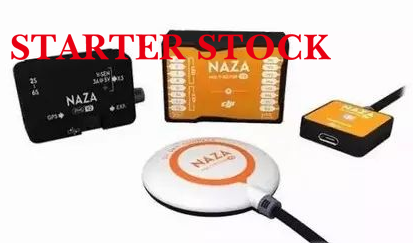
Flight Control System
The flight control system (FCS) can be regarded as the drone's brain. Whether the aircraft hovers or flies, and in which direction it moves, is all dictated by commands issued by the FCS.
How does the FCS manage to maintain the aircraft's attitude? This is because the FCS incorporates a ‘cerebellum’ – that is, several sensors. A basic FCS includes the following sensors:
GPS: Used to obtain the aircraft's latitude and longitude information, determining its position;
Barometer: Measures atmospheric pressure to determine altitude;
IMU (Inertial Measurement Unit): Combines a three-axis accelerometer and a three-axis gyroscope to measure angular velocity and acceleration in three dimensions, thereby calculating the object's orientation.
Compass: Determines the aircraft's orientation within the world coordinate system, linking cardinal directions (north, south, east, west) with the aircraft's forward, backward, left, and right axes.
A flight control system
With technological advancements, modern aerial photography drones now incorporate additional sensors. For instance, ultrasonic sensors enable precise altitude measurement near the ground, while optical flow technology assists with positioning and hovering indoors where GPS signals are unavailable.
Upon gathering data from these sensors, the flight control system fuses the information to determine the aircraft's current position, orientation, and heading. It then makes decisions regarding flight manoeuvres.
Remote Control System
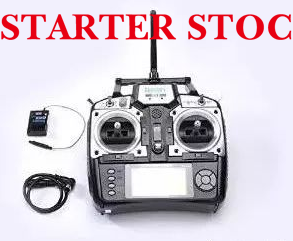
The remote control system comprises a ground-based controller and an on-board receiver module. Beyond the four channels for pitch, roll, yaw, and throttle via dual joysticks, it also facilitates switching flight modes, controlling gimbal rotation, and operating the camera's shutter. These commands are transmitted wirelessly from the transmitter to the aircraft via the receiver module, with 2.4GHz radio signals being the predominant standard.
Remote Control and Receiver
Power System
The power system comprises the drone's ESC, motor, propeller blades, and power battery.
ESC: Short for Electronic Speed Controller, it converts the direct current supplied by the power battery into three-phase alternating current suitable for directly driving the motor. Upon receiving flight control commands, the ESC regulates motor speed to alter the aircraft's pitch angle.
Motor: The predominant motor type currently is the brushless motor. Its function is to rotate, thereby driving the propeller rotation and generating lift.
Propeller: The propeller is fixed to the motor shaft and rotates with the motor, providing lift for the drone to achieve flight.
Power Battery: Aerial photography drones predominantly utilise lithium polymer batteries for power. Multiple battery cells are connected in series and parallel configurations to supply the power required for flight.

Propellers, ESCs, Motors
Video Transmission System
As the name suggests, video transmission relays imagery captured by the aircraft to the user's display screen. Beyond visuals, it also transmits flight data, enabling users to view real-time imagery alongside altitude and speed information on displays or mobile applications. Video transmission typically operates on 5.8GHz or 2.4GHz frequency bands.
Common types include analogue and digital video transmission systems. Currently, digital systems are favoured by consumers for aerial photography drones due to their superior quality and extended transmission range.
Among digital systems, DJI's LightBridge technology stands out for its exceptional performance. However, Israel's Amimon CONNEX has recently introduced a low-latency digital video transmission system – one wonders how it compares?

Video Transmission System
Gimbal
Anyone who has attempted handheld mobile phone video recording whilst walking will have noticed image shake. Similarly, the sway of an aircraft's fuselage can cause visual instability. To eliminate such jitter, gimbals were developed. These devices gather data from a three-axis accelerometer and a three-axis gyroscope, calculating tilt angles and applying counter-corrective movements to maintain a level camera frame.
A three-axis gimbal eliminates shake in all directions. To achieve this, the gimbal features three motors. For instance, if the aircraft tilts to the right, the gimbal counteracts by tilting to the left, maintaining relative levelness with the ground and thereby stabilising the footage.
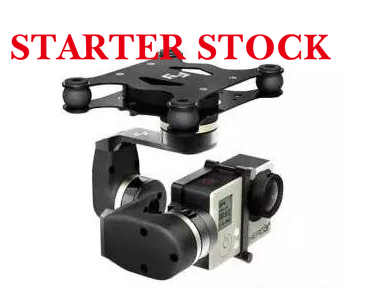
GoPro Gimbal
Aerial Photography Camera
Some aerial photography drones incorporate cameras, while others require pairing with a GoPro or other camera. Dedicated aerial photography cameras are fundamentally similar to standard cameras, though they typically employ wide-angle, fixed-focus lenses. This is due to the characteristics of aerial photography, where subjects are generally distant from the camera, resulting in significant subject-to-camera distance and a large depth of field.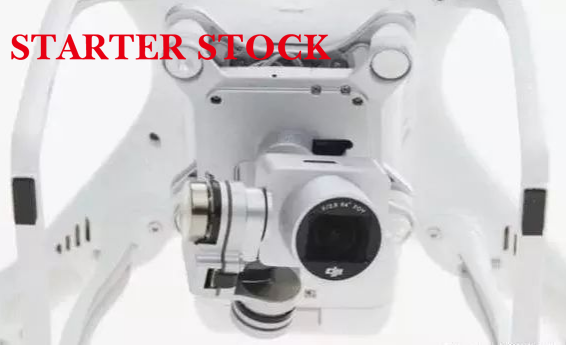
Aerial Photography Camera
These major systems largely stem from classifications established in the early days of model aircraft.
With the advancement of drone technology,
we may well see the emergence of ‘obstacle avoidance systems’ and ‘transformation systems’ in the future. (Or perhaps they already exist?)
Let us look forward to it together~