
-
65
-
2026-02-28 11:34:10
Today, we shall provide a brief explanation for beginners regarding the functions of each component on a drone. We shall use the common DJI Phantom 4 as an example.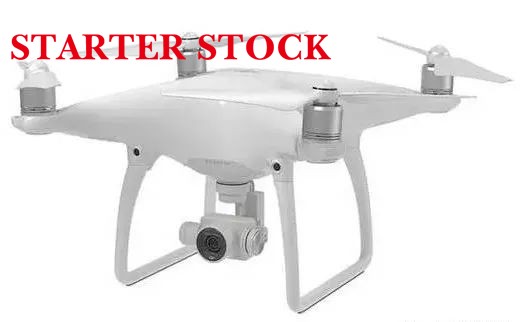
1.Motors
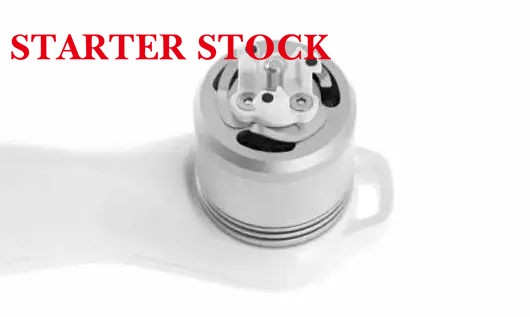
Consumer-grade aerial photography drones are predominantly quadcopters or hexacopters. Motors on each axis drive propellers to generate lift for flight. The current mainstream motors are brushless types, comprising a stator and rotor. The winding coils in the diagram below form the motor's stator. These coils induce a magnetic field that drives the permanent magnet rotor to rotate, thereby powering the motor.
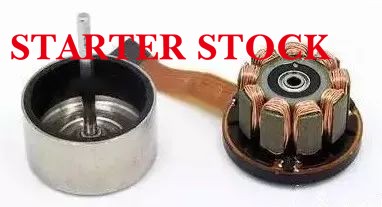
Left: Rotor Right: Stator
You'll often hear people ask whether a motor is 2212 or 2312. What do these four digits signify? They denote the motor's dimensions. For instance, the Phantom 4's 2312 motor indicates a stator diameter of 23mm and a stator height of 12mm. Motors with larger first digits are wider, while those with larger second digits are taller.
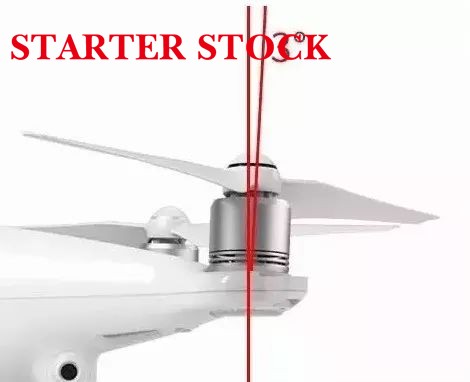
Observant individuals will note that the Phantom 4's motors feature a 3° outward tilt. This design allows for more agile directional rotation.
2. Propellers
Common propeller materials include plastic and carbon fibre, with options for two or three blades. The Phantom 4 utilises a two-bladed propeller. Why not three blades? Simply increasing the number of blades doesn't necessarily boost lift; factors like increased drag and battery discharge capacity must also be considered.
Propeller dimensions are often denoted by four-digit codes. For instance, the Phantom 4 employs 9450 propellers, where the first two digits indicate diameter and the latter two denote pitch.
Propeller mounting configurations also vary. Consumer-grade aerial photography drones typically employ the following installation methods:
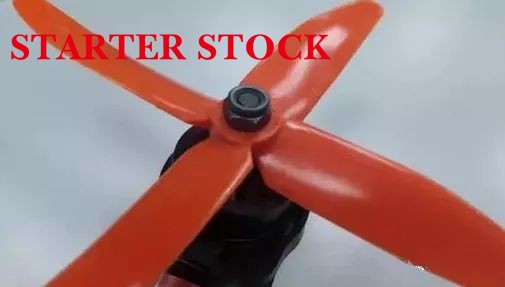
Screw-mounted propeller blades
Propeller blades secured by screws are commonly found in model aircraft.
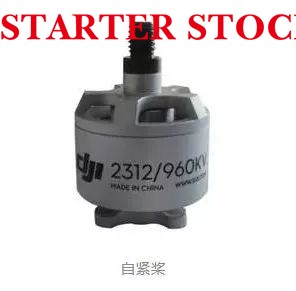
The propeller is fixed to the motor via threads, and during motor rotation, the rotational force tightens the blades. However, in certain circumstances, there is a risk of the propeller becoming dislodged.

Quick-release propellers
Should the self-locking propeller threads become damaged or the motor stall abruptly, the blades may detach and fly off the motor (propeller ejection). Consequently, newer aircraft increasingly favour the more reliable quick-release propeller system, exemplified by the Phantom 4's adoption of this mechanism.
3. LED lights
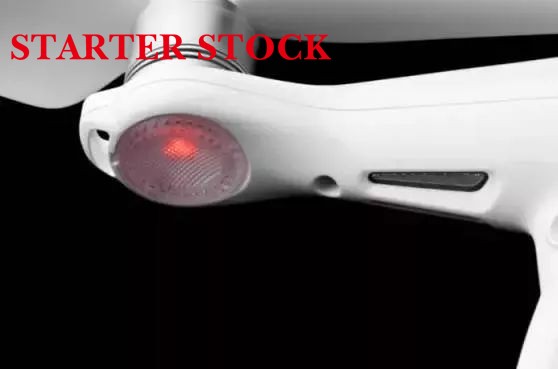
Consumer-grade aerial photography drones typically feature LED lights beneath their arms. These lights serve a practical purpose rather than mere decoration.
During flight, the forward red LED indicates the aircraft's position and nose orientation, while the rear lights signal its real-time status. For instance, a slow green flash indicates normal operation, a rapid yellow flash signifies loss of control, and a slow red flash alerts to low battery power.
4. ESC Board
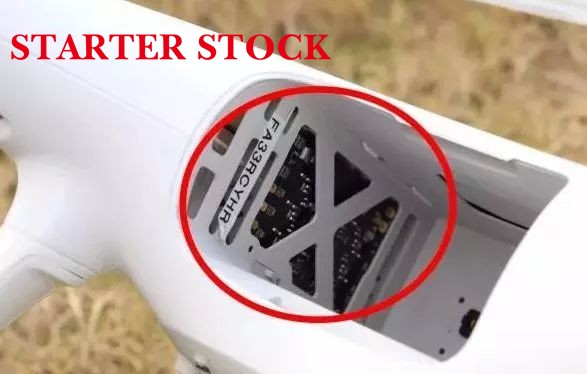
Upon removing the Phantom 4's battery, one can observe a portion of the circuit board visible through the battery compartment. This constitutes the aircraft's ESC board, responsible for regulating motor current.
The drone's electronics are susceptible to water damage, much like a mobile phone. Water ingress may invalidate the warranty. Consequently, a waterproof label is affixed inside the frame; it turns red upon contact with moisture. Should this label appear red during servicing, warranty coverage may be affected. Therefore, avoid flying in rainy or foggy conditions, and take precautions against moisture ingress during humid periods.
5. Ultrasonic/Visual Positioning/Visual Obstacle Avoidance
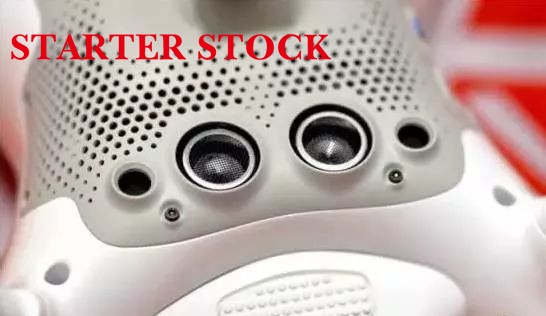
The two large circular openings in the centre of the image house ultrasonic modules, employing ultrasonic principles for precise altitude hold during low-altitude flight. The two smaller circular openings on either side contain visual positioning modules, functioning like eyes. These utilise image recognition technology to enable stable hovering indoors.
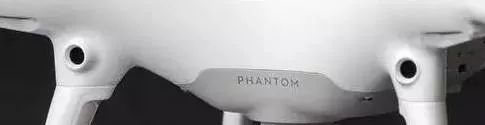
On the front landing gear of the Phantom 4, two ‘miniature lenses’ are visible. These form the core of its obstacle avoidance system, enabling active visual avoidance through stereoscopic imaging. Current drone obstacle avoidance technologies include the Phantom 4's visual avoidance, Intel RealSense technology, and ultrasonic avoidance systems.
6. Camera
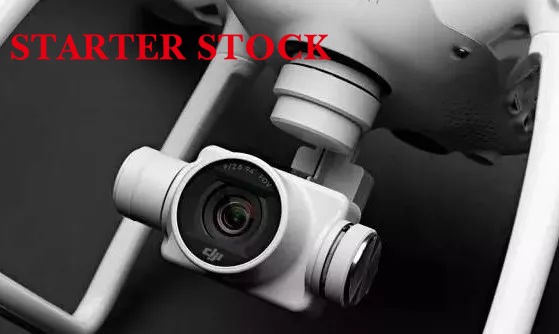
The component connecting the camera to the airframe is called the gimbal. This stabilises the camera during flight, eliminating image shake. The Phantom 4 integrates part of the gimbal into the airframe, creating a more streamlined silhouette.
To ensure stabilisation in all directions, the gimbal features three axes: pitch, roll, and yaw. Each axis has a dedicated motor, maintaining image stability even when the aircraft tilts.
7.Remote Controller
In the early days of drone flying, controllers generally resembled this design:
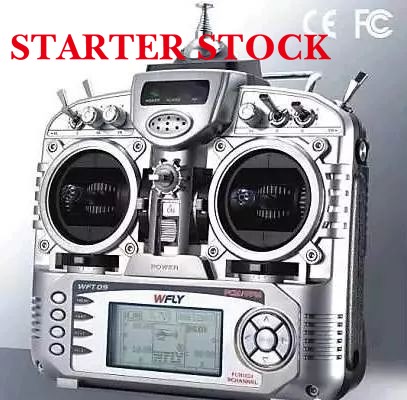
While the array of buttons and joysticks appeared sophisticated, they proved highly complex to operate. Users had to manually configure function assignments and perform tasks like throttle calibration. Such controllers often came with manuals running dozens of pages long, daunting many beginners.
Later, in integrated systems, controllers were drastically simplified to enable newcomers to grasp functions quickly.
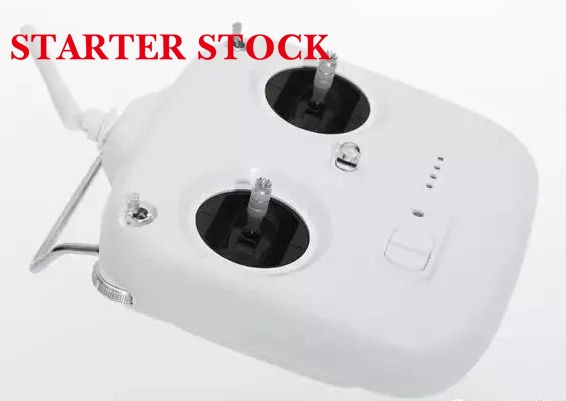
In these controllers, each switch is pre-assigned to a specific function. One need only memorise the mode corresponding to each switch to fly immediately upon picking it up.
Subsequently, perhaps due to such controllers appearing overly simplistic and functionally limited, designs evolved into the form shown below.
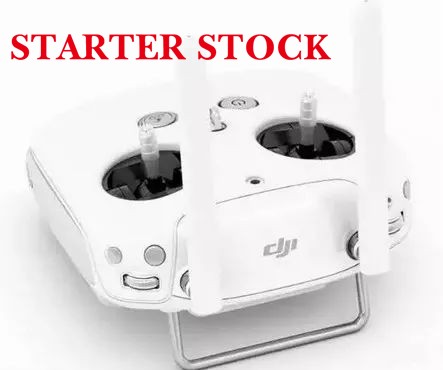
The number of buttons on the remote control increased once more, enabling more operations to be performed directly from the unit. High-frequency functions like photo and video capture buttons, along with the crucial return-to-home button, were added. At this stage, each button became more intuitive, with improved ergonomic design.
Right then, once you're familiar with the aircraft, all that remains is to learn how to fly it~