
-
78
-
2026-03-03 09:42:23
What qualifies a yacht?
When it comes to yachts, many people's first impression is "big, expensive, and a boat for the rich to enjoy". But what kind of boat can be called a yacht? What are the differences between it and ordinary fishing boats, speedboats, or motorboats? In fact, yachts have their own "publicly visible rules" and "secret rules". Not any boat with an engine can be called a yacht. Today, we will use plain language and a humorous style to clearly explain the standards of yachts, ensuring that after listening to this, you will never mistake a fishing boat for a luxurious yacht and make a fool of yourself.
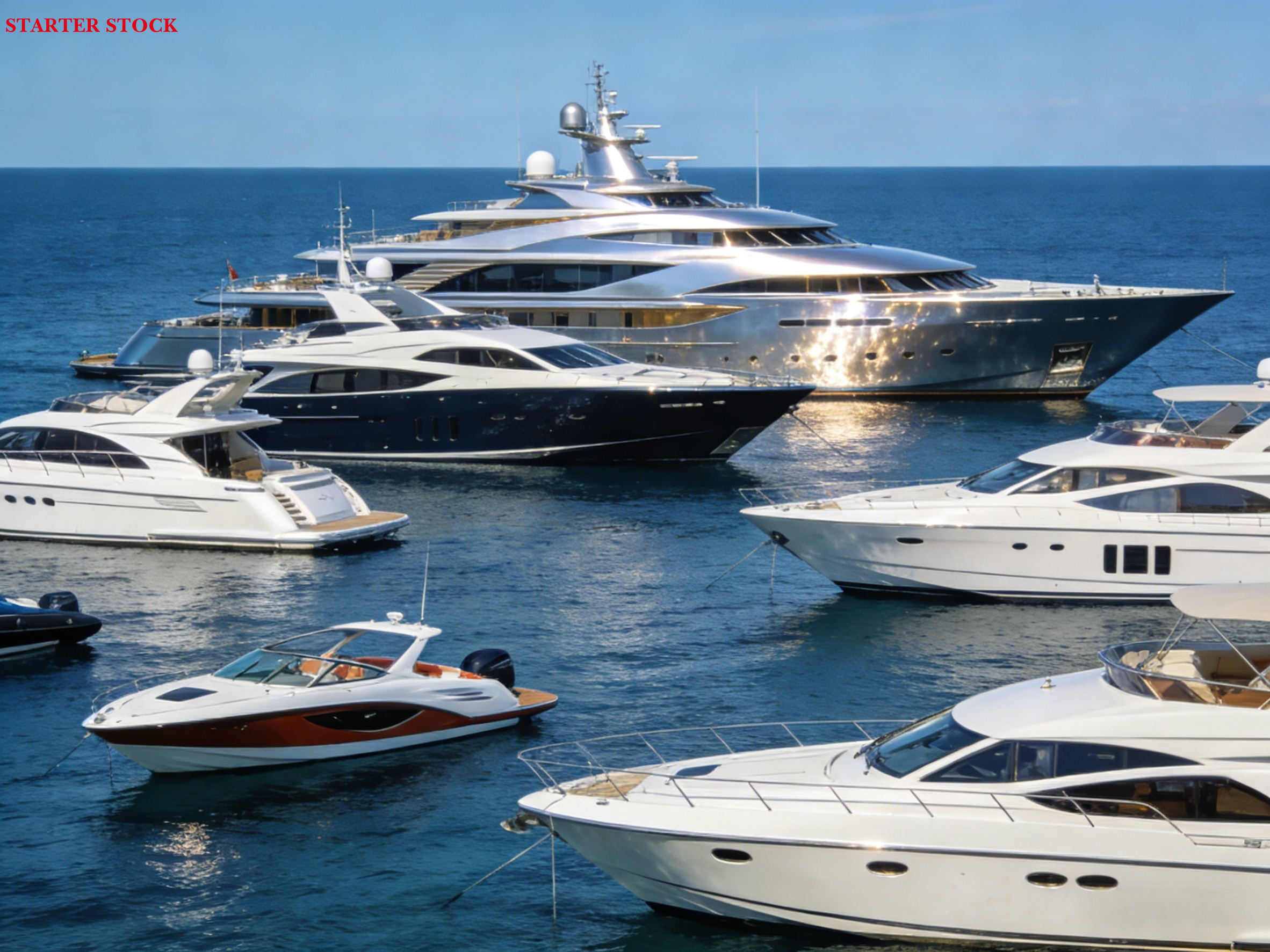
First, we need to give yachts a proper name: The core standard of yachts is not "expensive", but "functionality". Simply put, it is a boat specifically designed for leisure and relaxation, not a fishing, cargo, or law enforcement vessel. This is like a sports car and a truck in a car - they both have four wheels, but one is for showing off and being stylish, while the other is for hauling goods and making money. The positioning is completely different.
According to the internationally accepted "entry-level standard", for a boat to be called a yacht, it must meet at least three basic conditions. Missing any one of them is not allowed:
Size must be up to standard: Generally, the length should be over 6 meters. Think about it, a boat shorter than 6 meters, such as those 4 or 5 meters long speedboats, has too little space to accommodate only two or three people and lacks even a decent rest area. At most, it can be called an "ocean motorcycle", and it definitely doesn't count as a yacht. 6 meters is the passing line; anything below this number, even if it is luxurious, can only be called a speedboat or motorboat.
Function must be "for fun": It must be primarily used for leisure and entertainment. For example, it should have a bedroom, a kitchen, and a bathroom, allowing people to stay there for a few days; or it should have storage spaces for fishing equipment and water sports gear, with the main purpose of going out to fish or water skiing. If a boat is used for hauling seafood or transporting goods, even if it is 10 meters long, it is still a fishing boat or cargo ship; if it is equipped with warning lights and rescue equipment, it is a patrol boat, and has nothing to do with yachts.
It cannot be used for operation (non-professional term): Private yachts are generally used by the owner or with friends for fun, not like cruise ships that charge tourists. Of course, there are commercial yachts, but they require special certification and are not of the same category as the private yachts we are talking about.
Satisfying the basic conditions is not enough. There are even more detailed "grading standards" in the yacht world, just like how mobile phones have entry-level models and flagship models. Yachts are also classified into different grades, and each grade has its own interesting standards.
Let's start with entry-level yachts (6-12 meters). The standard for this level is "good enough, with a focus on cost-effectiveness". The length starts at 6 meters and ends at 12 meters, with prices ranging from 500,000 to 2 million yuan. This is the "common model" we talked about last time. Its core standard is: there is a sheltered cockpit, a small sofa for 4-6 people, and preferably a simple toilet - after all, spending half a day at sea, you can't just stay cramped up! The power is usually a single engine or a dual engine, with a speed not too fast, 20-30 knots (1 knot ≈ 1.85 kilometers/hour) is enough, it can cruise in the near sea, has average wind and wave resistance, and when encountering strong winds and waves, it needs to quickly return. This level of yacht, without hiring crew, can be driven by obtaining a yacht driver's license, and the standard is "able to enjoy, able to accommodate people, not troublesome".
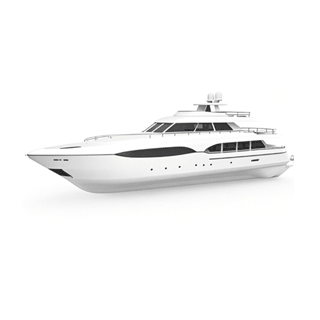
Then comes mid-range yachts (12-24 meters), the standard for this level directly upgrades to "a family vacation tool". This is also the most mainstream style on the market. The length is from 12 meters to 24 meters, with prices ranging from 2 million to 10 million yuan. Its standards include: first, it must have independent cabins, at least 1-2 bedrooms for sleeping; then it must have a complete kitchen and bathroom system, so that the kitchen can cook and the bathroom can bathe, after all, you need to stay on the boat for a few days; There must also be a flybridge (the top deck), where one can sunbathe, barbecue, and fish. Only then does it have that "feel". The power system must be dual engines, with a speed of 25-35 knots, strong against wind and waves, capable of navigating in distant sea areas, such as from Qingdao to Weihai. Additionally, this level of yacht has requirements for workmanship; the interior must use solid wood and leather, with good sound insulation, and it should not be like a speedboat where the engine starts and one has to shout to communicate. There is also a "stealth" standard: it must have the "qualification" to berth - it can be docked at a regular yacht marina, after all, the size is large and ordinary fishing boat marinas cannot accommodate it.
Next comes the luxury yacht (24-40 meters), and the standard for this level is just two words: luxury. Length from 24 meters to 40 meters, the price is directly in the tens of millions, even hundreds of millions, problem-free "sea villas". Its standard can leave ordinary people stunned: first, the space must be large, at least 3-5 luxury suites, each suite with an independent bathroom and a sea-view window; then the entertainment facilities must be fully equipped, private cinemas, bars, gyms, infinity pools are standard features, some even have sauna rooms and karaoke rooms; even more upscale, there must be a helicopter landing pad - after all, the rich may not want to drive to the marina, they can fly directly to the yacht for convenience. The power system is high-power engines, with a speed of 30-40 knots, super long-range endurance, capable of crossing sea areas, such as from China to Southeast Asia. And there is a hard standard: it must be equipped with a professional crew team, including a captain, chief officer, chef, waiter, and maintenance worker, without any of them, normal operation is impossible. And luxury yachts have extremely high material requirements; the hull must be made of carbon fiber or aluminum alloy, corrosion-resistant, lightweight, and the interior is all top-level customization, such as Italian leather sofas, German kitchenware, even the faucets are gold-plated.
The most top-level is the super yacht (over 40 meters), the standard of this thing is no longer the "ship" standard, but the "moving sea palace" standard. Length over 40 meters, the price is several hundred million or even billions, such as the super yacht of a Russian billionaire, over 100 meters long, longer than a football field. Its standard is just one thing: to meet the owner's every imagination. You want an underwater viewing platform? Arranged! You want to take a sports car out to sea? No problem, there is a dedicated garage on the yacht! You want to invite 20 friends to have a party? It's a small thing, the banquet hall can accommodate 50 people! And the construction standard of super yachts is extremely strict, it must meet the highest safety standards of the International Maritime Organization, with extremely strong anti-wind and wave capabilities, even in the face of typhoons, it can be as stable as a mountain. And there is an even more amazing standard: customization - there are no ready-made super yachts for sale, they are all custom-made by top shipyards for the rich, from design to delivery, it takes at least 3 years, and up to 5 years, just the design fee alone is several hundred million.
In addition to these standards based on size and luxury level, yachts also have some "invisible standards", which are the key for insiders to judge whether a yacht is good or not, and these standards are even more important than the price.
The first one is the ship design standard. A good yacht design not only has to be beautiful, but also practical. For example, the streamlined design of the hull, it must be able to reduce resistance, increase speed, and also ensure stability - after all, no one wants to sit on a boat like they are on a roller coaster at sea. And the center of gravity design, a yacht with a low center of gravity is less likely to capsize and will not shake too severely in wind and waves. Those that look cool but have a high center of gravity are "just for show, not for use", insiders do not like them.
The second is the safety standard. This is a hard rule. No matter how luxurious the yacht is, if the safety standards are not met, it is useless. There is an international convention called SOLAS (International Convention for the Safety of Life at Sea), yachts must meet this standard to go to sea. For instance, it is necessary to have sufficient life jackets, lifeboats, fire extinguishers, and emergency communication equipment; the hull should have buoyancy compartments so that it won't sink even if it takes in water; it should also have navigation systems and radars to avoid reefs and other vessels. Especially for super yachts, the safety equipment is more comprehensive than that of military vessels. After all, the ships are for the wealthy individuals with billions of assets, so safety comes first.
The third aspect is environmental standards. Nowadays, the yacht industry also emphasizes "green travel", especially in countries like Europe and the United States, where the emission requirements for yachts are particularly strict. The engine must comply with the Euro VI emission standards and not emit black smoke; sewage and garbage cannot be directly discharged into the sea; there should be specialized storage equipment for them and they should be uniformly treated upon arrival at the shore; some high-end yachts even use solar panels to power themselves and reduce fuel consumption. If a yacht fails to meet the environmental standards, it will not be allowed to enter many areas in Europe and the United States, even if it is extremely luxurious.
Finally, let me clarify a few misunderstandings about yacht standards that people have. Many people think that "expensive is good for a yacht", but that's not necessarily true - some yachts are sold at high prices because of brand premium, for example, the Italian Yativa yachts, whose brand is worth several million dollars, but their actual performance may not be better than other brands at the same price. Also, some people think that "big is a yacht", but that's not correct - a 30-meter fishing boat, even if it is very large, is used for fishing and cannot be called a yacht.
To sum up, the standards for yachts are actually quite simple: they are mainly for leisure and entertainment, with a length of more than 6 meters. They are classified into different grades based on size, configuration, and functions, and also meet hard requirements such as safety and environmental protection. It is not an unreachable "exclusive symbol for the rich", but rather a maritime leisure tool. Different levels of yachts correspond to different consumption capabilities and needs.
Now, when you see a ship, you can immediately tell if it is a yacht - first look at the length, then check if it has bedrooms and a kitchen, and finally see if it is used for entertainment or work. You will surely get it right.