
-
95
-
2026-03-09 16:01:15
The differences between marine-grade starting motors and standard automotive starting motors
Let's make a comparison: If we compare the starting motor to a "key for starting an engine", then the starting motor of a car is like the ordinary key we use at home, lightweight and sufficient for the task; while the marine-grade starting motor is like the special key for a bank vault, heavy, durable, and capable of enduring various extreme conditions, even in the face of strong winds and heavy rain, salt fog corrosion, it must complete the task successfully. Although both are "key-pressing" starting machines, the internal differences are huge. Today, I will explain this in plain language so that everyone can understand, without using those obscure professional terms.
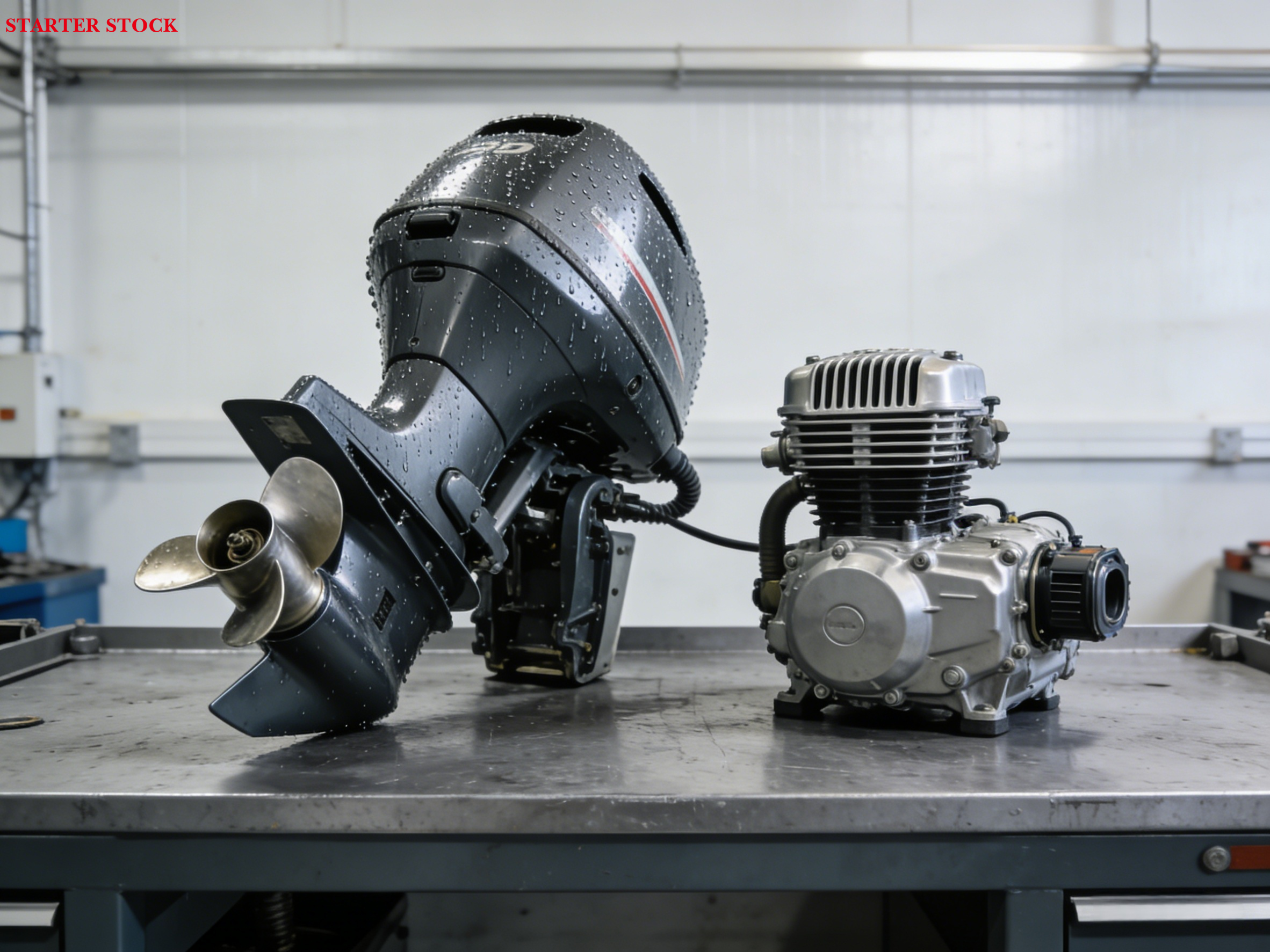
The most fundamental difference is the working environment. One is in a "greenhouse", the other is in a "hell". Our automotive starting motor stays in the engine compartment all its life, although it will experience wind and sun exposure, high and low temperatures, but overall the environment is relatively mild: even if it's extremely hot in summer, there is ventilation and cooling in the engine compartment; if it's extremely cold in winter, parked in a garage or in the open air, it won't be soaked in water or corroded by salt fog. Even if it occasionally gets splashed with water, it is only surface wetting, and it can dry quickly, basically not worrying about "corrosion" problems, just like we are in a room with air conditioning, occasionally going out to bask in the sun, life is relatively comfortable.
But the marine-grade starting motor is much worse. Its working environment is simply "extremely harsh". Whether it's a cargo ship or a fishing boat, as long as it goes out to sea, the motor has to stay in a damp and salt fog-filled environment - the salt fog after evaporation from seawater is like the salt grains we eat, floating in the air, landing on the motor and slowly "eating away" its shell and internal parts; sometimes encountering wind and waves, seawater will directly splash onto the motor, and even occasionally be immersed in seawater. Not to mention the environment in the engine room, which is stuffy and hot, with extremely high humidity, like a sealed sauna room. Plus, during ship navigation, there is continuous vibration, equivalent to the motor being "sweating in a sauna, being shaken, and being salt fog-damaged" every day. If it were an automotive starting motor, placed on a ship, it wouldn't take less than half a month for the outer shell to rust and the internal parts to be corroded, and it would directly "break down".
Secondly, the "combat ability" is different. One is a "fragile scholar", the other is a "powerful giant". The starting motor of a car usually has a very simple task: when we turn the key or press the start button, it rotates for a few seconds to start the car engine, the task is completed, and then it rests, waiting for the next start. Moreover, the "size" of the car engine is not particularly large, and the required force is limited, so the automotive starting motor does not need to be too large or heavy, just small and flexible is fine, like when we open a door, we just need to gently turn it to open, without too much effort.
But the marine starting motor is facing a "huge beast" - the ship's engine, which is dozens or even hundreds of times larger than the car engine, like a huge iron lump. To bring it from a stationary state to start, it requires a lot of force. And when the ship starts, it is not as easy as a car. Sometimes it needs to be repeatedly started, and it has to work under low temperatures and high loads, such as when going out to sea in winter, the seawater temperature is extremely low, the engine oil becomes very viscous, starting is more difficult, which requires the marine starting motor to be a "powerful giant", with great strength and sufficient power, even if it needs to be repeatedly started or work for a long time, it cannot fail. Just like when we move things, the automotive starting motor can only move a small box, while the marine starting motor has to move a few hundred kilograms of large cabinets, and it needs to be stable and fast.
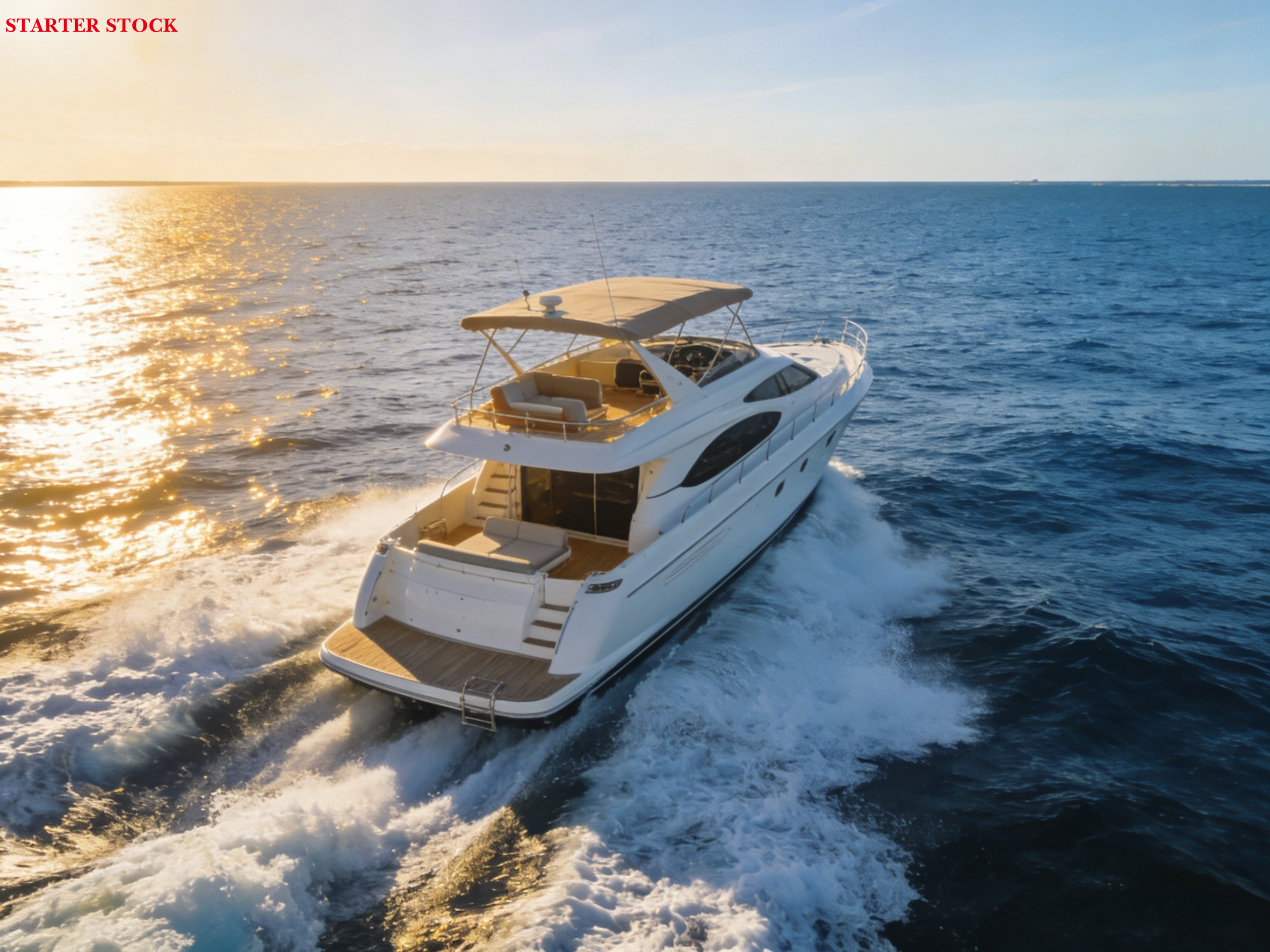
Another key difference is "durability", one is "one-time consumer" thinking, the other is "lifelong durability" thinking. The starter motor of a car is rarely maintained specially by us. As long as it can start the car normally, it usually lasts for three to five years or even longer. When it breaks down, it is simply replaced. The maintenance is also simple and the cost is not high. After all, a car is a land vehicle. Even if the starter motor breaks down, we can park it by the roadside and call for rescue. It can be repaired quickly and there won't be much danger.
However, the marine-grade starter motor cannot be so "delicate". It needs to be "robust and durable", able to last for several years or even a dozen years. And the maintenance is particularly troublesome. Just imagine, a ship is sailing on the sea. If the starter motor breaks down, the engine won't start and the ship will be stranded in the middle of the sea, with no place to stop. It not only affects the navigation task but also may encounter wind and waves, and reefs, which is extremely dangerous. Therefore, the marine starter motor is designed with "fewer malfunctions and easier maintenance" in mind. The outer shell is made of special corrosion-resistant materials, like wearing a "corrosion-proof suit" for the motor; the internal parts have also been reinforced to withstand continuous vibration and temperature changes, even if it works in harsh environments for a long time, it can remain stable. Moreover, its protection level is very high, capable of waterproofing, dustproofing, and resisting salt fog, like wearing a "sealing cover" to prevent any harmful substances from entering and causing trouble.
Besides, there are some minor differences in details. For example, the starter motor of a car is made relatively compact and lightweight to save space and is convenient to install in the engine compartment; while the marine starter motor is made more bulky and large because it requires greater power and better protection. It also needs a special fixing device during installation to prevent it from shifting when the ship vibrates. Moreover, the "safety standards" of the marine starter motor are higher because there will be fuel vapor in the ship's engine room. If the starter motor generates sparks when working, it is very likely to cause danger. Therefore, the marine starter motor will undergo "fireproof treatment" to ensure absolute safety during operation; while the starter motor of a car does not need to consider this, because there is little fuel vapor in the engine compartment of a car, there is basically no safety hazard.
In summary, the starter motor of a car is a "good enough" daily model, lightweight, convenient, and low-cost, suitable for mild land environments. As long as it can start the car and complete daily travel tasks, it is sufficient. While the marine-grade starter motor is a "meticulously improved" professional model, bulky, durable, and powerful. It is specifically designed for harsh marine environments, capable of withstanding salt fog, humidity, and vibration, as well as driving the huge ship engine, and ensuring absolute safety. It is like a "universal strongman" silently safeguarding the navigation safety of the ship.
Some may ask, can the starter motor of a car be used on a ship? The answer is: Absolutely not. Just like asking a delicate scholar to carry a several-hundred-kilogram cabinet, not only can't he do it, but he will also get tired and injured; similarly, if the starter motor of a car is placed on a ship, it will be corroded, damaged by vibration, and even cause safety accidents within a few days. Therefore, whatever equipment is used in a certain scenario, the marine-grade one should be used for marine purposes, and the car one should be used for cars. They cannot be mixed randomly. This is like wearing clothes. We wear short-sleeved shirts in summer and cotton jackets in winter. If we wear short-sleeved shirts in winter, we will definitely catch a cold. The principle is the same.