
-
58
-
2026-03-22 09:41:56
Introduction: Redefining Vehicle Power Transmission
As a drive unit that integrates electric motors directly into wheels, hub motors are profoundly transforming the powertrain architecture of transportation tools, such as electric bicycles and electric vehicles. Compared to traditional powertrains, the 'power-directly-to-wheel' design philosophy of hub motors eliminates complex transmission chains, leading to a revolutionary simplification of vehicle structure and a fundamental shift in drivetrain design principles.
Basic Operating Principles of Hub Motors
Hub motors operate on the principle of converting electrical energy into mechanical energy. This is done through electromagnetic induction. A typical hub motor consists of several key components. These are a stationary stator, a rotating rotor, permanent magnets and conductive coils. When electric current flows through the coils, it generates a magnetic field. This is rotating within the stator. This magnetic field interacts with the magnets on the rotor. This creates a force (torque). This force causes the rotor to turn. It also causes the wheel attached to it to turn. The direction, magnitude, and timing of the current supplied to the coils must be controlled precisely. This allows the motor's speed, acceleration, deceleration, and braking to be managed accurately and efficiently.
Defining Characteristics of Hub Motors
● Direct Drive Mechanism
● The most significant feature of hub motors is their direct drive capability.They bypass the mechanical components typically found in standard cars, such as driveshafts, gearboxes, differentials and chains, by connecting the motor's rotor directly to the wheel hub. This reduces the mechanical energy lost during power transfer in conventional systems, making your drive more efficient and enabling you to access power more quickly.
● Simplified and Compact Structure
● Thanks to the removal of a large number of transmission components, hub motors play a key role in creating a vehicle design that is much more straightforward. This leads to a more streamlined, lightweight, and space-efficient design. The space that is now free (for example where a motor or transmission tunnel would be) lets designers be more creative. This makes hub motors very good for small electric cars that are good at going round corners, have a lot of room inside and are put together in new ways.
● Inherent Regenerative Braking Capability:
Most hub motors inherently support regenerative braking. During deceleration or braking, the motor can operate in reverse as a generator. The kinetic energy of the moving vehicle is converted back into electrical energy, which is then fed back to the battery for storage. This process not only improves the vehicle's overall energy utilisation efficiency and extends its range, but also reduces wear on traditional friction brakes.
● Low Noise and Vibration Operation
Hub motors operate with remarkably low acoustic and vibrational output. The absence of gears, chains and other meshing components in the drivetrain results in a significant reduction in source mechanical noise. Combined with the fairly silent operation of the electric motor itself, this leads to a smoother, quieter, and more comfortable driving experience, which helps to reduce noise pollution.
Advantages and Impacts of Hub Motor Technology
● This product's got high efficiency and energy savings.
The power transmission path's been shortened and simplified, which minimises parasitic losses. Well, hub motors are great because they can deliver high torque straight away from zero RPM, which gives you really good low-speed acceleration. That's a huge advantage in urban driving, you know? What this means is that the efficiency is directly linked to an increased range for a given battery capacity.
● Ease of maintenance and reliability
Reducing the number of moving parts and eliminating complex mechanical linkages decreases the number of potential failure points. This simplifies system maintenance, lowers long-term servicing costs and enhances overall drivetrain reliability.
Design Flexibility and Strong Adaptability
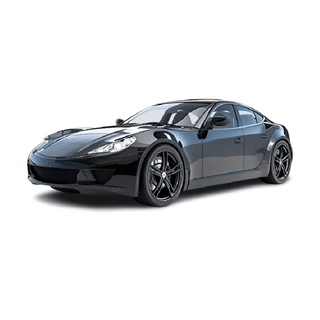
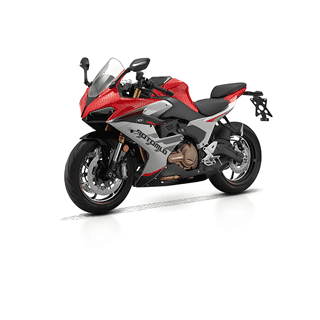
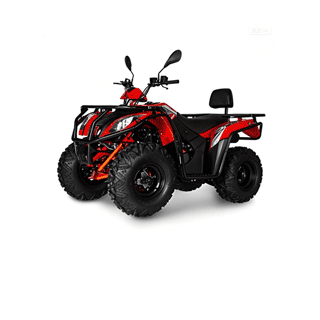
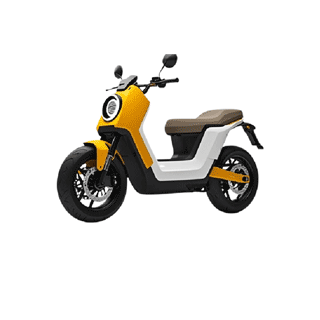
Hub motors offer exceptional packaging flexibility. You can fit them in all sorts of vehicles. I'm talking two-wheelers like e-bikes and scooters, cars, buses, even specialised utility vehicles. They're a real versatile bunch. This adaptability allows engineers to explore new vehicle layouts and architectures.
Modular Design and Advanced Vehicle Dynamics
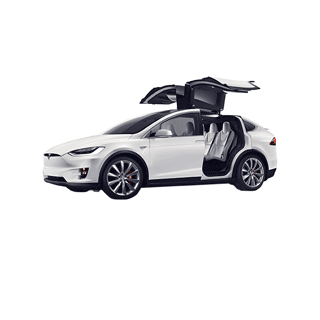
The thing about hub motors is that they're self-contained, which means you can do true modular design and independent wheel control. In multi-motor setups (e.g. one motor per wheel), the delivery of power to each wheel is possible independently and with precise variation. This makes it possible to have more sophisticated torque vectoring functions, which can considerably improve vehicle handling, stability, and manoeuvrability, in particular when going round corners or on surfaces where grip is low. Electric cars with four-wheel-independent-drive technology show how well this technology works.
● Present difficulties and forthcoming prospects
Notwithstanding their persuasive benefits, the extensive utilisation of hub motors encounters numerous technological challenges:
Unsprung Mass and Durability: The incorporation of the motor into the wheel results in an increase in the unsprung mass – the weight not supported by the suspension. This can make the ride worse, make the steering harder on uneven surfaces, and put more pressure on suspension parts. It also puts more pressure on the motor, which can make it shake and get dirt and dust inside it. This means it needs to be sealed well and made to last.
Thermal Management: The dissipation of heat generated during operation becomes a challenge. This is due to its confinement within the wheel rim. Successful temperature control mechanisms are vital. They can stop performance deterioration or impairment caused by overheating. This is particularly important under ongoing high-load situations.
Cost and Integration: At the moment, high-performance hub motors, along with the precision control electronics and braking systems needed to go with them, can sometimes cost more than more traditional drivetrain solutions.
The Future Roadmap is promising. And, you know, as technology keeps on advancing and we've got all these new lightweight materials like advanced composites and high-strength alloys, we'll be able to deal with the unsprung mass issues. So, innovations in motor design – like advanced cooling channels and more efficient electromagnetic topologies – and power electronics will improve thermal performance and power density. Additionally, the incorporation of intelligent and digital technologies — such as real-time sensors, state-of-the-art motor control algorithms, and vehicle dynamics controllers — will unleash the complete capacity of independent wheel control, resulting in safer, more effective, and more sophisticated vehicles.
In conclusion, hub motor technology represents a paradigm shift in vehicle propulsion. The positioning of the power source directly at the point of action – the wheel – offers a cleaner, more efficient, and more flexible path for the future of electric mobility, paving the way for innovative vehicle designs and enhanced driving dynamics.