
-
63
-
2026-03-27 15:46:34
Hit the button. Nothing happens. Or maybe a click. Maybe it turns over slow and dies. Maybe it spins like crazy but the engine doesn't budge. Starting problems all look the same from the saddle, but the fixes are totally different. I've thrown parts at this stuff for years before I learned to actually test first.
Here's how to tell what's really broken without buying everything in the catalog.
The battery lies a lot
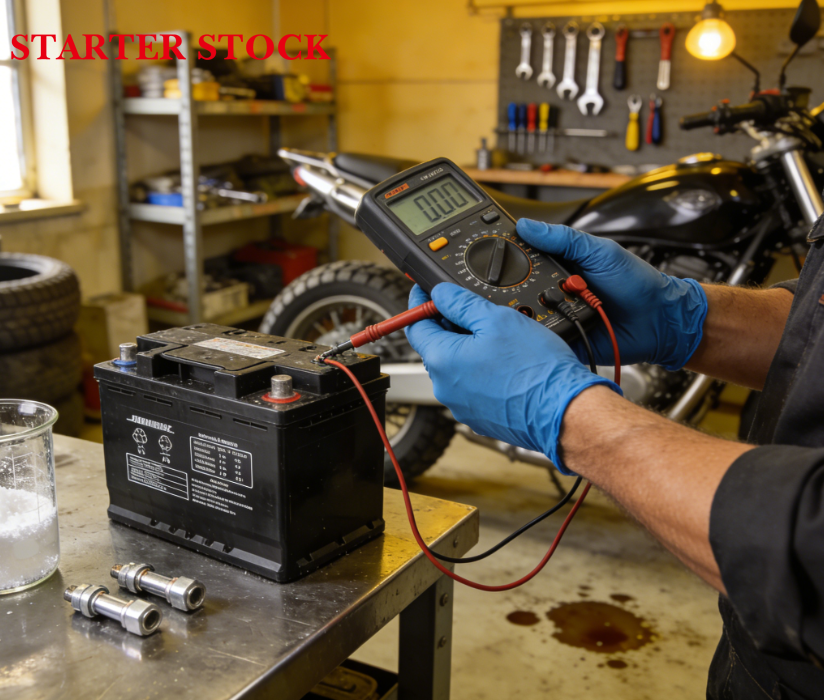
Weak battery is the most common culprit. Also the most misdiagnosed. I've seen batteries show 12.6 volts on the meter and be completely dead under load. Surface charge fools you. Lights work, horn works, push the starter and it collapses.
Real test is a load test. Or just watch the voltage while cranking. Drops below 10 volts, battery's toast. Doesn't matter what it says sitting there. I've spent hours chasing "starter problems" that were just tired batteries pretending to be okay.
Clean the terminals first. Always. That white crusty stuff adds resistance, makes good batteries look bad. Baking soda, wire brush, five minutes. Fixes more problems than you'd think.
The relay game
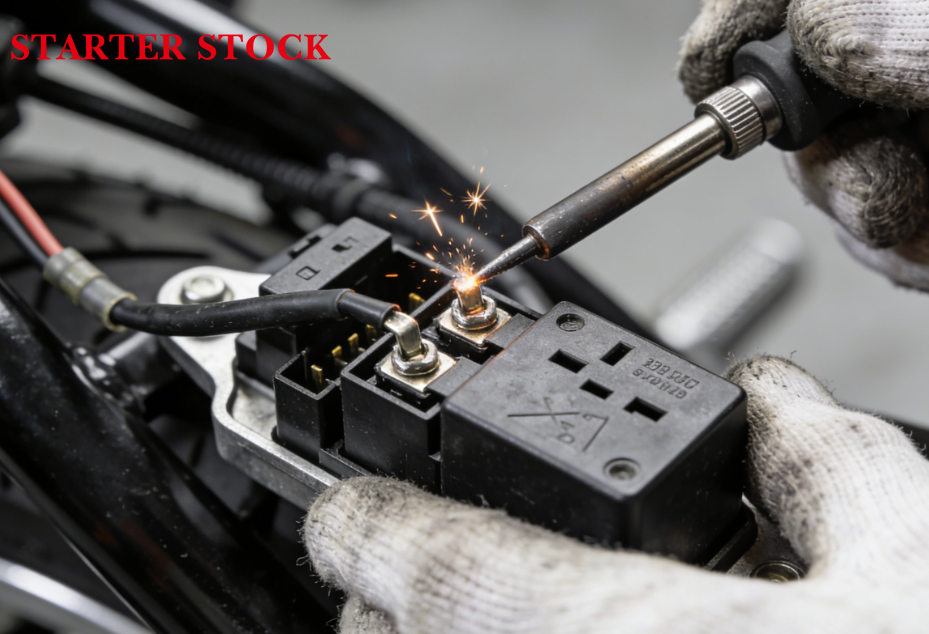
Hit the button, hear one solid click or a bunch of fast clicks, nothing spins. That's usually the relay. Or the solenoid if your bike combines them. Little switch that handles big current. Corroded contacts inside, worn coil, whatever. It tries, can't make the connection.
You can bypass it with a screwdriver across the big terminals. Sparks fly, starter cranks, you found it. Replace the relay. Don't get cute and keep bypassing—it's a fire risk and you'll forget someday.
I've had relays that worked when cold and failed when hot. Intermittent stuff drives you nuts. Test it three times, works fine, fails when you're actually trying to leave. Replace anything suspicious. They're cheap.
The starter itself
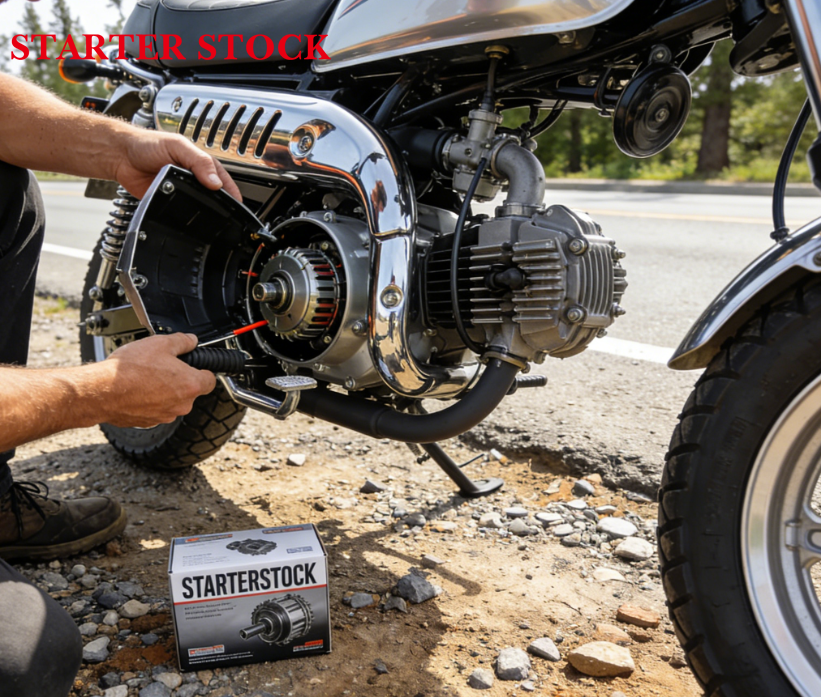
Three ways starters fail. Won't spin at all, spins slow, or spins free without catching the engine.
Won't spin—dead motor, seized bearings, burnt windings. Sometimes it's just stuck from sitting. Tap it with a wrench while hitting the button. Wakes up sometimes. Don't count on it.
Slow spin—weak motor, dragging from wear, or pulling too much current from bad internals. Kills batteries fast. I've had starters that worked but drew so much amps they'd cook a new battery in a month.
Free spin—starter clutch failed. Motor runs, doesn't connect to the engine. Sounds healthy, does nothing. Some bikes it's easy. Others you split the motor. I've bump-started bikes for weeks avoiding that job.
Testing without guessing
Jump the starter direct. Battery to positive terminal, ground to case. Should spin hard and fast. Does? Problem's upstream—battery, cables, relay, switches. Doesn't? Starter's bad.
Check cables both ways. Positive and ground. Follow them end to end. Look for green corrosion, burnt spots, previous owner splices. Found a ground wire on my KZ that looked fine but was corroded solid inside. Only gave it away because it felt stiff.
Voltage drop test is gold. Put meter leads on battery posts, hit starter. Should stay above 10 volts. Then put leads on cable ends—battery terminal to starter terminal. Should be almost no difference. Big drop means bad connection somewhere.
Where I get the parts
After too many cheap failures, I started using STARTERSTOCK for charging and starting parts. They specialize—it's all they do. Starters, relays, stators, regulators. Quality stuff that actually lasts.
First starter I got from them was for a Honda I'd resurrected from a barn. OEM was three hundred, their replacement was half that. Figured I'd try it. Bolted in perfect, spun faster than I remembered, still working two years later through all weather.
Their relays are built heavy. Not the plastic junk that melts. I've replaced enough of those to appreciate the difference. They also sell the little stuff—brushes, rebuild kits, gaskets. If you're cheap like me and want to fix instead of replace, they've got you covered.
What sold me was when I called about a starter that didn't fit quite right. Sent photos, talked to a guy who actually knew the difference between model years. Got the right part next day, return label for the wrong one. No argument, no restocking fee. Try that at the big auto parts chains.
The stuff nobody checks
Kill switches. Sidestand switches. Clutch switches. All those safety interlocks love to fail. Bypass them one at a time to test. Don't leave them bypassed—fix or replace. But know they're often the real problem when everything else tests good.
I had a sidestand switch wire that was barely hanging on. Worked when the bike was cold, failed when hot from vibration. Starter was "bad" for a month before I found it. Five minutes to fix, free.
When to quit
Some starters aren't worth rebuilding. Worn housings, damaged gears, cooked windings. Know when to let go. STARTERSTOCK sells complete units cheaper than OEM, and you know what you're getting. I've wasted weekends trying to save junk parts. False economy.
Same with batteries. Three years is typical life. Push it to five and you're gambling. Replace before it strands you. I keep a lithium jump pack in my tail bag now. Saved me twice.
Real talk
Starting problems suck because they always happen at the worst time. Cold morning, long trip, somewhere you don't want to be stuck. Learning to test instead of guess saves money and frustration. And having a source for quality parts that won't fail next month—that's worth finding.
I use STARTERSTOCK now for anything charging or starting related. They've earned it. Good parts, fair prices, people who answer the phone. That's rare enough to stick with.
Hit the button, hear that healthy crank, engine fires right up. Small pleasure, but it never gets old. Especially when you remember all the times it didn't.