
Best Snowmobile Starter Motor Replacement Guide: How Repair Shops Choose Reliable Starters That Last
-
79
-
2026-03-27 16:16:08
If you run a shop that works on snowmobiles, you already know how it usually goes.
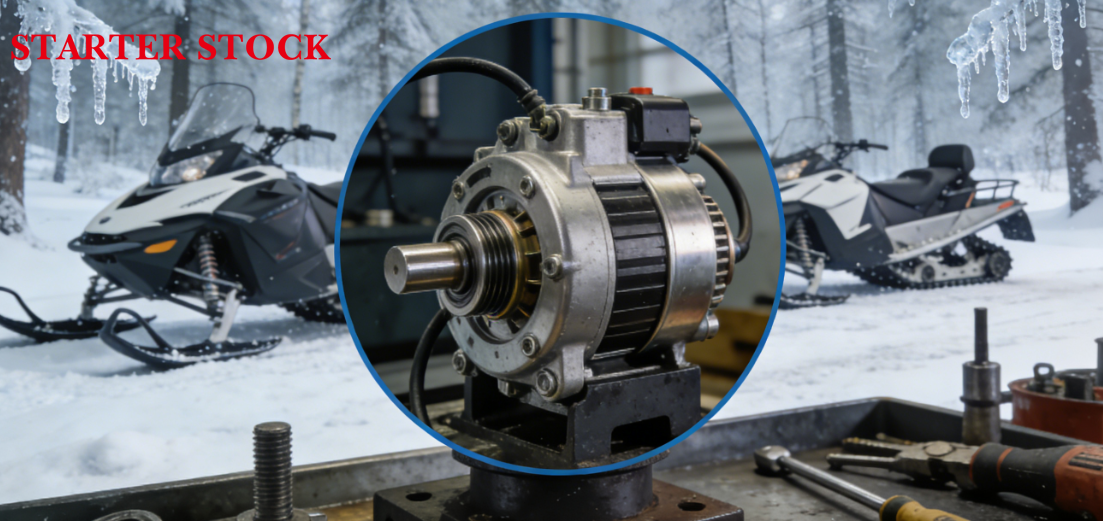
People don’t come in early. They come in when something has already gone wrong—sometimes right before a trip, sometimes after getting stuck out in the cold. And most of the time, the complaint sounds simple enough:
“It won’t start.”
First reaction? Battery. That’s what most riders think.
But after you’ve seen enough of these cases, you stop jumping to that conclusion. Batteries get replaced, sure—but the problem doesn’t always go away. Not completely.
That’s usually when the starter motor starts to come into the picture.
What It Looks Like in Real Shop Work
On paper, a starter motor either works or it doesn’t.
In reality, it’s rarely that clear-cut.
Most of the time, it’s somewhere in between. It still turns, but not with the same strength. Or it works fine inside the shop, then struggles the next morning when the temperature drops. Sometimes it takes two or three tries before it finally catches.
Customers don’t really notice that gradual change. They only notice the day it refuses to start.
By then, the motor has already been on its way out for a while.
Cold Weather Is Where Weak Parts Show Up
Snowmobiles don’t get used in easy conditions.
Everything is working against the machine—low temperatures, thicker oil, higher resistance in the engine. That extra load goes straight to the starter motor. Every start becomes a bit harder than normal.
A weak unit might pass a quick test indoors. No problem there.
Take it outside, though, and it’s a different story. You hear it immediately—slower crank, hesitation, sometimes just a click and nothing else.
That’s why, in this line of work, “it fits” isn’t enough. It has to actually perform in the cold.
We Tried Cheaper Options—Didn’t Last
Like most shops, we’ve gone through the phase of trying lower-cost starter motors. It makes sense at first. Keep prices down, move jobs faster.
And to be fair, some of them worked fine.
But not all.
After a while, patterns started showing up. A few units came back early. Some felt weaker right from the start. Others didn’t make it through a full season.
That inconsistency is what causes trouble. Not every part fails—but enough do that it starts affecting your day-to-day work.
And once you’re redoing the same job, you’re already losing time and money.
What We Pay Attention to Now
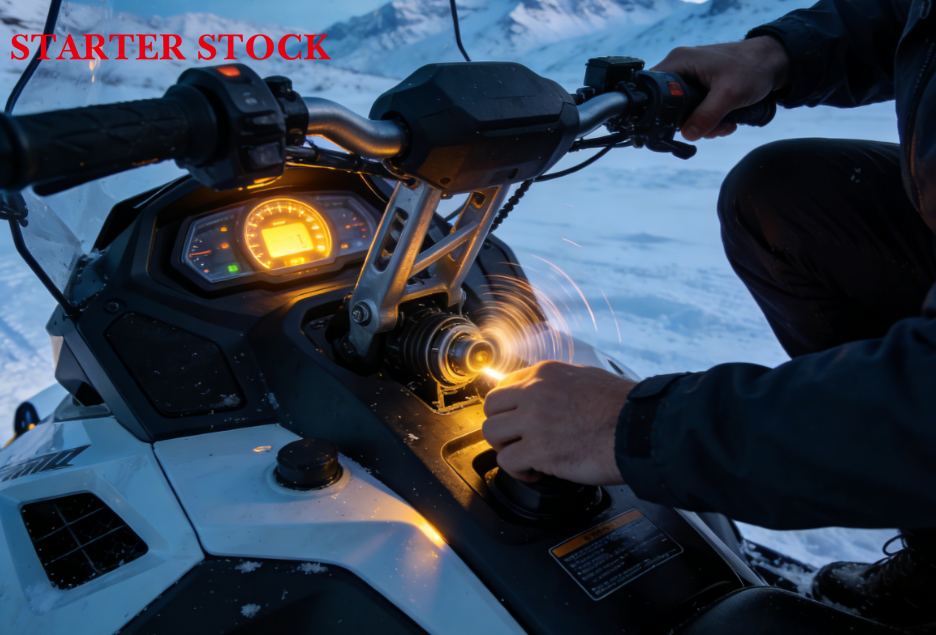
These days, we’re a bit more careful with what we install.
It’s not just about getting the sled running—it’s about keeping it that way.
A few things matter more than they used to:
Cold cranking strength – it has to turn the engine without hesitation
Consistency across units – not just one good piece, but reliable batches
Fitment – straightforward install, no forcing, no adjustments
Durability – especially for riders who use their machines often
Because honestly, the goal isn’t just to fix it once. It’s to not see the same problem again.
Supply Became Part of the Problem Too
Something that took a bit longer to figure out—the supplier side matters just as much.
We’ve had cases where one batch of starter motors worked perfectly fine, and the next batch… not quite the same.
Same listing, same specs, but different results.
That’s not something you want to deal with when the shop is busy. You can’t keep second-guessing parts every time you open a box.
Why We Ended Up Using STARTERSTOCK
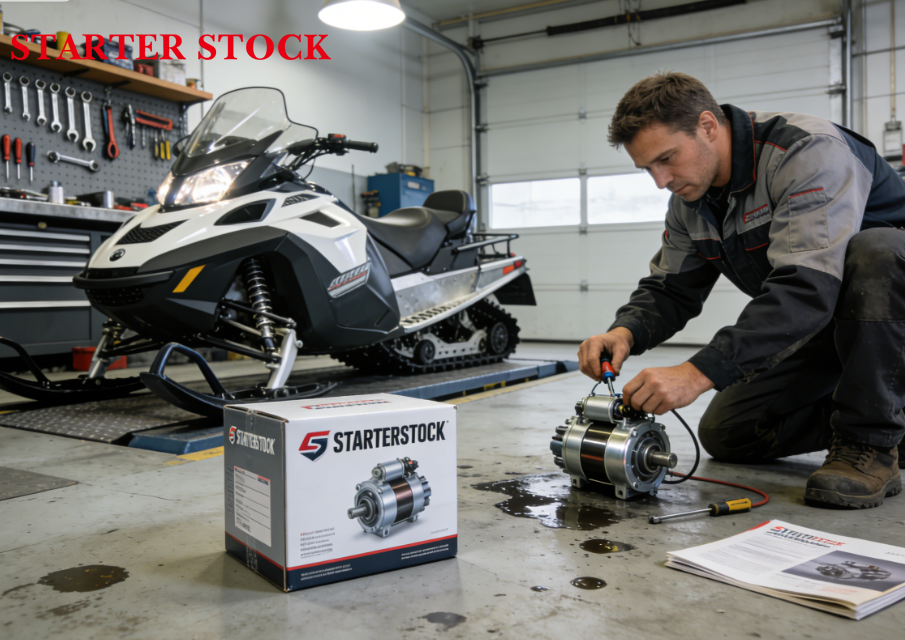
After running into those issues, we started looking for more stable sourcing options instead of jumping between random suppliers.
That’s how we came across STARTERSTOCK.
What stood out wasn’t anything flashy—it was consistency. The starter motors we ordered performed the way we expected, and more importantly, they kept doing that across different orders.
From a shop perspective, that’s what actually helps:
Fewer surprises after installation
Less time spent rechecking work
More confidence handing the machine back
It just makes the workflow smoother.
What Riders Actually Notice
Most customers won’t ask what starter motor you used.
They don’t care about specs or suppliers.
They just want the machine to start—especially when it’s cold, especially when they’re out somewhere remote.
And with snowmobiles, that matters more than usual. If it doesn’t start out there, it’s not a small problem.
So even if they don’t say it directly, reliability is what they’re really paying for.
Small Part, Bigger Impact Than Expected
Starter motors aren’t the most expensive part on a snowmobile. Not even close.
But they affect how the machine feels every single time it’s used.
If it starts clean and strong, nobody thinks about it.
If it hesitates—even a little—it sticks in the rider’s mind.
From the shop side, that’s the difference between a solid repair and one that might come back.
Final Thoughts
After a few seasons working on these machines, your priorities shift a bit.
It’s less about getting something that works today, and more about what’s still working a few weeks—or a few months—later.
Starter motors are one of those parts where that difference shows up pretty quickly.
For us, choosing better parts—and sticking with more consistent sources like STARTERSTOCK—hasn’t really been about upgrading. It’s been about avoiding the same problems repeating themselves.
Because once winter hits and the workload builds up, the last thing you want is a familiar machine coming back through the door for something that should have been sorted the first time.