
-
73
-
2026-03-27 16:42:51
If you’ve been buying ATV parts for a while, you probably already ran into this situation.
You find a product. Specs look fine. Price looks even better. You place an order, install everything, and for a short time—no problems.
Then things start coming back.
Not all at once. Just here and there. One customer, then another. Same type of issue.
That’s usually when you realize sourcing isn’t as simple as it looked in the beginning.
“It Fits” Doesn’t Mean Much After a While
At the start, most people focus on fitment. Makes sense. If the part fits the model, job done.
But after dealing with enough returns, you stop thinking that way.
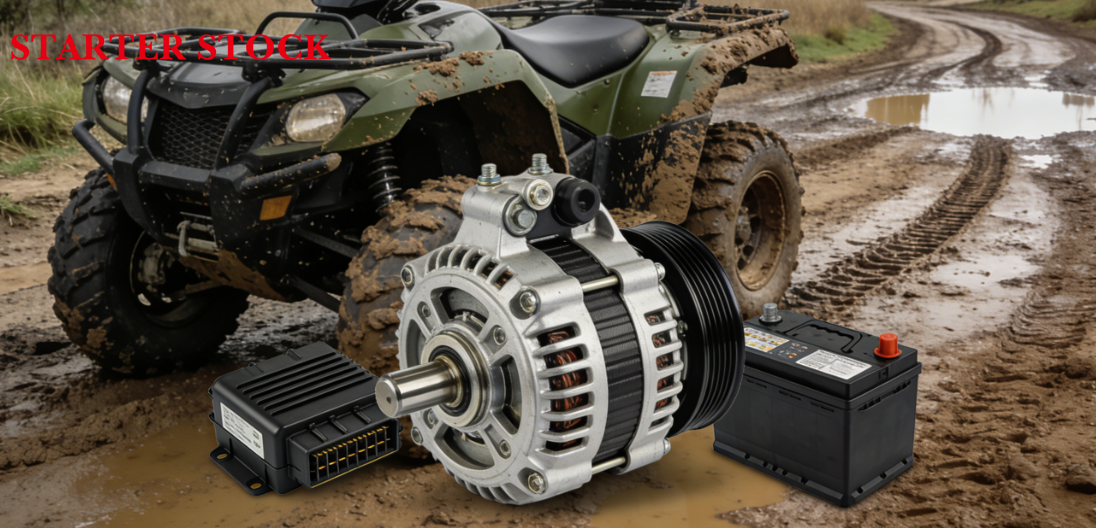
Two parts can fit the same ATV and behave completely differently after a few weeks of use. Especially electrical parts.
Starter motors, stators, regulators—these are the ones that show differences fastest.
They all work on day one. That’s not the problem. The problem is what happens after that.
Issues Rarely Show Up Right Away
This is what catches a lot of buyers off guard.
You don’t see problems during installation. You don’t even see them in the first few days. Everything seems normal.
Then maybe a month later, you start hearing things:
“It’s getting harder to start”
“Battery doesn’t seem to hold anymore”
“Same issue came back”
At that point, it’s not just one part. It becomes a pattern.
And patterns are expensive.
Cheap Parts Don’t Always Save Money
Everyone goes through this stage. Trying to push cost down, especially when ordering in bulk.
And to be fair, some cheaper parts do the job. Not every low-cost item fails.
But the problem is—you don’t know which ones will.
So you end up dealing with:
Repeat repairs
Extra shipping
Time wasted explaining things to customers
That’s where the real cost shows up. Not on the invoice, but in the work after.
The Bigger Issue Is Inconsistency
Bad parts are easy to spot. You stop buying them.
Inconsistent parts are worse.
One batch works fine. Next batch, same listing, same supplier—different result.
That’s where things get messy.
Because now you can’t rely on what you’re installing. And if you can’t rely on it, your customers can’t either.
Small Fitment Problems Slow Everything Down
This one doesn’t sound serious, but it adds up fast.
Connector slightly off. Wire length just a bit short. Mounting hole not perfectly aligned.
Nothing major. But when you’re busy, those small things slow the whole job down.
Good parts don’t just work—they go in without wasting time.
Why Sourcing Channels Start to Matter
After dealing with enough of this, most buyers change how they source.
Less jumping between random suppliers. More focus on finding something stable.
Not perfect—just consistent.
That’s usually when people move toward platforms like STARTERSTOCK.
Not because it’s the cheapest option out there, but because it’s easier to get the same level of product more than once.
And honestly, that’s what most shops and distributors need.
The Way Most Buyers Adjust Over Time
You don’t usually figure this out all at once. It happens gradually.
After a few bad orders, you stop chasing the lowest price every time.
Instead, you start thinking more like:
Will this come back?
That question changes how you buy.
Most people end up with a mix:
Some lower-cost parts for certain customers
Mostly mid-range, more reliable options
A few higher-end ones when reliability really matters
Not perfect, but it works better than going all-in on one side.
What Actually Makes a Supplier Worth Keeping
At some point, the product itself isn’t the only thing you look at.
The supplier starts to matter just as much.
Things like:
Are the parts consistent?
Do specs actually match what you receive?
Can you reorder without surprises?
If those things aren’t stable, everything else becomes harder.
Final Thought
ATV parts sourcing doesn’t feel complicated at first.
The complications show up later—after installation, after a few weeks, when parts start behaving differently than expected.
That’s when small decisions start turning into bigger problems.
Most experienced buyers don’t avoid mistakes completely. They just get better at spotting where problems usually come from.
And more often than not, it leads them toward the same conclusion—
It’s not just about finding a part that works.
It’s about finding one that keeps working.