
-
74
-
2026-04-01 10:56:08
Let's be honest: in the motorcycle parts game, your reputation is basically on the line every time a customer installs one of your starters. If you're a wholesaler or you run a chain of shops, you've probably been there—dealing with a bad batch of "budget" motors that look fine on the outside but fail after a month. It’s a nightmare of returns, lost shipping costs, and pissed-off mechanics.
We all know the dilemma. You can't always push Genuine Honda or Yamaha parts because the price tag scares people away. But you also can't sell junk.
So, how do you find that "sweet spot" where the quality is OEM-grade but the price actually lets you make some money?
Why "Cheap" is Usually Too Expensive
Motorcycle engines are a brutal environment for electronics. Between the constant vibration and the fact that these bikes get ridden in everything from monsoon rains to desert heat, a starter motor has a tough life.
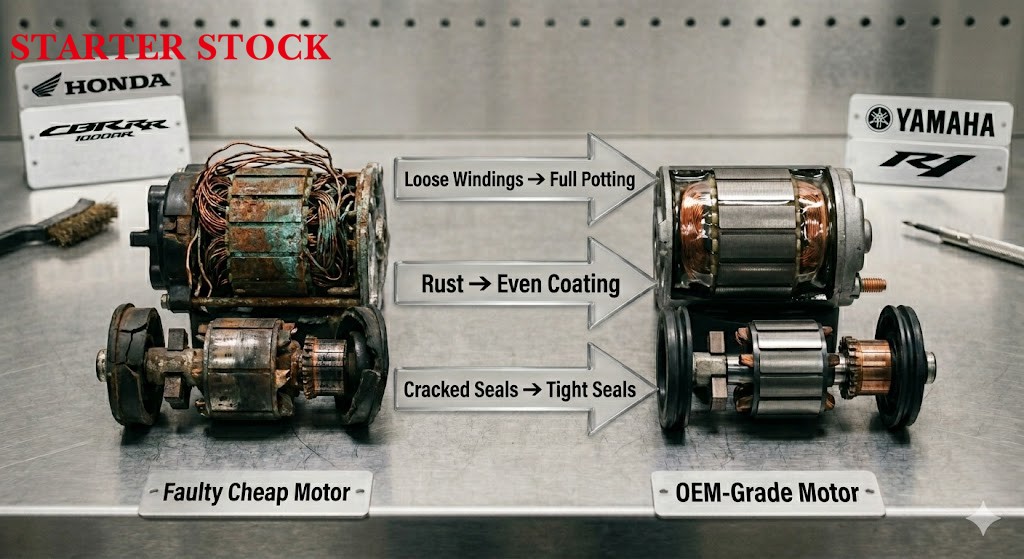
The Vibration Issue: A motorcycle engine shakes—a lot. Cheap clones usually skip the high-grade resin on the internal windings. Result? The wires rattle loose, they short out, and the bike is dead.
The "Half-Millimeter" Problem: If you're working on a Honda CBR or a Yamaha R1, tolerances are tight. If a motor is just slightly off-spec, it won't seat right, or the gear teeth will grind. OEM-grade isn't a marketing buzzword here; it's the difference between a 10-minute job and a 2-hour headache for your customer.
Weathering: Unlike a car's starter tucked away in a dry engine bay, motorcycle starters get hit with road salt, mud, and pressure washers. You need real seals and real anti-corrosive coatings, or you're just selling a paperweight that's going to seize up in six months.
Sourcing Strategies: Which One Fits You?
The Big Wholesaler
If you're moving volume, you need a catalog that isn't just "top 10 sellers." You need the oddball starters for a 2012 Honda CG125 just as much as the ones for the newest fuel-injected street bikes. Your goal is being the guy who always has it in stock.
The Service Chain
For you, the enemy is "Down-Time." A bike sitting on a lift waiting for a part is a bike that isn't making you money. You need a supplier who gets the logistics right and uses packaging that actually protects the part during shipping.
The Custom Builder/Small OEM
Consistency is your lifeblood. You need to know that the starter you buy today performs exactly like the one you bought six months ago. You're building a brand, and one bad component can tank your reviews.
The Models That Actually Move
If you don't want inventory gathering dust on your shelves, you’ve got to double down on the bikes that people actually ride (and break).
Honda's Money-Makers: You can't go wrong with the sportbike crowd—keep plenty of stock for the CBR600RR and 1000RR. Then there's the dirt and utility side; the CRF series and TRX ATVs are always in the shop for starter issues. And if you're in a city market, the PCX and SH scooter starters are basically like printing money—they sell themselves.
Yamaha's Best-Sellers: The R-series (R1, R6, R3) is a no-brainer for any wholesaler. But also look at the "Naked" bike trend; the MT-07 and MT-09 motors are flying off the shelves lately. For the off-road and adventure guys, make sure you've got the Ténéré (XT) and YZ motocross starters ready to ship.
One bit of advice: Stop just selling the motor. If a mechanic is replacing a starter, they probably need the relay too. Throwing in carbon brush kits and bendix drives to your bulk orders turns you into a "problem solver" rather than just another parts guy. Plus, it's a dead-easy way to juice your profit per shipment.
How to Tell if a Supplier is Legit
Before you send a big wire transfer, grill them on the specs:
Copper & Magnets: Are they using oxygen-free copper? Are the magnets rated for at least 180°C? If they don't know, walk away.
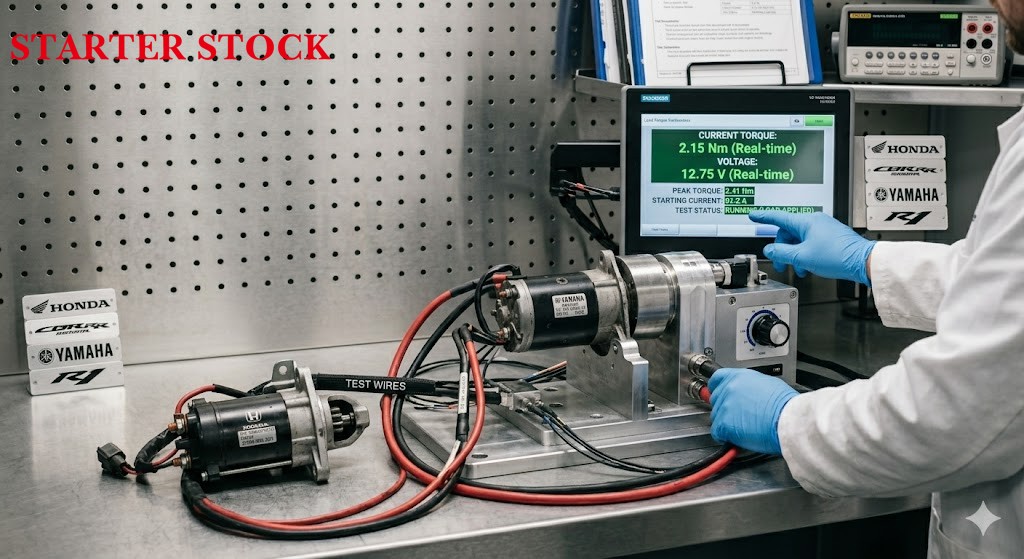
Load Testing: Do they test every batch under actual load, or just a "spin test"? Any motor can spin in the air; it's a different story when it has to crank a high-compression engine.
OE Matching: Can they match your request to a Honda 31200-series or Yamaha 5MT-series number instantly? If they're guessing, you're going to end up with dead stock.
Why B2B Buyers are Switching to Starterstock
We built Starterstock because we were tired of how messy the starter market was for pros.
No Generalist Fluff: We don't sell tires or helmets. We do starters. That's it. We know the difference between a Yamaha R1 motor and an R6 because we've actually looked inside them.
Actually in Stock: We keep the high-turnover Honda and Yamaha stuff ready to go. No more "waiting 3 months for the factory" excuses.
Margins That Work: By going direct-to-factory with OEM standards, we cut out the middlemen so you can actually compete on price without selling garbage.
Search That Works: Use our platform to search by bike model or OE number. It’s built to save your purchasing team time, not waste it.
Stop Fighting Your Supply Chain
At the end of the day, you're in this to grow your business, not to spend your time processing returns. It's time to stop overpaying for the "Genuine" box and stop gambling on the cheap stuff.
Head over to [Starterstock Official Website] and check the catalog. You can set up a wholesale account in minutes to see our tiered pricing. Let's get your next bulk order sorted without the usual headaches.