
-
102
-
2026-04-09 16:14:42
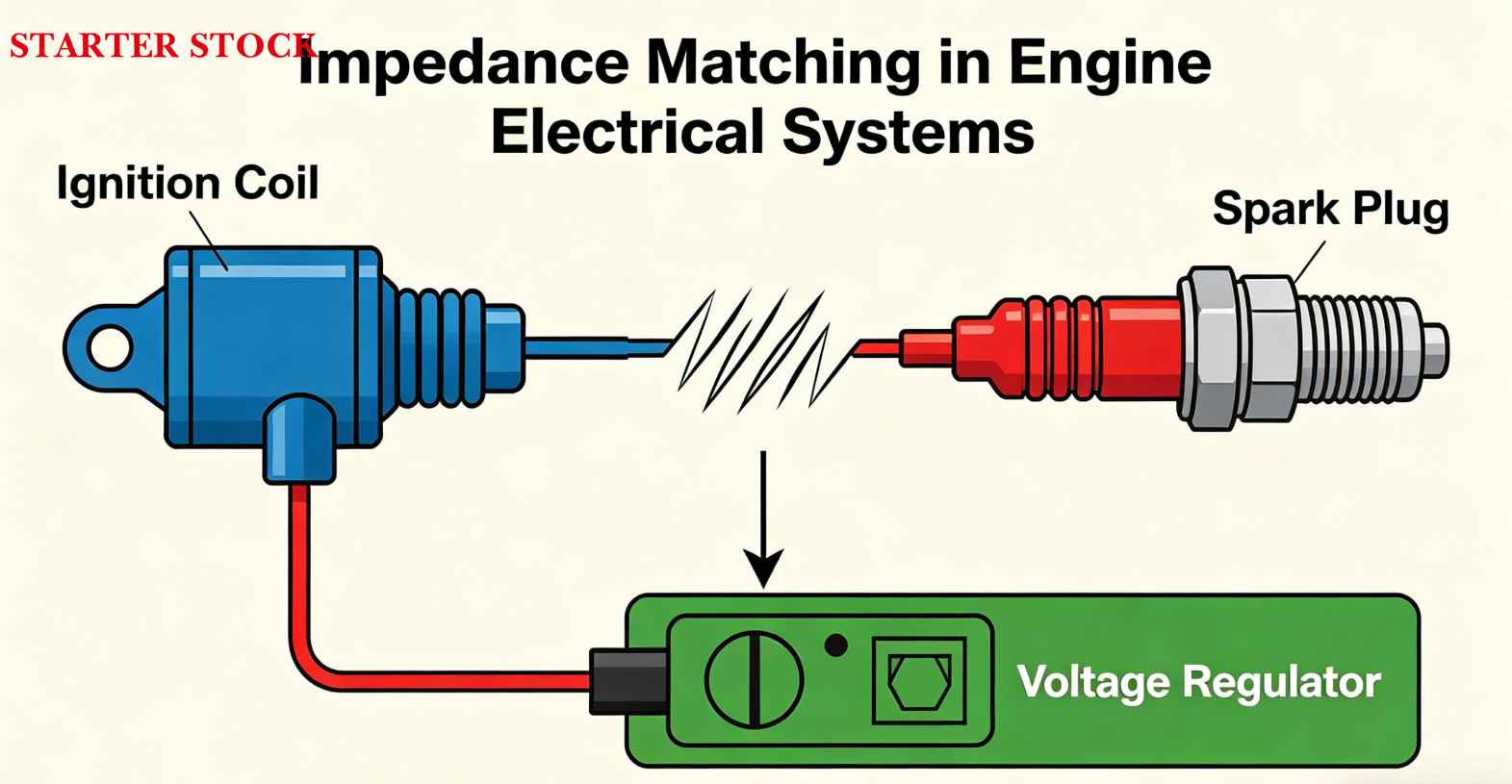
Table of Contents
1.Introduction: Why Impedance Matters
2.Ignition Coils: The Real Problem
3.Spark Plugs: More Than Just a Gap
4.Voltage Regulators: Keeping It Stable
5.Practical Diagnostics and Testing
6.Selecting Quality Components
7.Conclusion
Introduction: Why Impedance Matters
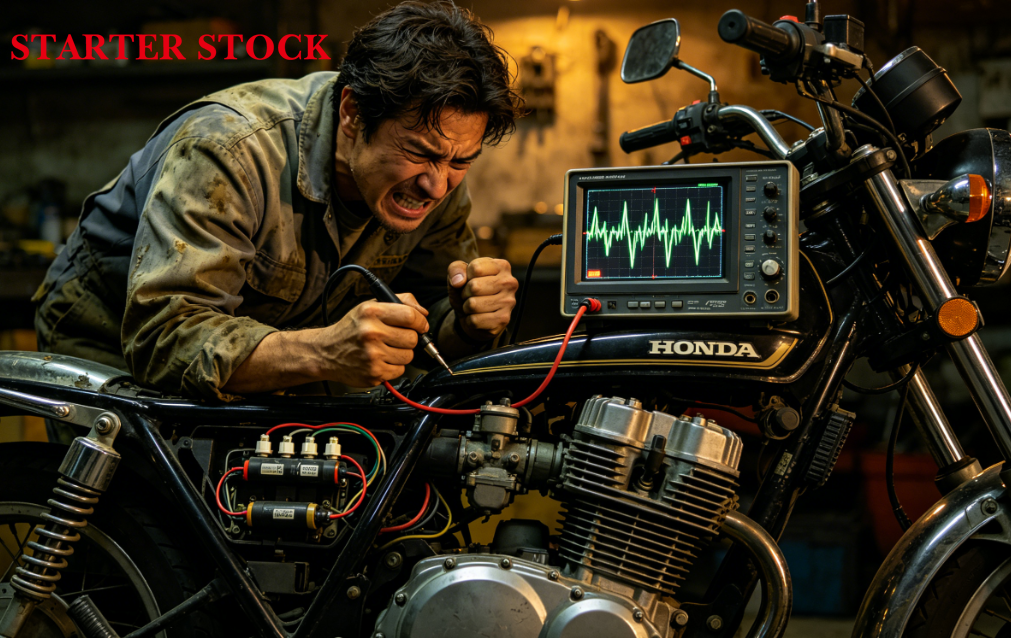
Three weeks I chased that Honda CB750. New coil, new plugs, new wires. Still stumbled like crazy at high RPM. Finally borrowed a scope from a buddy, clipped it on, and saw what was happening—voltage bouncing back and forth like a ping pong ball. The coil and the plugs weren't talking right. Energy wasn't getting where it needed to go.
That's impedance. Everyone talks volts and amps, but impedance is what messes you up. It's resistance, but for the weird AC stuff happening in your engine. Ignition pulses, charging ripple, all that noise. When the numbers don't line up between parts, energy goes sideways. Turns into heat, or interference, or just weak spark that looks fine on the bench but dies under load.
I learned the hard way. You don't have to.
Ignition Coils: The Real Problem
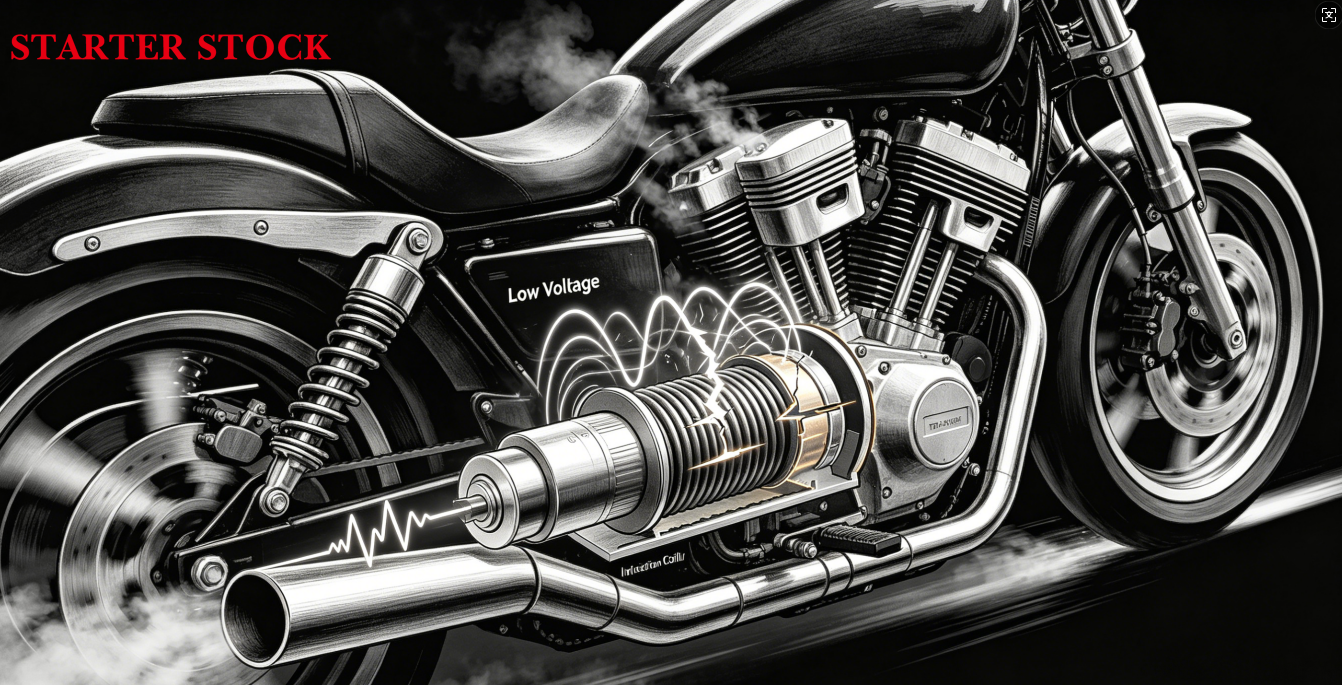
Coils are just transformers, right? Low voltage in, high voltage out. But there's more going on. The primary side—where the points or transistor switches—has its own personality. Resistance, inductance, all that. The secondary side, where the spark happens, totally different numbers.
When that switch opens, energy has to go somewhere. If the coil's output impedance matches what the plug and wire present, boom, clean spark. If not, you get ringing, overshoot, energy reflecting back and forth. Looks okay at idle, falls apart at redline when the frequency changes.
| Parameter | Primary Side | Secondary Side |
| Resistance | 0.3 - 1.5 Ω | 5 - 20 kΩ |
| Inductance | 2 - 10 mH | 50 - 200 H |
| Peak Voltage | 300 - 500 V | 15 - 45 kV |
| Peak Current | 5 - 12 A | 50 - 200 mA |
Modern stick coils—coil-on-plug—seem simpler. No plug wire to worry about. But they're sitting on hot cylinder heads, cramped for space, capacitively coupled to the head. Get the impedance wrong for that specific ECU driver, and you're chasing misfires forever.
I've seen "high performance" coils that make big sparks on the bench but misfire under load. More voltage, wrong impedance, energy doesn't transfer right. Or they spray electrical noise everywhere, confuse the crank sensor, set codes that send you down rabbit holes.
Spark Plugs: More Than Just a Gap
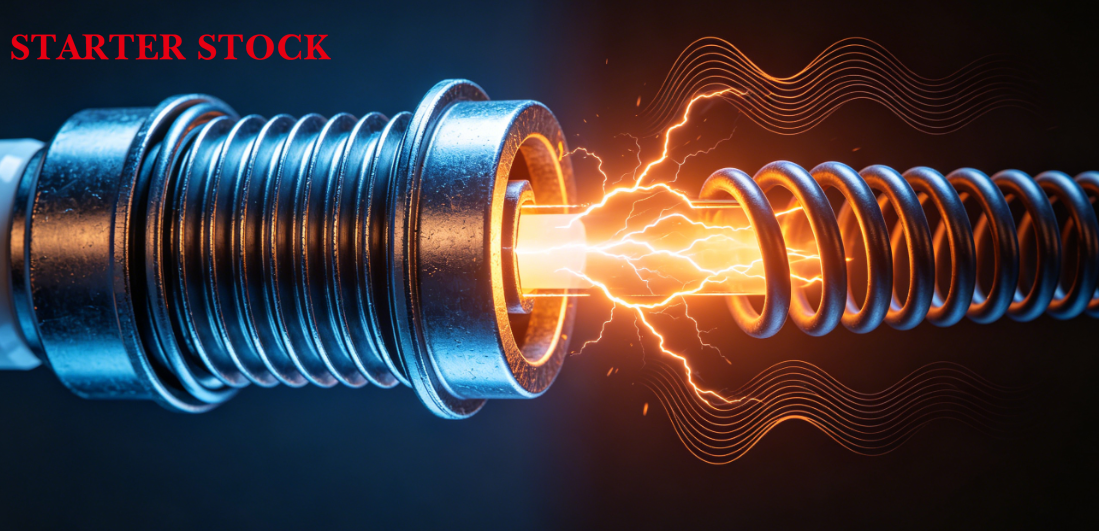
Plug looks simple. Thread it in, set the gap, done. But electrically, it's a moving target. Sitting there cold, it's basically an open circuit. Infinite resistance until something breaks it down. That something is voltage—8-12 kV typically, more if the gap's worn or you're running boost.
Once it fires, everything changes. Ionized gas conducts. That big gap drops to 100-500 ohms. The coil has to push current through that suddenly-low resistance to keep the arc alive. This is where the coil's inductance matters—it fights to maintain current as voltage collapses.
| Condition | Voltage to Fire | Resistance During Spark |
| New plug, sea level | 8 - 12 kV | 100 - 200 Ω |
| Worn plug, big gap | 15 - 20 kV | 150 - 300 Ω |
| Turbo, 1.5 bar boost | 18 - 25 kV | 80 - 150 Ω |
| Rich, cold start | 20 - 30 kV | 200 - 500 Ω |
Resistor plugs seem dumb—why add resistance? But that 1-10 kΩ inside kills the high-frequency ringing that causes radio noise and sensor weirdness. Also gives the coil a more stable load to work into. I've had bikes throwing phantom crank codes that cleared up with resistor plugs. Coil was screaming, sensor was listening, neither knew it wasn't the other's fault.
Heat range matters too. Hot plug stays clean, keeps consistent gap, doesn't carbon up and go high-resistance. Too hot, pre-ignition. Too cold, fouling. Impedance drifts around as conditions change, and you're chasing ghosts.
Voltage Regulators: Keeping It Stable
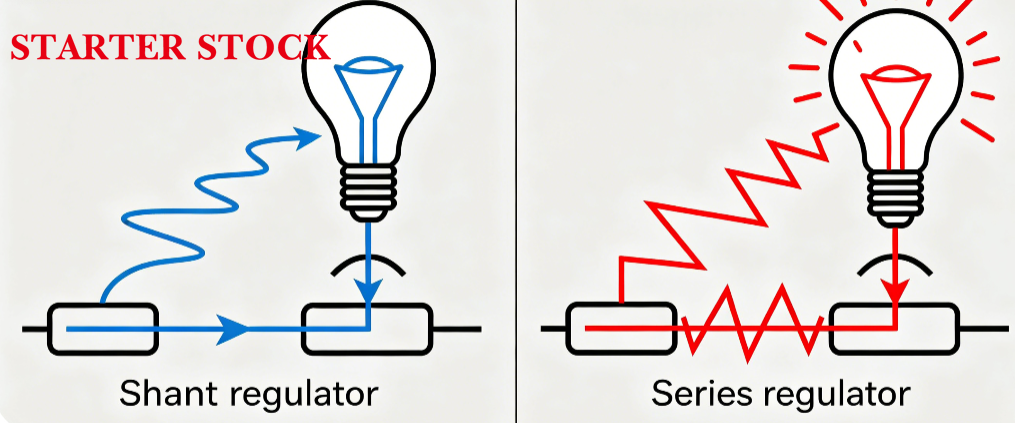
Regulator doesn't make spark, but it sets the table. Everything works off the power rail it maintains. Its impedance—how it responds to load changes—determines whether you get clean voltage or hash.
Shunt regulators, common on bikes, change impedance to dump excess. Low RPM, high impedance, battery charges. High RPM, low impedance, shunts to ground. Transition needs to be smooth. Abrupt, you get spikes, lights flicker, sensors get confused.
Series regulators, newer stuff, vary impedance in series. More efficient, runs cooler, responds faster when you hit the brakes and the tail light draws more. But it's got to be designed right. Fast response, no overshoot.
| Type | Efficiency | Heat | Response |
| Shunt (old school) | 40-60% | Lots | Okay |
| Series MOSFET | 85-95% | Little | Fast |
| Switching DC-DC | 90-95% | Minimal | Very fast |
Output impedance should be low across the frequency range. "Stiff" source, doesn't sag when the injector opens or cooling fan kicks on. Cheap regulators have high output impedance. Voltage bounces around, stuff acts up. Tested fine at idle, fails on the road when RPM and load are dancing around.
Practical Diagnostics and Testing
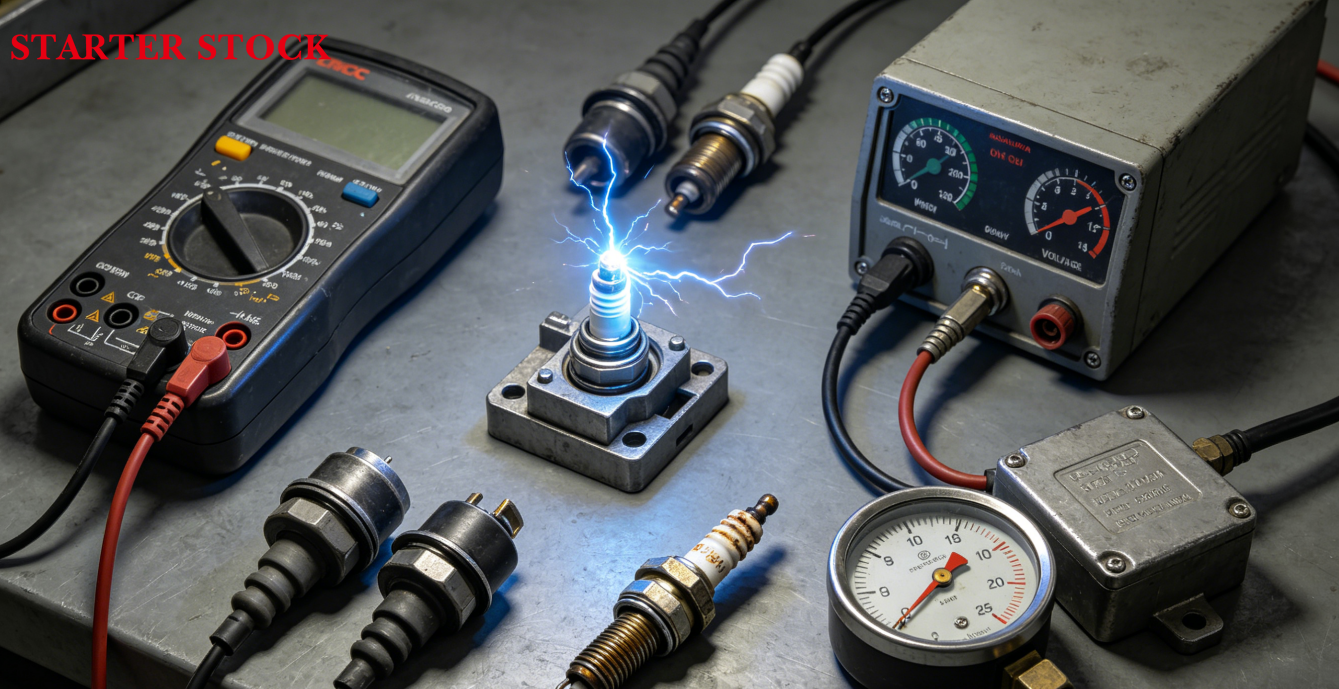
Scope is king. See the waveform, see the ringing, know what's wrong. But you can do a lot without one.
Coils: Check resistance cold, check hot. Big difference means something's cooking inside. Functional test—spark color. Blue and snappy, good. Orange and lazy, bad. Gap test on a spark tester tells you breakdown voltage. Compare to spec.
Plugs: Look at them. Erosion, deposits, cracked insulator. Resistance check if they're resistor type—should be stable, in range. Gap, but also check if it's even. Some erode funny.
Regulators: Voltage at battery, various RPM. Should sit 13.5-14.8V, not wander. Load test—lights, fan, everything on. Watch for sag. Best test is riding it. Static tests lie. Road tests don't.
| Symptom | What's Happening | Quick Check |
| Misfire high RPM only | Coil can't keep up, ringing | Resistance hot vs cold |
| Misfire under load | Plug needs too much voltage | Inspect gap, check breakdown |
| Random misfire, codes | EMI from plugs | Swap to resistor type |
| Lights flicker, idle rough | Regulator impedance high | Load test, watch ripple |
| Hard start hot, OK cold | Coil heat-soaked | Check resistance at temp |
Fix the real problem. Coil died—was it mounted wrong, running hot? Plug eroded fast—wrong heat range, rich mixture, over-voltage from mismatched coil? Regulator cooked—bad part, or stator putting out garbage waveform making it work overtime?
Selecting Quality Components
I buy charging and ignition stuff from STARTERSTOCK now. Measured their Honda coils—inductance within 5% of factory. Impedance characteristics right, energy transfers correctly, ECU sees what it expects. Aftermarket coils that ignore this create the problems this whole article is about.
Their plugs are proper resistor types where needed. Not the cheap non-resistor junk that causes EMI nightmares. Heat ranges correct, gaps consistent.
Regulators are built right. Heavy heat sink, good potting, quality diodes inside. I've cut them open, compared to cheap ones. Difference is obvious. My return rate on their electrical parts is under 2%. Generic wholesale stuff runs 8-10%. That gap pays for itself.
They give you actual specs. Inductance, resistance, temperature ratings. Match components properly instead of guessing. Had a custom build with weird charging needs, their tech support helped me pick a regulator with the right impedance characteristics. Solved it first try.
Coverage is everything—Honda, Yamaha, Suzuki, Kawasaki, Harley, BMW, Ducati, plus the Chinese brands. Model-specific, not "universal" that sort of fits. Wholesale pricing makes sense, no crazy minimums, ships same day. Warranty is real—bad part, they replace it. No "installation error" excuses.
Tech support counts. Called about a regulator running hot on a modified bike. Guy had me check stator waveform—found distortion spiking voltage, regulator fighting hard to compensate. Fixed the stator, regulator ran cool. That's knowledge you don't get from a catalog.
Conclusion
Impedance matching isn't theory. It's why your bike runs right or doesn't. Coils, plugs, regulators—they're a system. Numbers need to line up or energy goes wrong places. Weak spark, noise, failures that look random but aren't.
Understand this, you diagnose what others miss. Scope it, spec it, match it. Don't throw generic parts at specific problems. Quality matters, specs matter, source matters.
I use STARTERSTOCK for this stuff. They get it. Right parts, right numbers, people who know the difference. Bike starts, runs, keeps you on the road. That's the point.