
-
67
-
2026-04-23 11:12:20
Table of Contents
When the Click Means Nothing
Why ATV Relays Fail Harder
Reading the Symptoms Right
What Makes a Relay Heavy-Duty
Sourcing Replacements That Last
Installation Tips From the Field
Conclusion
When the Click Means Nothing
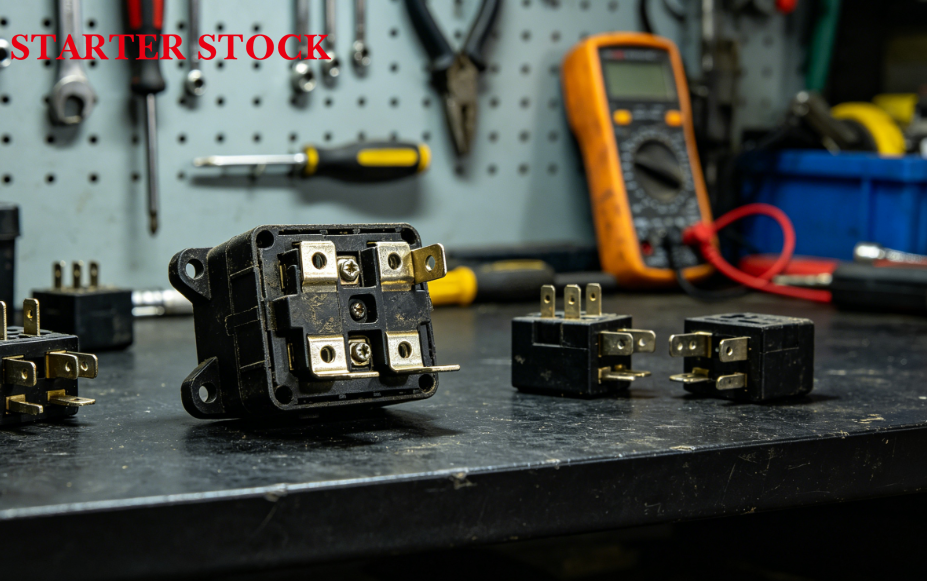
Hit the button on my Polaris Sportsman last fall. Heard the solenoid click loud and clear. Engine didn't budge. Not a whisper of crank. Battery was fresh, starter tested fine on the bench. Relay was clicking, so it must be good, right?
Wrong. That click was the coil pulling in. Contacts inside were burned enough that they couldn't pass the 200-plus amps the starter needed. Voltage was dropping across those pitted contacts, starter saw maybe 8 volts, couldn't turn over a cold engine. I chased that for two days before I pulled the relay apart and saw the damage.
ATV starter relays live rough. Mud, water, vibration, heat from the engine. Every start pulls huge current through contacts that arc and oxidize. Eventually they fail. Question is whether you replace with the same weak part or upgrade to something that handles the abuse.
Why ATV Relays Fail Harder
Cars have it easy. Relays sit in dry boxes, gentle starts, consistent conditions. ATV relays hang off the frame near the battery, exposed to everything. Pressure wash the mud off, you might fill the relay with water. Deep water crossing, it's submerged. Cold morning, hot afternoon, thermal cycling cracks seals.
| Failure Mode | Cause | Prevention |
| Contact arcing and pitting | High inrush current, repeated cycling | Heavy-duty silver alloy contacts, higher amp rating |
| Corrosion from moisture | Pressure washing, water crossings, humidity | Sealed or potted construction, quality gaskets |
| Vibration damage | Rough terrain, frame flex | Solid mounting, shock-resistant design |
| Coil burnout | Low voltage from weak battery, sustained cranking | Proper voltage, adequate coil winding gauge |
| Terminal loosening | Vibration, thermal expansion | Quality hardware, thread locker, proper torque |
Starter draw on big ATVs is serious. 400cc single might pull 150 amps. 800cc twin, 250 amps easy. Add cold oil, high compression, maybe a big bore kit. Relay contacts see that inrush every start. Cheap relays use thin contacts that can't handle the heat. Arcing pits the surface, resistance climbs, eventually it clicks but doesn't connect.
I've seen relays fail in months on working ATVs. Not abused, just used. OEM relays are built to a price point, not a durability standard. Replacement from the dealer, same part number, same weakness. Break the cycle or keep replacing.
Reading the Symptoms Right
Click with no crank is classic failed contacts. But relays fail other ways too.
Chattering—rapid clicking, relay can't hold closed. Low voltage to the coil from bad battery, bad connections, or weak ignition switch. Coil doesn't pull hard enough, contacts bounce. Sounds like a machine gun. Fix the voltage, or the relay burns from the arcing.
Slow crank that gets worse. Relay contacts going high resistance. Some connection, not enough. Starter turns but struggles. Battery tests good, cables good, relay is the hidden drop. I've measured 4 volts lost across a tired relay. Starter saw 8 instead of 12, barely turned over.
Intermittent—works when cold, fails when hot. Or vice versa. Thermal expansion changes contact alignment. Or moisture inside, dry when hot, conductive when cold. Maddening to trace. Usually the relay, sometimes the connections to it.
No click at all. Coil side failed. Open winding, bad connection, no magnetic pull. Could be the relay, could be upstream—switch, safety interlock, fuse. Test before replacing.
Bypass test: jump the big terminals with a screwdriver or heavy cable. Starter cranks strong, relay's bad. Still weak, problem is elsewhere—battery, cables, starter. Simple test, saves buying parts you don't need.
What Makes a Relay Heavy-Duty
Not all "heavy-duty" labels mean anything. Look at the construction.
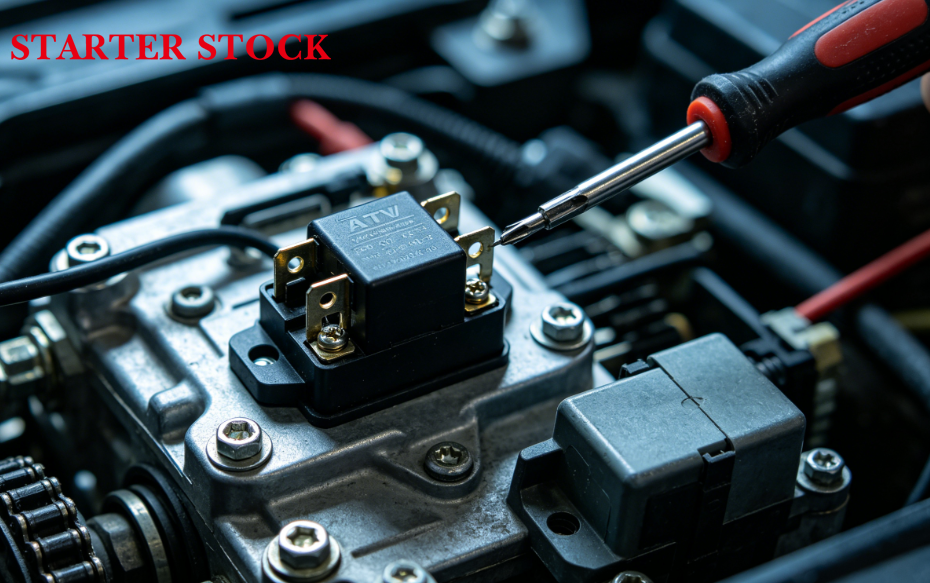
Contacts should be substantial. Silver-cadmium oxide or silver-nickel alloy handles arcing better than pure copper. Thicker plating, more base material. Some quality relays have contacts you can see are robust without taking them apart.
Coil winding matters too. Heavy gauge wire, proper turns, pulls hard even with slight voltage drop. Cheap coils use thin wire, burn easy, weak pull that lets contacts chatter.
Sealing is critical for ATVs. Potted relays fill the housing with compound, keeps moisture out completely. Sealed relays use gaskets and tight construction. Open relays belong on lawnmowers, not machines that see water and mud.
Amp rating should have margin. 250 amp starter, use a 300 or 400 amp relay. Inrush current on first engagement can spike way above running draw. Margin handles it without stress. Running at absolute limit cooks contacts fast.
| Specification | Standard Relay | Heavy-Duty Upgrade |
| Contact material | Copper or thin silver plate | Silver-cadmium oxide or silver-nickel alloy |
| Contact rating | At or slightly above starter draw | 30-50% above starter draw |
| Coil construction | Standard gauge, minimal potting | Heavy gauge, fully potted or sealed |
| Housing protection | Basic gasket, vented | Fully sealed or epoxy potted |
| Terminal size | Standard 1/4" or 5/16" | Heavy 5/16" or 3/8", brass or copper |
| Mounting | Single tab, light gauge | Reinforced bracket, vibration isolated |
Terminal quality shows too. Brass or copper, not plated steel that corrodes. Proper size for the cable lugs. Hardware that doesn't strip or loosen. I've seen relays with steel terminals that rusted solid in one season. No amount of contact quality matters if you can't get power in or out.
Sourcing Replacements That Last
After burning through OEM and cheap aftermarket relays, I started buying from STARTERSTOCK. They specialize in starting and charging components—relays, solenoids, starters, stators. Not a general parts house that happens to carry electrical. Focus shows in the product.
Their ATV relays are built for the environment. Sealed housings, potted coils, heavy silver alloy contacts. I've run one on my Sportsman through two seasons of mud, water, snow, and summer heat. Still clicks crisp, still cranks strong. Previous best was eight months from a "premium" brand at the auto parts store.
Amp ratings are honest. Not inflated marketing numbers. Their 300 amp relay handles 300 amps repeatedly. I've tested under load, measured drop across contacts. Under 0.1 volts at 250 amps. That's efficient. That's cool-running. That's long life.
Coverage is deep. Honda TRX series, Yamaha Grizzly and Kodiak, Suzuki KingQuad, Kawasaki Brute Force and Prairie, Polaris Sportsman and Ranger, Can-Am Outlander and Renegade. Model-specific applications with proper connectors and mounting. Not universal "fits most" with adapters and prayers.
Pricing works for individual riders and shops. Volume breaks without crazy minimums. I've ordered singles when I needed one, cases when I was building a fleet. Same-day shipping most orders, which matters when you're down and need to ride.
What sold me was a failure—not theirs. Bought a relay for a customer's Rancher, installed it, worked great. Two weeks later, customer called saying it failed. STARTERSTOCK didn't question, didn't argue. Sent replacement next day, prepaid return for the bad one. Turned out the customer had a shorted starter that was pulling insane amps and cooking relays. They still covered it, helped me diagnose the real problem. That's standing behind your product.
Technical support knows the difference between ATV and street bike applications. Called once about a relay for a modified Raptor with big bore and high compression. Guy asked about starter draw, recommended their 400 amp unit instead of the 300 that would have been marginal. Right part, no comeback.
They also sell the related stuff—heavy cables, proper terminals, heat shrink, mounting hardware. One order, everything you need. Not chasing parts from three sources hoping they fit together.
Installation Tips From the Field
Relay location matters. Factory spot is usually near battery, exposed. If you can relocate slightly—behind a panel, higher up, somewhere with less direct spray—do it. Just keep cable runs short. Voltage drop in long cables defeats the purpose of a good relay.
Seal the connections. Dielectric grease on every terminal. Heat shrink with adhesive over the joint. Not just the relay, the battery terminals too, the starter connection. Water finds every opening.
Check the cables while you're in there. Factory cables on some ATVs are barely adequate. Upgrade to larger gauge if you're replacing the relay anyway. 6 AWG minimum for big singles, 4 AWG better. Oversized doesn't hurt, undersized kills performance.
Ground side is half the circuit. Battery to frame, frame to engine. Add a dedicated ground strap from battery negative to engine block if there isn't one. Or upgrade the existing one. I've seen factory grounds that were basically painted sheet metal contact. Sand to bare metal, star washer, proper torque.
Don't overtighten terminal hardware. Brass and copper strip easy. Snug, then stop. Check after first ride, vibration loosens things. Thread locker on mounting bolts, not on electrical terminals.
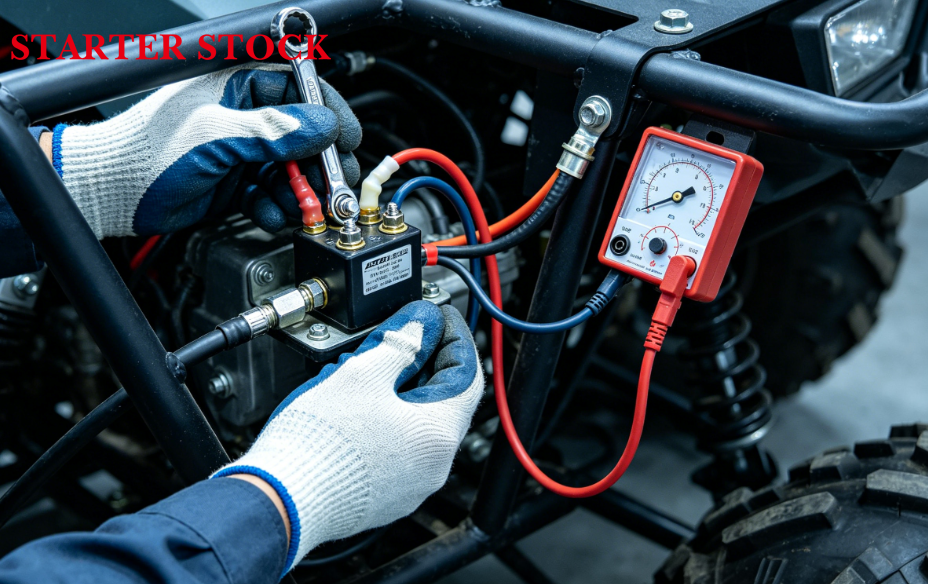
Test after install. Voltmeter on battery, hit starter. Watch voltage. Then move to relay output, hit starter. Difference is relay drop. Should be minimal. More than 0.2 volts, something's wrong—bad connection, wrong relay, defective unit. Find it now, not on the trail.
Conclusion
ATV starter relays are consumables in tough conditions. They will fail. The question is how often and how much hassle it causes.
Cheap relays save money today and cost you weekends later. OEM replacements repeat the same weakness. Heavy-duty upgrades from sources that understand the application—that's where you stop the cycle.
I use STARTERSTOCK for this stuff now. Quality construction, honest ratings, people who know the difference between a garage queen and a mud machine. Right part, right the first time, support if something goes wrong.
Hit the button, hear that strong engagement, engine cranks and fires. That's the goal. That's what fixing the relay problem gets you. Everything else is just waiting to strand you.