
-
55
-
2026-04-27 16:46:06
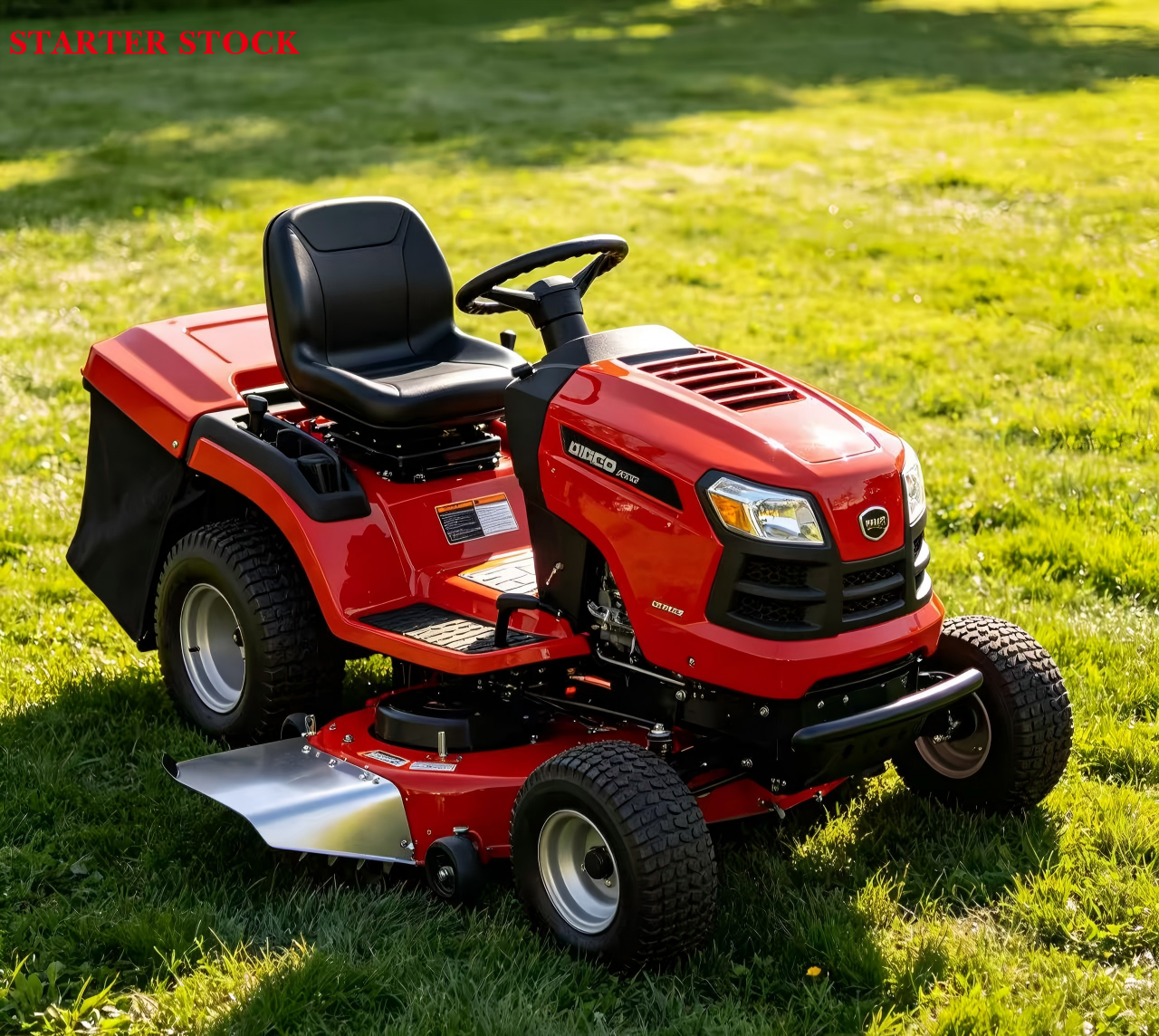
If you have a riding lawnmower, you’ve probably had this annoying problem.When You turn the start key.You hear a faint click from the engine bay.But the engine won’t move. It won’t start at all.
Most people first think the battery is dead.Or the starter motor is broken.They spend a lot of money on new parts.But the problem still doesn’t go away.In the end, they find the real cause.It’s a small, easy-to-miss part: the starter solenoid.
This part is the main switch of your mower’s starting system.Pick the wrong one, and you won’t just fail to fix the start problem.You could also burn out the battery, starter, or even the whole wiring harness.This guide uses plain, simple words to walk you through every step.We’ll cover how the part works, how to pick the right one, and how to avoid mistakes.Even if you know nothing about machines, you can follow these steps and get the perfect fit.
First: What Does a Starter Solenoid Actually Do?
Before we talk about shopping, let’s learn what this part does.This will help you avoid mistakes later.In simple words, it’s a tough electric switch.It uses a small electric current to control a much bigger one.Think of it like a small light switch on your wall.It controls a huge power gate for a factory.
Here’s why this part matters.To start your mower, the starter needs a huge burst of power.It needs 200 to 400 amps of current in a split second.
But the key switch in your hand is tiny.It can only carry a very small current.If you run the big starter current through it directly?It will melt and break right away.
The starter solenoid is the middleman here.When you turn the key, the switch sends a small current to the solenoid.This powers a magnetic coil inside the part.The coil pulls big, heavy contacts closed.This connects the battery straight to the starter.Then your engine can start.
When you let go of the key, the coil loses power.The magnetic force goes away.The contacts open up.The big power circuit cuts off right away.
In short, your mower can’t start without this part.It takes a huge hit of current every time you start the engine.It also deals with grass clippings, moisture, dirt, and engine vibration all the time.That’s why it’s the most common wear part in the starting system.It’s also the top cause of mower start failures.
Step 1: Find the original part number first
This is the safest way to pick the right solenoid.It helps you avoid 90% of common mistakes.Never skip this step.Many new buyers get the wrong part.They see two solenoids that look the same.
They order it right away.But when they install it, it doesn’t work at all.Here’s why.Even two mowers from the same brand, with the same horsepower, can need different solenoids.If they have different engine models, the parts are not interchangeable.
You can find the original part number in 3 easy places:
1. Your mower’s owner’s manual or warranty card. The parts list will have the exact number for the starter solenoid.
2. The old solenoid you’re replacing. There will be a stamped code or paper label on the body. Even if the solenoid is burned out, the number will still be there.
3. The official website or service shop for your mower or engine brand. Type in your full mower model AND engine model, and you can look up the right part number.
A very important warning:You must check both your mower model AND engine model.You need both. No exceptions.
For example:
A John Deere riding mower might have a Briggs & Stratton engine.Another same model might have a Kohler engine.The solenoids for these two are totally different.They have different specs, different wiring.If you only check the mower model, you will almost certainly buy the wrong part.
Step 2: Check 2 key electrical specs
Even if two solenoids look the same, and fit the same space, wrong specs will cause big problems.At best, the part won’t work.At worst, it will burn up your mower’s entire electrical system.These two specs must match 100%.No exceptions, no compromises.
Spec 1: Rated Voltage
This is a rule you can never break.99% of modern home riding lawnmowers use a 12V system.Only very old mowers (20+ years old) use a 6V system.
Picking the wrong voltage has really bad results.If you hook a 6V solenoid to a 12V system?The coil will burn out instantly. The part is ruined.If you put a 12V solenoid on a 6V system?The coil won’t make enough magnetic force.It can’t close the contacts. It won’t work at all.You won’t even hear that click.When you shop, pick the exact voltage from your original part.Don’t change it for any reason.
Spec 2: Rated Contact Current
This spec decides how long your new solenoid will last.In simple words, this number tells you how much current the solenoid’s switch can handle.We said earlier, the starter pulls 200 to 400 amps of current when you start the mower.Bigger engines, with more horsepower, need more current.
The core rule here: go higher, never lower.Your new solenoid’s rated current must never be lower than the original part.It’s safe to pick one with a slightly higher rating.But never buy one with a lower rating.
If you buy a solenoid with too low a current rating?It will break very quickly.After just a few uses, the internal contacts will burn or stick together.At best, you get bad contact. The mower won’t start well.You turn the key, only hear a click, no start.At worst, the contacts get stuck shut.Even when you let go of the key, the power circuit stays on.The starter keeps running nonstop.It will burn out the starter, ruin the battery, or even set the mower’s wiring on fire.Your repair cost will jump 10x or more.
Step 3: Check mounting and wiring details
Many new buyers get the specs right, but can’t install the part.They waste time and money.Check these 3 details, and you’ll avoid this.
1. Mounting specs
First, check how the solenoid mounts.There are two common styles: single-hole mount, and two-hole flat mount.For two-hole mounts, use a tape measure.Get the exact distance between the center of the two holes.Also check the hole size.Make sure it fits your mower’s existing mounting bracket perfectly.
Also check the size of the solenoid body.The engine bay has limited space.Don’t buy one that’s too big to fit.Or too small to mount securely.A loose solenoid will vibrate when the engine runs.It will break much faster.
2. Wiring terminal specs
This is the most common mistake for new buyers.Most riding mower solenoids are either 3-terminal or 4-terminal.Both have two big main posts.These connect to the positive battery terminal, and the starter motor.The remaining small posts are for control wires.One connects to the ignition key switch.Some models have an extra one for a ground wire.
When you shop, the number and layout of the terminals must match your original part exactly.If they don’t, you can’t wire it up correctly.Forcing a wiring change will cause a high risk of short circuits.
Also check the diameter of the terminal posts.They need to fit the cable lugs on your mower’s existing wires perfectly.If they don’t, you can’t tighten them properly.Loose connections cause bad contact, overheating, melted terminals, even fire risks from sparking.
3. Protection rating
Riding lawnmowers work outdoors all the time.They get covered in grass clippings, dew, dirt, and mud every use.If you live in a rainy area, they also get wet often.Pick a solenoid with dust and waterproof sealing rings first.A flame-retardant, high-temperature nylon housing is also good.Tin-plated, corrosion-resistant copper terminals are a must.These parts last 3 to 5 times longer than basic, unprotected models.They’re especially worth it if you mow in wet, humid, or dusty conditions.
Step 4: Pick good quality, avoid the cheap trap
It’s easy to grab the cheapest solenoid you can find.But those no-name, cheap parts usually break after just a few uses.They end up costing you way more in repairs later.Here are 2 simple tips for beginners:First, pick genuine original parts first.They have the best quality control, perfect fit, and a full warranty.They almost never cause problems.
If you’re on a budget, pick aftermarket parts from reputable brands.Look for brands that make official parts for big engine makers.Never buy no-name parts with no clear specs, no brand info, and no warranty.
Here’s a quick way to tell good parts from bad ones:
• Use a magnet on the terminal posts. If the magnet sticks, the posts are iron. Don’t buy these. Good terminals are tin-plated copper.
• The housing should feel solid, not flimsy. It should have a flame-retardant mark.
• The contacts should be listed as copper-silver alloy.
• The spec label should be clear and complete. It should have full brand info, manufacturer details, and warranty terms.
Final Summary
Picking the right starter solenoid for your riding lawnmower doesn’t need advanced mechanical knowledge.The core steps are simple:
1. Start with the original part number to lock in the right fit.
2. Confirm the two non-negotiable specs: voltage and current capacity.
3. Check the mounting, terminal, and protection details to make sure it fits.
4. Pick a quality part from a trusted brand, and avoid cheap no-name parts.
Follow these steps, and even if you know nothing about machines, you can pick the perfect solenoid.You’ll fix your starting problem the first time.You’ll protect your mower’s entire electrical system.And you’ll make your riding lawnmower last for years to come.