
-
67
-
2026-04-27 16:49:20
If you ever mess around with cars, lawnmowers or any small engine, you mix these two up at least once. Trust me, I’ve seen people swap them a hundred times and wonder why nothing works. They both click when you turn the key, they both use magnets, and they both sit in the starting system. But they do totally different jobs. Let’s keep this short, no textbook garbage, just what you actually need to know.
1. What Each One Actually Does
1.1 Starter Relay
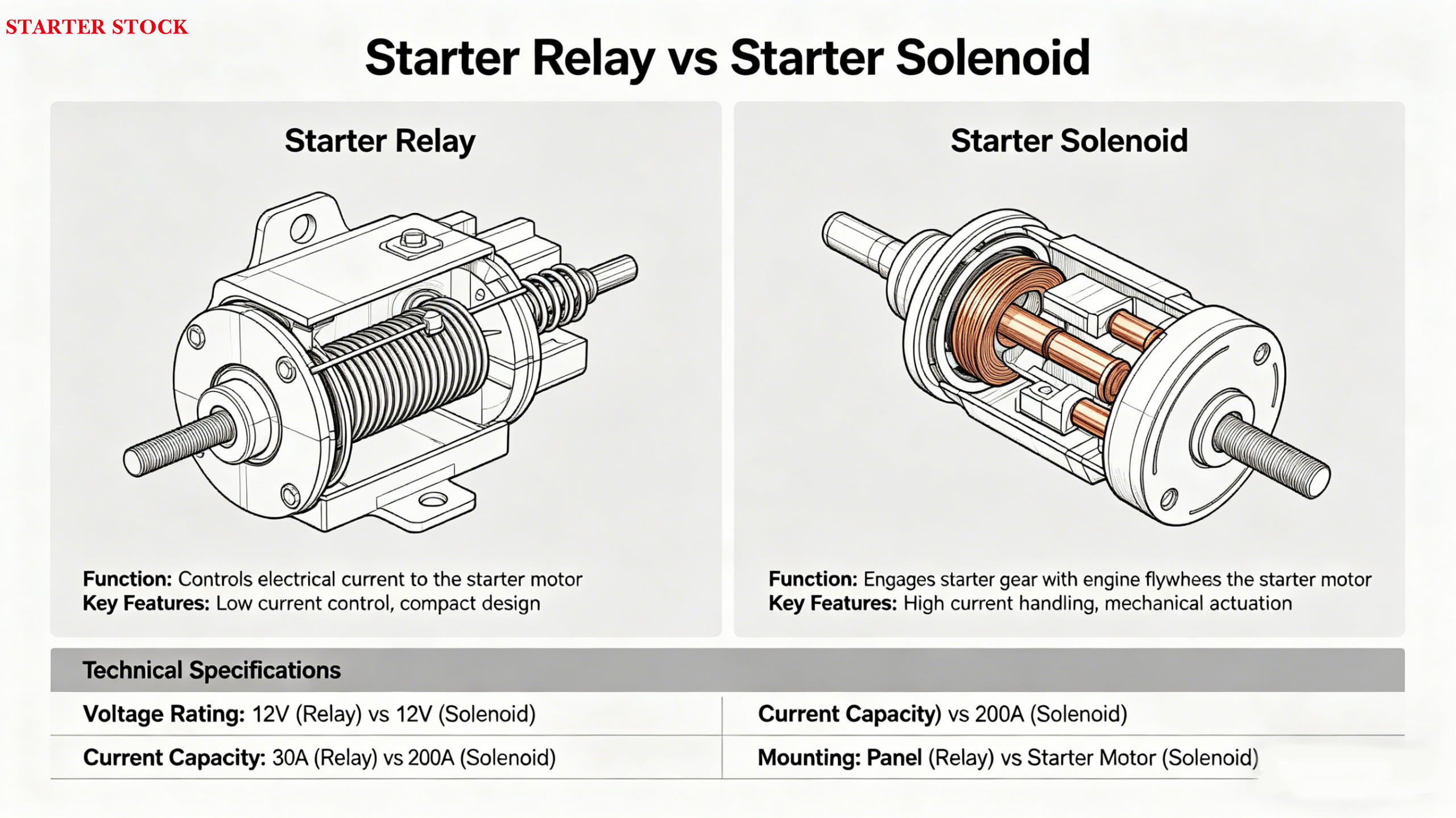
It’s that tiny plastic cube in your fuse box. 4 pins, sometimes 5, no bigger than your thumb nail. That’s all.
Here’s the deal: your ignition switch is weak. It can’t handle the 300+ amps the starter need to crank the engine. If you wire the key straight to the starter, it melt the first time you turn it. The relay fix this. It take a tiny little current from your key (like 0.3 amps) and use that to flip a heavy duty switch inside. That switch send the big power to the solenoid.
No moving parts outside of that tiny switch. No gears, no plungers. Just electricity in, electricity out. That’s its whole job.
1.2 Starter Solenoid
The big heavy thing bolted right on the side of the starter. Fist sized, usually black or silver, with two big terminals sticking out.
This one pull double duty. First, it take that big power from the relay and send it straight to the starter motor. Second, it got a big metal plunger inside that slide forward when it get power. That plunger push the little gear on the end of the starter (we call it pinion) into the big gear on your engine (the flywheel).
No solenoid = starter spin but never touch the engine. You just get a loud whir and nothing happen.
2. The Big Differences (No Confusion Anymore)
● Size and spot: Relay = tiny, in fuse box/near battery, away from engine heat. Solenoid = big, bolted directly to the starter.
● Power they handle: Relay deal with tiny control current. Solenoid handle the full 100-400 amp load from the battery.
● What they do: Relay = only a switch. Solenoid = switch + mechanical gear pusher.
3. How They Work Together (Step by Step)
1. You turn the key to start
2. Tiny current go to the relay
3. Relay click, send big power to the solenoid
4. Solenoid click, push pinion into flywheel AND send power to starter
5. Engine crank and start
6. You let go of the key, relay cut power, solenoid pull pinion back
4. Common Problems (Quick Diagnose)
● Bad relay: No click at all when you turn the key. Or one single soft click and nothing else. Fast buzzing almost always mean low battery, not bad relay.
● Bad solenoid: You hear a clear loud click from the starter area but engine won’t crank. Or the gear stay engaged after engine start (grinding noise, fix this fast or you break the flywheel). Or corroded terminals block power.
Quick Wrap Up
Relay is the small helper that protect your ignition key. Solenoid is the workhorse that actually make the starter connect to the engine. They work together, you can’t swap them. That’s all you really need to know.