
-
121
-
2026-04-30 14:49:23
You turn the key. Whir. Clunk. Engine starts. That clunk? That’s the bendix. Nobody cares about this tiny part until it dies and you’re stuck somewhere. It’s actually one of the simplest, smartest parts on your car. Let me break it down, no fancy engineering talk.
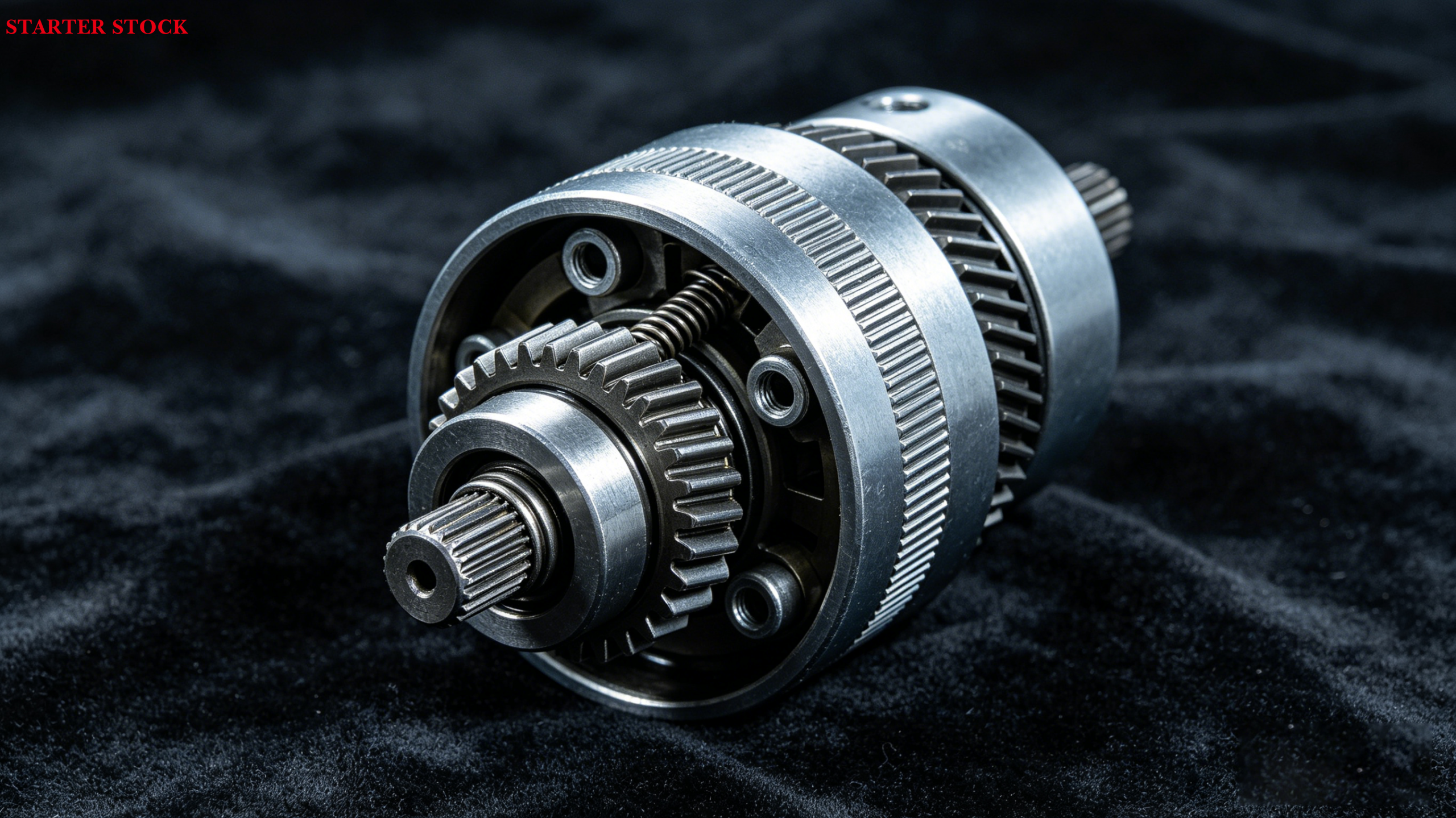
The 4 Main Parts of a Bendix
It’s literally just four pieces bolted together on the end of your starter. That’s all.
● Pinion gear (the drive gear)The small toothed wheel that actually grabs the flywheel. They make it softer than the flywheel on purpose. If something breaks, you replace this $25 gear instead of the $300+ flywheel. Total no-brainer. The teeth are cut at an angle so they can slide into each other even if they don’t line up perfect first try.
● Helical splined shaftThe rod the pinion sits on. It’s not smooth. It has these slanted grooves cut into it. This is the whole secret. When the shaft spins, the pinion doesn’t just spin—it moves forward and backward along the shaft.
● Heavy coil springWrapped tight around the shaft. Two jobs: softens the big hit when the pinion slams into the flywheel, and pulls it back into place once the engine starts.
● Overrunning clutchThe safety part. Only turns one way. Starter can turn the engine, but engine can’t turn the starter. If this broke, once your engine started it would spin the starter motor so fast it would literally blow apart. Not exaggerating.
How It Actually Engages the Flywheel (Step by Step)
Whole process takes less than half a second. No computers. No sensors. Just basic physics.
1. You turn the key. Electricity flows to the starter motor. It starts spinning. The helical shaft spins with it. But the pinion gear is heavy, it doesn’t want to start spinning right away. It lags just a tiny, tiny bit.
2. Because the grooves on the shaft are slanted, that tiny lag makes the pinion slide forward. It shoots straight at the flywheel’s big ring gear.
3. 9 times out of 10, the teeth don’t line up on the first try. You hear that little grind or click. That’s the pinion teeth hitting the side of the flywheel teeth, spinning until they slot into place. Everyone’s heard that sound. It’s normal, just wears the gears a little over time.
4. Once they mesh together, the pinion can’t slide forward anymore. Now it has to spin with the shaft. That’s when it turns the flywheel and cranks the engine over.
5. The second the engine fires up and runs on its own, it spins way faster than the starter. That extra speed pushes the pinion back down the slanted shaft, away from the flywheel.
6. The spring yanks it all the way back into its resting position. And the overrunning clutch keeps the fast-spinning engine from destroying the slow starter motor.
That’s literally all there is to it. This design has been around for almost 100 years and it still works better than most of the overcomplicated new stuff. The only things that ever go wrong are: teeth wear down, spring gets weak, or clutch sticks. I’ve changed dozens of these. Most people have no idea what part it is until it stops working. But now you do.