

-
45
-
2026-05-07 14:12:48
Starter motors are built tough for engine use, but international shipping hits them with a whole different set of risks that cause real damage. Over the last five years, bad packaging has cost us more than $85,000 in returns, replacement parts, and customers who stopped ordering from us. The same problems keep coming up: bent pinion gears, cracked magnets, snapped terminals, and units rusted through because moisture got in. These aren’t rules we pulled from a random website. We wrote every single one after fixing thousands of broken motors that came back to us. Follow them exactly, and our damage rate stays below 0.5%—down from 8% when we didn’t have these standards.
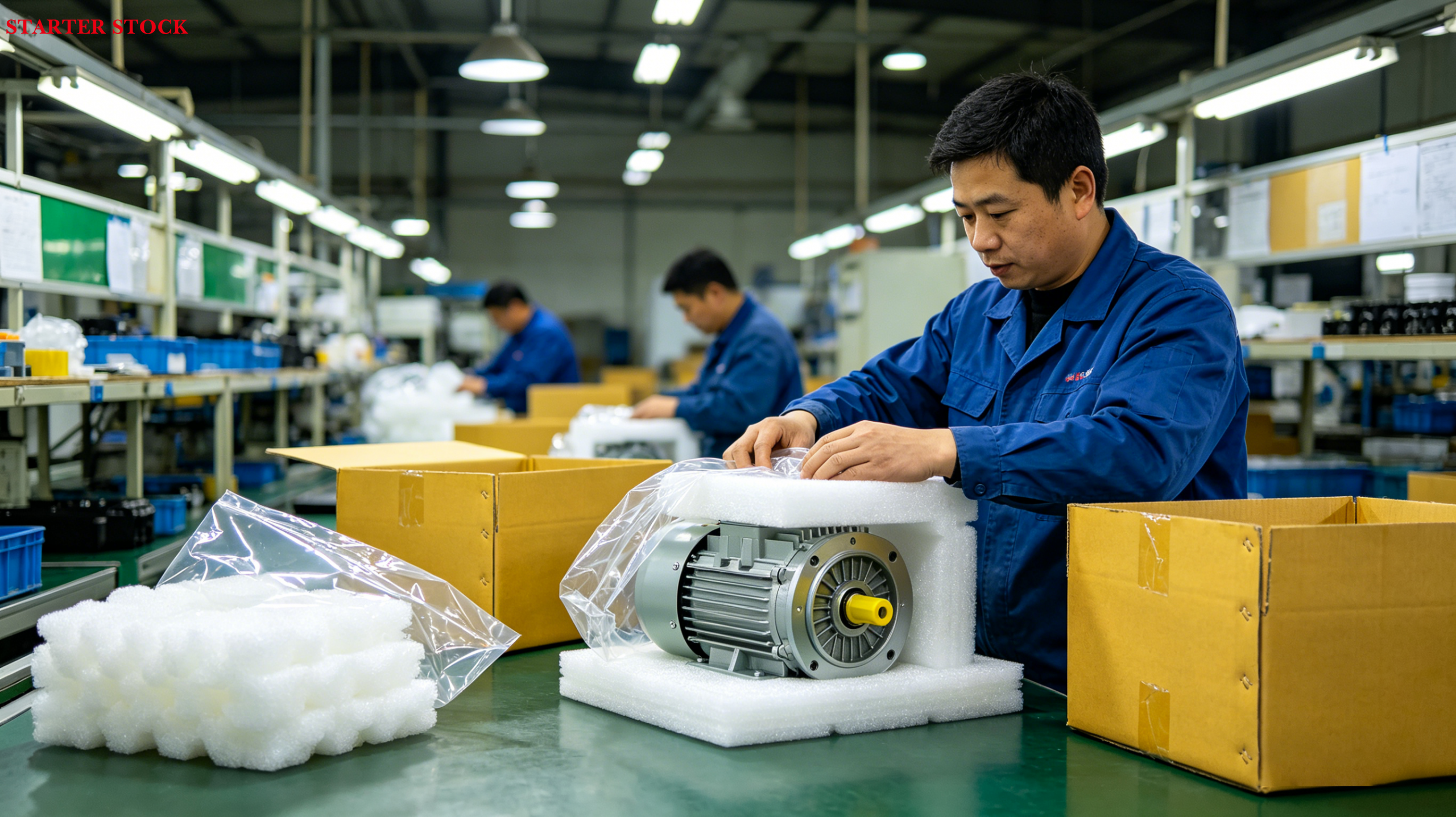
1. Individual Unit Protection
First, wipe every motor down thoroughly with a clean lint-free cloth. Get rid of all metal shavings, dust, and leftover grease from assembly. Spray a thin, even coat of rust-preventive oil on all bare metal. Wipe off any excess oil—customers hate opening oily boxes, and it can also ruin the packaging over time.
You cannot skip this step, ever: Snap a hard plastic cap over the pinion gear. Our damage logs show 9 out of 10 returned units have bent pinions. In 2022, we lost an entire container of 200 motors because one shift skipped this step for a whole day.
Wrap all electrical terminals with black insulating tape. Pull any loose wires tight against the motor body and tape them down firmly. Loose wires catch on forklift tines or other cargo all the time, and they get ripped right off.
Slide the prepared motor into a 0.1mm thick plastic bag. Drop in one 5g silica gel packet. For shipments going to Southeast Asia, South America, or any trip that takes longer than 30 days, use the silver VCI bags instead of regular plastic. Seal the bag completely with tape—no open corners, no gaps.
Wrap the whole bagged motor in 10mm EPE foam. Add an extra layer on the pinion end and all four corners, since those are the first places that hit when boxes get dropped. Tape the foam shut tight enough that nothing moves, but not so tight that you bend any parts.
2. Inner Carton Packaging
We only use double-walled BC flute corrugated boxes with a minimum 150 psi bursting strength. Single-walled boxes get crushed flat at the bottom of shipping containers. Don’t even think about using them.
Put the custom cardboard dividers in the box before you add any motors. One motor per compartment, no exceptions. It doesn’t matter if there’s extra space—never put two motors in the same slot.
Fill all empty spots with crumpled kraft paper. When you’re done packing, pick up the box and shake it hard. If you hear anything moving inside, add more paper until it’s completely still. No movement means no damage.
Each inner carton can hold 4 large motors max, or 6 small ones. Keep the total weight under 15kg. Heavier boxes get dropped way more often by warehouse workers.
Seal all seams with 50mm wide heavy-duty packing tape. Put two full strips on the top and two on the bottom, covering the entire length of the seam. Don’t just tape the middle—that’s how boxes split open in transit.
3. Palletization
Take each master carton first, glue thick cardboard corner guards to all 8 corners before you set it on the pallet. Check the guards first—if they’re bent or squished, throw them away. They won’t hold up when containers get stacked 6 layers deep.
Stack each carton straight, edge to edge with the pallet. No part of the box can stick out, not even 1cm. Forklifts and other pallets will hit anything that’s sticking out, guaranteed. We lost $12,000 on a 2023 Germany shipment because cartons stuck out just 2cm.
Only grab pallets that have the clear, unobscured ISPM 15 heat-treated stamp. Fumigated pallets have a strong chemical smell and will get your whole shipment held at customs. Back in 2021, a full load sat in Rotterdam for 21 days because someone took the wrong stack from storage.
Grab the stretch wrap roll and anchor it tight around the pallet base first. Work your way up slowly, overlapping each wrap by about half so there are no gaps. Pull the film firm but not so tight it warps the boxes, and do at least 3 full passes from bottom to top.
Run two heavy-duty poly straps next: one running the full length of the pallet, the other straight across the width. Grab those extra cardboard corner scraps we keep by the strapping station and slide them under the straps first—they stop the sharp strap edges from slicing right through the carton corners.
Once you’ve done two full wraps, grab a 6mm plywood sheet and lay it flat across the very top of the stack. Finish the last layer of stretch wrap over the plywood. It takes the weight of any pallets stacked on top and spreads it evenly, so the top row of boxes never caves in.
4. Labeling and Documentation
Take the label printer and run off the three standard handling labels: FRAGILE, THIS SIDE UP, KEEP DRY. Make sure they’re printed in 50mm bold font and stick one on every side of the master carton. Never handwrite these—they smudge in transit and overseas workers can’t read messy handwriting.
You have to put these five things on every single carton, no cutting corners: country of origin, the full unshortened model number, how many motors are packed inside, the total gross weight, and the net weight of just the motors. Print them big and clear. No shorthand, no abbreviations allowed. If someone can’t read it from three feet away, redo it.
Stick shipping marks only on two opposite sides—don’t waste labels on all four. Make sure you include the customer’s full legal name, the exact port name as written on the PO, the purchase order number, and the carton sequence in X/XX format. For example, 3/15 means this is the 3rd carton out of 15 total. Always double-check the PO number twice before hitting print.
Print out the complete packing list for each pallet. Fold it twice the long way, then once across the middle to fit the envelope. Slide it into one of those thick yellow waterproof bags we keep stacked by the shipping desk. Never grab the thin clear ones—they rip the second they catch on a forklift tine, and any rain that gets in will turn the paper into unreadable mush.
Grab the commercial invoice, bill of lading, and ISPM 15 certificate one at a time. Lay them all flat next to the packing list and go through every number line by line: total units, gross weight, PO number, each individual model number. If there’s a coworker nearby, have them spot-check it too. Even a single wrong digit will hold your shipment at customs for days.
5. Pre-Shipment Checks
Before any truck leaves the loading dock, run through these final steps. First, pull 5% of inner cartons at random from each batch and cut them open. Check for missing pinion caps, silica gel packets, and proper foam wrapping. Count the units to make sure they add up. If you find one bad carton, inspect every single carton on that pallet.
Next, take one sealed inner carton from each batch and do a drop test. Hold it 30cm above the concrete floor, let it fall on one of the bottom corners. Open it up and check every part. If anything is bent, cracked, or loose, the whole batch gets repacked. No exceptions, no shortcuts.
Weigh each pallet one by one on our calibrated floor scale. If the actual weight is more than 1kg off from what’s on the paperwork, stop and find the mistake before loading.
If pallets have to sit outside waiting for the truck, cover them completely with a heavy-duty waterproof tarp. Even 10 minutes of light rain can cause rust that won’t show up until the customer opens the box two months later.
None of these steps require fancy tools or expensive materials. They’re just the hard lessons we learned from years of costly mistakes. What makes them work is everyone doing every step right, every single time. Good packaging isn’t an extra cost—it’s how we keep our products intact, our customers coming back, and avoid the headache of fixing broken returns on weekends.
We’ve learned the hard way that even a small packaging oversight can ruin a starter and cost us valuable business.