
-
74
-
2026-05-11 15:21:40
Wholesale Garden Tractor Starters: Upgrading for Better Durability
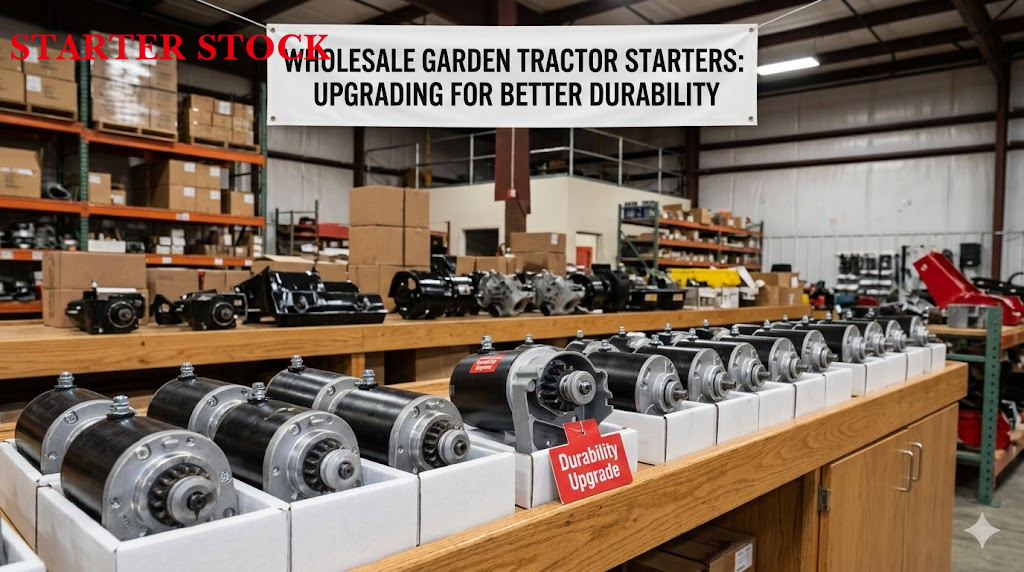
Garden tractors get no respect. Weekend warriors abuse them, homeowners forget maintenance, commercial crews run them ten hours a day until something smokes. Then they blame the starter when it finally gives up. I've sold parts for these machines long enough to know—the starter isn't the weak link. It's the victim.
These tractors live rougher than most motorcycles. Dust, moisture, long cranking cycles in cold weather, engines that sit for months then get expected to fire immediately. The starter sees it all. And garden tractor starters are built cheap because the machines are built cheap. Margins are thin at the retail end, so every component gets squeezed.
As a wholesale parts seller, you can keep selling the same disposable starters and hope customers don't come back angry. Or you can upgrade them to something that lasts. I've moved toward the upgrade side. Fewer returns, happier shops, better reputation. Here's what actually works.
Why Stock Starters Fail Fast
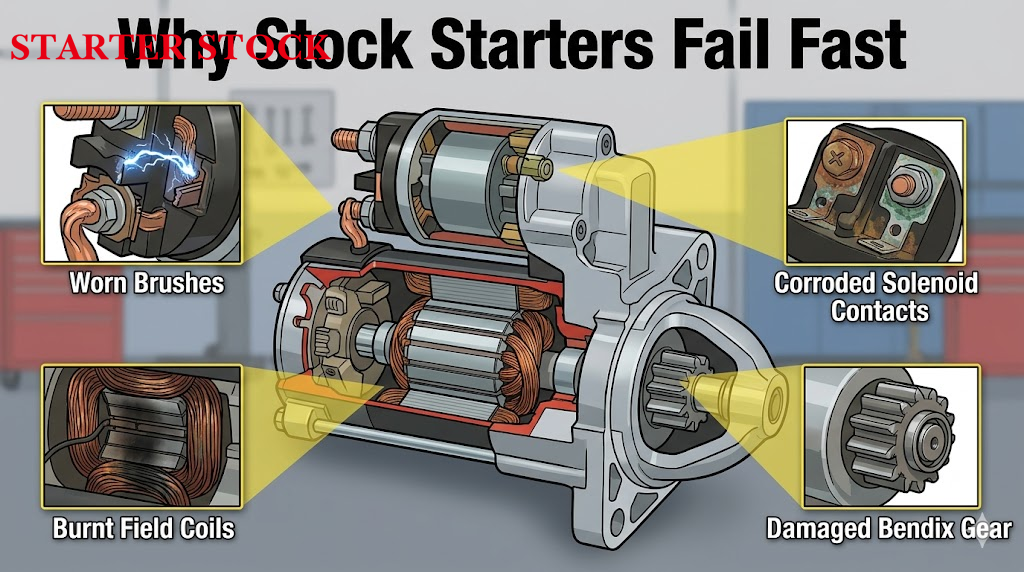
Garden tractor engines are single-cylinder, air-cooled, often 400cc to 800cc. Big pistons, heavy flywheels, lots of compression. Starting in cold weather, oil is thick, battery is weak, starter struggles. Long cranking cycles heat everything up.
The stock starters are direct-drive, permanent magnet, minimal everything. Thin copper windings, basic bearings, no thermal protection. Run them hard and they cook. I've seen starters fail in one season of commercial use. Homeowner might get five years, but only because they use it twice a month.
Dust is the silent killer. Air-cooled engines suck in everything. Dust gets past seals, into bearings, onto the commutator. Abrades, scores, increases resistance. Starter draws more current, runs hotter, fails sooner. I've pulled units where the inside looked like a sandbox. Bearings ground to dust, brushes worn to nubs, commutator grooved like a record.
Moisture does similar damage. Tractors stored outside, condensation inside the starter, corrosion on every metal surface. I've cut open units where the armature shaft was rust-welded to the bushing. Customer said "it worked fine last fall." Sure it did. Then it sat all winter in the shed with a dirt floor.
| Failure Mode | Cause | Upgrade Solution |
|---|---|---|
| Burnt windings | Long cranking, overheating | Heavy-gauge copper, higher temp insulation |
| Worn bearings | Dust ingress, poor sealing | Sealed ball bearings, better shaft seals |
| Corroded commutator | Moisture, condensation | Harder copper alloy, improved sealing |
| Weak pinion engagement | Low battery, worn drive | Stronger return spring, better solenoid |
| Brush wear | Dust, heat, poor contact | Longer brushes, better holder design |
| Housing cracks | Vibration, thermal cycling | Thicker alloy, better mounting support |
What an Upgrade Actually Looks Like
Heavy copper windings are the obvious place. More copper mass handles heat better, maintains torque when hot. Standard starters use wire that barely meets spec. Upgraded units use heavier gauge, more turns, better slot fill. Draws less current for same torque, or delivers more torque when the engine is fighting back.
Insulation matters too. Standard 130°C rating is marginal. 180°C or 200°C rated insulation survives the heat soak after a long crank. I've baked samples in an oven, run them at temperature, then tested cold cranking torque. Good insulation makes a real difference.
Bearings are where cheap starters really cheat. Stock units use sintered bronze bushings—basically powdered metal with oil in the pores. Works fine clean and lubricated. Add dust, heat, age, and the oil dries, the pores clog, the bushing scores the shaft. I've seen armature shafts worn .005" undersize from bushing damage.
Upgrade to ball bearings, sealed on both sides. No dust ingress, no lubrication issues, handles radial and axial loads better. Costs more, lasts five times longer. Commercial customers notice. They'll pay extra for something that doesn't strand them mid-mow.
Pinion drives take abuse. Engagement against a flywheel that's not always spinning free, occasional misalignment from worn mounting ears, repeated shock loads. Stock drives use basic Bendix designs with minimal spring pressure. Upgraded units have stronger return springs, harder steel pinions, better engagement geometry. Less skipping, less chewing of the ring gear, longer life for both starter and flywheel.
Housing strength gets overlooked. Garden tractors vibrate. Single-cylinder engines shake everything. Cheap aluminum housings crack around mounting ears, warp bearing bores, let the armature rub the field magnets. I've seen housings held together with hose clamps and prayers.
Thicker alloy, better ribbing, reinforced mounting points. The starter stays aligned, bearings stay true, nothing rubs. Also handles the torque better when the engine kicks back during a hard start.
The Commercial Angle
Homeowners buy on price. Commercial cutters buy on uptime. A landscape crew with five tractors can't afford a starter failure on Tuesday morning when the Jones account needs cutting by noon. They'll pay more for reliability.
I market upgrades two ways. Direct to commercial operators—landscapers, golf courses, municipal maintenance. They understand total cost of ownership. Cheap starter, two replacements a season, labor to install, downtime. Upgrade starter, lasts two seasons, install once. Math works.
To retail shops, I pitch the warranty angle. Fewer comebacks, happier customers, less time handling returns. A shop that installs my upgrade starter and doesn't see the customer again for three years remembers me. Shop that installs cheap junk and sees them back in six months starts buying elsewhere.
Seasonal timing matters. Fall and spring are starter season. Fall—people put the tractor away, something was acting up, they ignored it. Spring—first mow, won't start, panic. I stock heavy in February and August, push upgrades before the rush hits.
Installation Reality
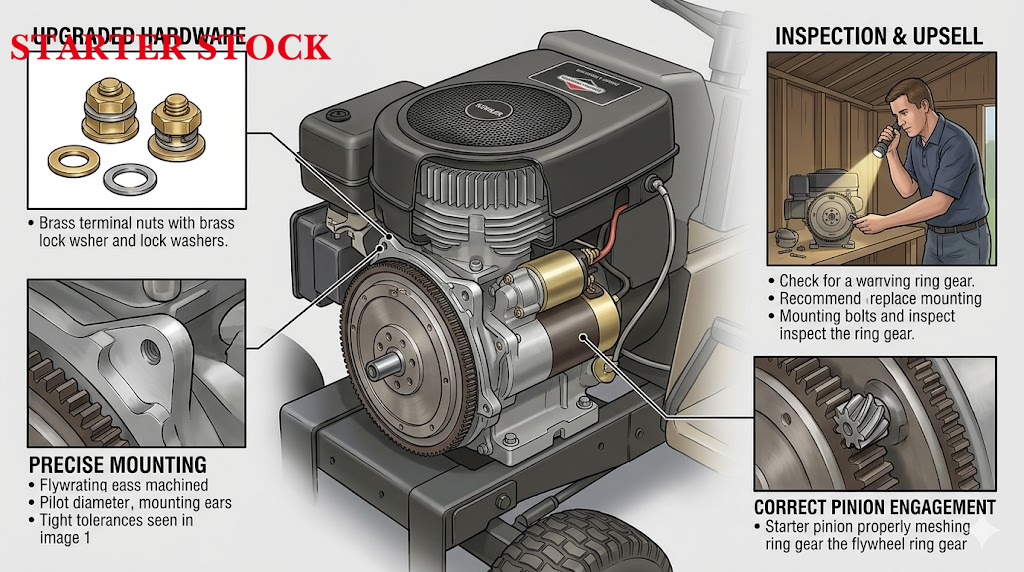
Garden tractor starters are usually accessible. Not like outboards buried under cowlings. But they're still a pain. Tight spaces, awkward angles, rusted hardware. Anything that makes installation easier sells.
Some upgrade starters come with better terminal hardware. Brass instead of steel, proper thread length, lock washers that actually work. Sounds small, but when you're hanging upside down in a shed with a flashlight in your mouth, good hardware matters.
Mounting alignment is critical. Single-cylinder engines vibrate, mounting ears fatigue, bolt holes wallow. Upgraded starters with precise machining, proper pilot diameters, tight tolerances bolt in straight. Pinion engages the ring gear correctly, no edge loading, no premature wear.
I always recommend shops replace mounting bolts and check the ring gear while they're in there. Starter failed because of worn ring gear, new starter will fail the same way. Upsell the ring gear, or at least inspect it. Customer pays once, problem solved.
Where I Source
I buy garden tractor starters from STARTERSTOCK. Here's why that works for my wholesale business.
They build for the application, not just the part number. Their upgraded units have the heavy windings, sealed bearings, better drives I actually want to sell. Not a generic starter with a garden tractor label slapped on.
Quality is consistent batch to batch. I've had suppliers where sample was great, production run was junk. STARTERSTOCK holds spec. I spot-check incoming, measure winding resistance, check bearing drag, inspect commutator finish. Always within spec. That means my customers get the same quality I approved.
Pricing works for wholesale. Volume breaks at quantities that make sense for my turnover. No container minimums, no currency games, no waiting eight weeks for a boat from overseas. Order Monday, have it Wednesday, sell it Friday.
They carry the brands that matter. Briggs & Stratton, Kohler, Kawasaki, Honda, Yanmar. The engines that actually power garden tractors, not obscure stuff nobody uses. Model-specific fitment, proper mounting, correct rotation direction. I've been burned by "universal" starters that sort of fit. Never again.
Technical support knows tractors. Called about a Kohler Command starter that was eating ring gears. Guy asked about engine mounting, found the bracket was fatigued, letting the engine shift under torque. Starter wasn't the problem—loose engine was. Saved me from selling another starter into a bad situation. That's expertise.
Warranty is straightforward. Defective unit, they replace it. No "improper installation" excuses, no runaround. I've had maybe five claims in three years, all handled fast. My customers get the same treatment—if it's bad, I make it right, and STARTERSTOCK backs me up.
Conclusion
Garden tractor starters are a commodity market if you treat them that way. Sell cheap, replace often, deal with angry customers. Or upgrade, differentiate, build a reputation for reliability.
I chose the upgrade path. Better starters from STARTERSTOCK, marketed to customers who value uptime over lowest price. Commercial crews, serious homeowners, shops that warranty their work. Fewer returns, more repeat business, better margins in the long run.
The starter isn't glamorous. But when a customer hits the key and the engine fires on a cold morning, when the crew keeps working instead of waiting for a tow, that's value. That's why durability matters. That's why I sell upgrades.