
-
41
-
2026-05-14 13:44:34
For all kinds of power sports equipment like ATVs and off-road motorcycles, the electrical system is the core guarantee of normal start and operation. Among many electrical parts, ignition coils and starter relays are two key units. They undertake different tasks respectively, yet must coordinate closely with each other. Once the matching state is broken, the whole vehicle will fail to start or run abnormally.
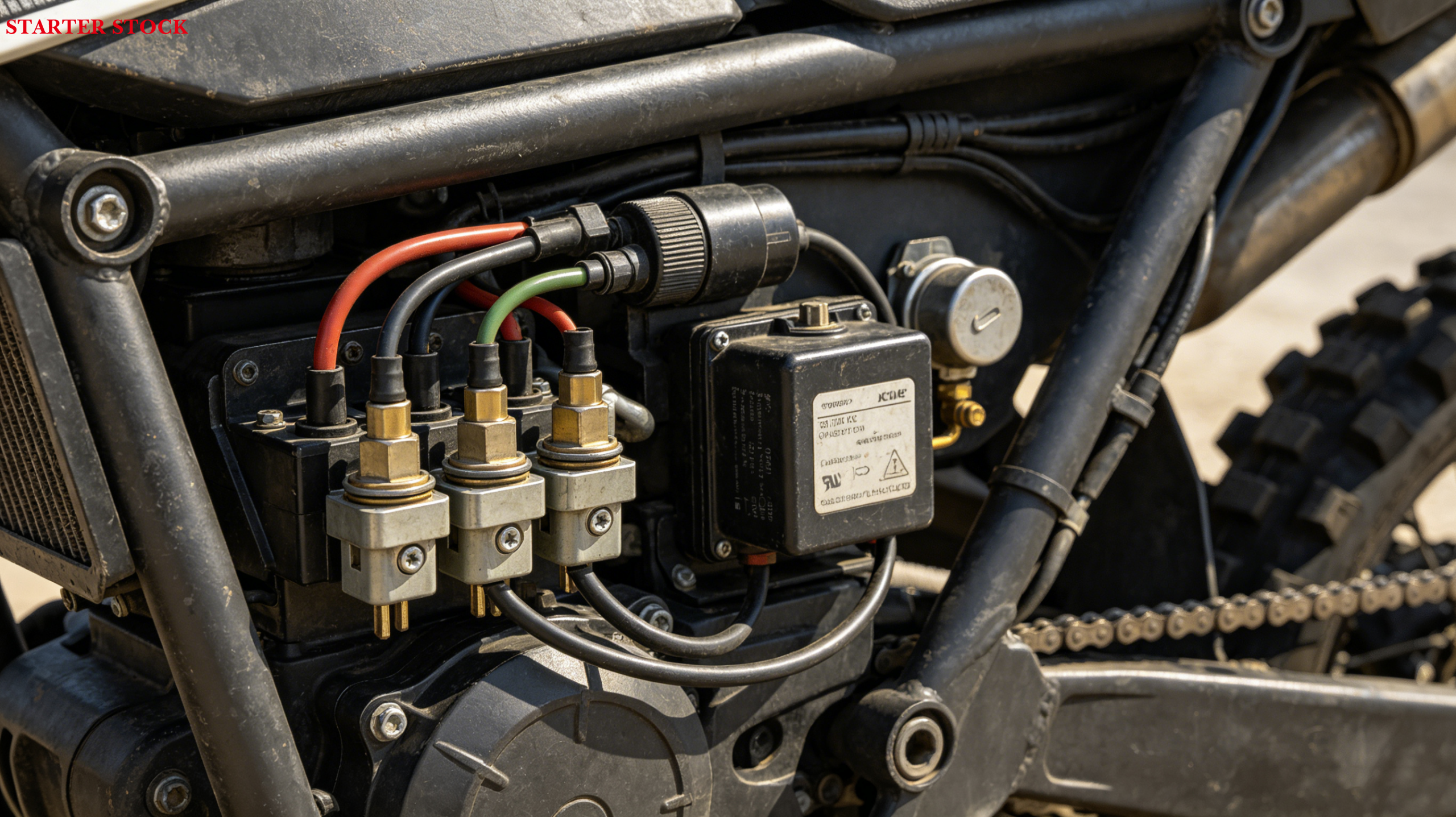
1. Basic Function of Ignition Coil
Vehicle batteries only supply 12V low voltage, which cannot meet the ignition demand of spark plugs. The ignition coil acts as a voltage booster in the circuit. It raises low voltage to high voltage strong enough to generate electric spark, igniting the mixed oil and gas inside the cylinder.
Structurally, the coil is composed of internal winding and iron core. It relies on the change of magnetic field to complete voltage conversion. Compared with ordinary automobile coils, power sports ignition coils need to adapt to long-term vibration, large temperature difference, as well as muddy and humid use environment, so the overall durability and sealing performance are higher.
After long-term use, the coil will age gradually. Typical manifestations include unstable combustion during driving, difficult cold start, and insufficient power output. In most cases, abnormal ignition is easily misjudged as spark plug failure, while the real aging problem of ignition coil is ignored.
2. Working Principle of Starter Relay
The starter motor needs instantaneous high current to drive the engine to rotate. The conventional ignition switch cannot bear such large current directly, so the starter relay becomes an indispensable control switch in the circuit.
It uses small current to control the on-off of high current loop. When the start button is triggered, the relay acts immediately to switch on the power loop of the starter motor. On most power sports models, the relay is also used as the main power distribution node of the whole vehicle, and other electrical components obtain power supply through it.
Terminal corrosion and internal contact ablation are the main causes of relay damage. When it fails, the common phenomenon is only a slight clicking sound when starting, but the starter does not work; sometimes it shows intermittent start failure, which brings great trouble to use.
3. Matching Logic of The Two Components
The ignition coil and starter relay do not work independently. They follow a fixed logical order to cooperate every time the vehicle starts.
After turning on the power switch, the ignition circuit is powered on and the ignition coil enters standby state. Press the start button, the starter relay acts first to connect the starter power supply and drive the engine to crank. At the same time, the vehicle’s ignition control unit senses the engine speed and piston position, and controls the ignition coil to discharge and ignite at the right time.
After the engine runs stably, release the start button, the relay disconnects the starter loop and stops working. The ignition coil continues to work continuously to maintain the normal operation of the engine. The whole coordination process is completed in an instant, and any link out of sync will lead to start failure.
4. Common Matching Faults in Actual Use
Most starting faults are not caused by complete damage of parts, but by poor coordination between ignition coil and relay.
Insufficient battery power is the most common cause. A weak battery can drive the relay to act, but cannot provide stable voltage for the ignition coil. As a result, the engine cranks normally but cannot ignite. Loose and corroded wiring joints will cause voltage loss, interfere with signal transmission, and lead to irregular ignition and intermittent starting.
If the ignition timing is adjusted improperly after engine maintenance, even if both parts are intact, the ignition coil will discharge in advance or delay, resulting in backfire and difficult start. In addition, aging relay contacts will produce instantaneous disconnection, resulting in sudden loss of ignition power during cranking, making the engine unable to catch fire smoothly.
5. Daily Maintenance Suggestions
Daily simple inspection and maintenance can effectively avoid most coordination faults.Regularly check the wiring terminals of battery, starter relay and ignition coil, keep the joints clean and firm, and do a good job of anti-corrosion protection. Check battery status every riding season and replace aging battery in time.When the starter relay is aged and replaced, the service life of the ignition coil can be checked together. Since the two work in the same electrical environment, their aging cycle is relatively close. After driving in water and mud, clean the electrical contact parts to avoid moisture and dirt causing circuit failure.
Summary
Ignition coil and starter relay are two basic but vital parts of power sports electrical system. Their respective functions are clear, and synchronous coordination is the key to ensure smooth start and stable operation of the engine. Understanding their working relation and common fault performance can help users quickly judge problems. Doing a good job of daily maintenance can also effectively extend the service life of parts and reduce unexpected failure during use.