
-
38
-
2026-05-22 10:47:55
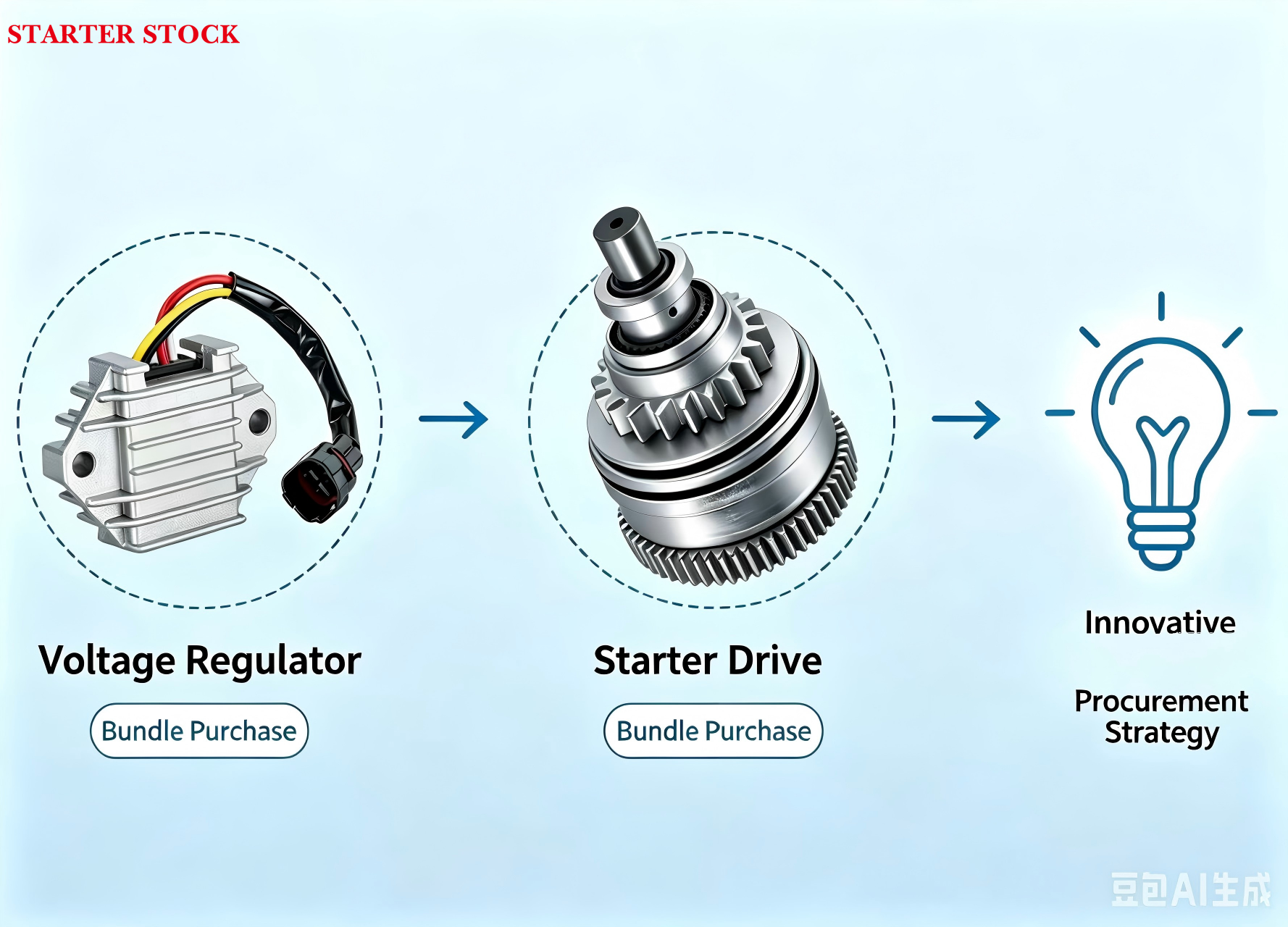
If you buy parts for auto repair shops, fleet operations or construction equipment, you’re probably still buying and managing each item separately. But there’s a smarter, cheaper way that’s catching on fast: cross-category bundling. And the best place to start? Pairing Bendix starter drives with voltage regulators. This isn’t just a random combo—it’s a proven trick that cuts costs, saves time and cuts down on headaches for anyone who deals with vehicle parts every day.
Why These Two Parts Belong Together
You might wonder: starters and regulators look totally different. Why buy them as a set? The answer is simple: how they work and how they break.
Bendix is a global leader in heavy-duty vehicle systems. Their starters are famous for being tough and powerful, used in everything from semi-trucks and buses to excavators and farm tractors. The voltage regulator, meanwhile, is the “brain” of your charging system. It keeps your truck’s voltage steady, protecting the battery and all your electrical parts.
Here’s the big secret most people miss: these two parts fail together. A bad voltage regulator causes wild voltage spikes that burn out the starter’s solenoid and coils. And an old, worn-out starter draws way too much current, which kills the regulator early.
In real repair shops, over 60% of starter replacements happen because a bad regulator killed it first. If you only swap the starter and leave the old regulator, your new Bendix starter will almost always die again in 3-6 months. That means double the parts cost, double the labor, and worst of all, extra downtime for your trucks. Any good mechanic will tell you: “When you replace a starter, always check the regulator. When you replace a regulator, always check the starter.”
4 Real, Tangible Benefits of Bundling
1. Cut Your Parts Bill by 15-25%
This is the most obvious win. When you buy starters and regulators separately, you pay full single-item price for each, and there’s barely any room to negotiate. But when you bundle them as a single order, you’re essentially buying in bulk. Suppliers will jump to give you a better price to keep your business.
Take a typical heavy-duty truck fleet as an example. If you buy 100 Bendix starters alone at $850 each, and 100 regulators at $120 each, that’s $97,000 total. But when you bundle them, most dealers will offer $780 per starter and $90 per regulator. That drops your total to $87,000—$10,000 saved right there. And if you sign an annual contract? You can push that discount to 20% or more.
2. Cut Your Inventory Work in Half
Buying separately means tracking two separate SKUs. You have to place two orders, do two receiving checks, two stock entries and two inventory counts. Bundling turns two SKUs into one single “kit.” One order, one delivery, one stock check. It’s that simple.
Even better, it fixes the most annoying inventory problem: mismatched stock. How many times have you had a truck down because you had plenty of starters in the warehouse but zero regulators? Or the other way around—stacks of regulators gathering dust while you’re scrambling for starters? Bundling keeps your stock at a perfect 1:1 ratio, so you never have that problem again.
3. Make Your Repairs Faster
For repair shops, time is money. When a truck comes in with a starting system failure, your tech doesn’t have to run to the parts room twice to grab both parts. They just grab one pre-bundled kit and get to work. That cuts down on wasted time running back and forth and checking part numbers.
And since both parts are genuine Bendix, they’re perfectly matched. No compatibility issues, no weird electrical glitches after the repair. That means fewer comebacks and happier customers.
4. Simplify Your Warranty Claims
If you buy your starter from one supplier and your regulator from another, you’re in for a nightmare if something breaks. Each will blame the other, and you’ll be stuck in the middle paying for repairs out of pocket.
When you bundle from a single authorized Bendix dealer, you get one unified warranty. Usually 12 months or 20,000 miles, no fine print. If either part fails, you only have to call one person. No finger-pointing, no runaround.
3 Simple Steps to Start Bundling Today
Step 1: Calculate Your Actual Needs
Don’t just bundle for the sake of bundling. First, pull your repair records from the last 1-2 years and count how many starters and regulators you actually replaced each month.
For fleets, a good rule of thumb: for trucks 3-5 years old, you’ll replace about 0.5-1 starter and 0.8-1.2 regulators per truck per year. Use that number to make a realistic annual plan.
Step 2: Only Buy From Official Bendix Dealers
This is non-negotiable. There are tons of fake Bendix parts on the market. They’re cheap, but they’ll fail in months and cost you way more in downtime.
Always check the Bendix China website for authorized dealers, or ask to see their official authorization certificate. A real dealer won’t just sell you parts—they’ll also give you technical support and stand behind their warranty.
Step 3: Sign an Annual Contract
To get the best price and guaranteed stock, sign a 12-month framework agreement with your dealer. Spell out exactly how many kits you’ll buy, the fixed price, delivery times and warranty terms.
Add a flexible clause too. Let’s say you agree to 100 kits for the year. Allow yourself to buy between 80 and 120 kits at the same price, so you can handle unexpected breakdowns without paying extra.
2 Important Risks to Watch For
1. Don’t overbuy. Yes, bundling is cheaper, but electrical parts have a shelf life. If you buy two years’ worth of parts and let them sit in a hot warehouse, their performance will drop. Keep your inventory turnover under 6 months.
2. Don’t just chase the lowest price. If a dealer offers you a bundle that seems too good to be true, it probably is. They might be selling you rebuilt parts, aftermarket knockoffs or even fakes. Always check the packaging, hologram and serial number to make sure you’re getting genuine Bendix.
Final Thought
Cross-category bundling isn’t just about throwing two parts into the same box. It’s about understanding how your parts work together, and using that knowledge to make your whole supply chain run better.
As your purchasing management level improves, you can also try to bundle more related parts together. For example, brake pads with brake discs, engine oil with oil filters, air filters with fuel filters, and so on. This method not only can cut your purchasing cost, but also make the whole operation process more smooth, and create bigger value for your company.