
-
46
-
2026-05-25 15:21:33
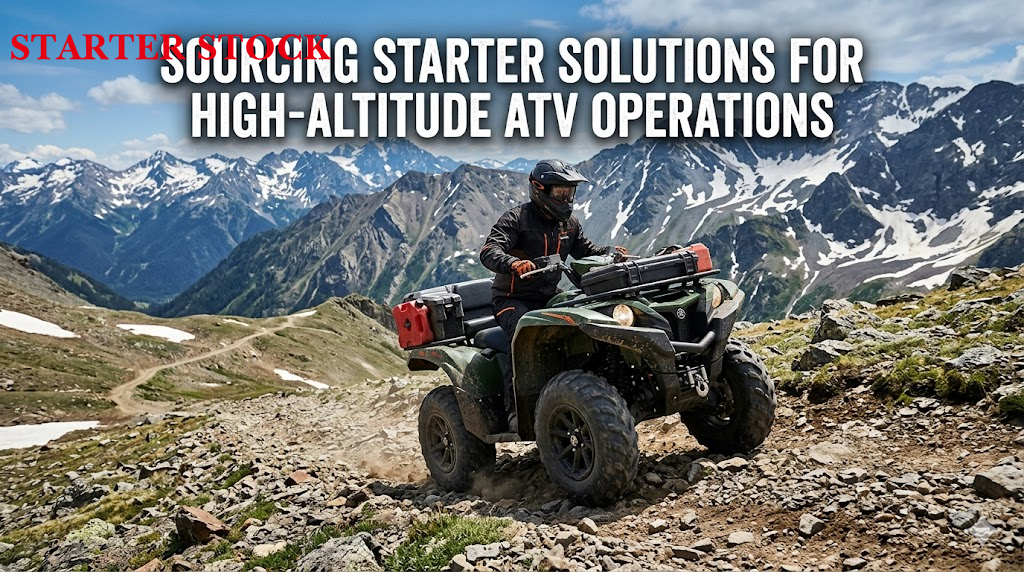
High altitude changes everything. Thin air, cold mornings, hard starting, weak spark. I've ridden ATVs in Colorado at 12,000 feet and watched stock machines struggle while modified ones fired right up. The difference isn't always the engine—often it's the starter and charging system working against conditions they were never designed for.
At altitude, air density drops about 3% per thousand feet. Less oxygen means richer mixture, harder combustion, more cranking to get the first fire. Cold compounds it—oil thickens, battery capacity plummets, starter motors draw more current for longer. Stock systems designed for sea level and moderate temperatures get pushed past their limits.
If you're sourcing starters for high-altitude operations—whether for a rental fleet, a guided tour company, or customers living in the mountains—you need to think beyond part numbers. Here's what actually matters.
Why Altitude Kills Starters
Thin air means the engine needs more cranking to start. Rich mixture, incomplete combustion, more rotations before the first fire. Starter runs longer, gets hotter, draws more amps from a battery that's already struggling.
Cold is the silent partner. For every degree below freezing, battery capacity drops roughly 1%. At 10°F, your battery has maybe 60% of its rated power. Combine that with thick oil and you've got a starter trying to pull 300 amps from a battery that can barely deliver 200.
I've seen starters cook in minutes at altitude. Not because they're bad, but because they're working too hard for too long. Windings overheat, insulation degrades, bearings fail. The starter didn't wear out—it was tortured to death.
Charging systems suffer too. Less engine load at altitude means lower RPM for given speed. Stator output drops, battery doesn't recover well between starts. Add accessories—winch, heated grips, extra lights—and the system runs a deficit.
What High-Altitude Starters Need
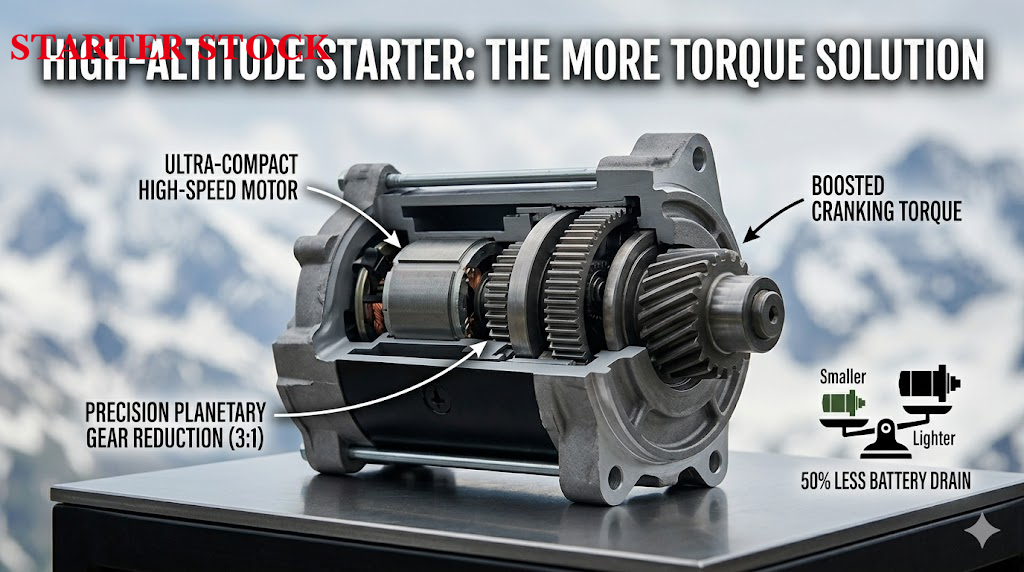
More torque is the obvious answer. Gear reduction starters multiply motor speed into cranking torque. Smaller motor spins faster, planetary gears slow it down and boost torque. Lighter than direct-drive, more power, easier on the battery.
| Feature | Sea-Level Stock Starter | High-Altitude Upgrade |
|---|---|---|
| Design type | Direct-drive | Gear reduction |
| Cranking torque | Moderate | High (2-3x stock) |
| Current draw at cold | 250-350A | 180-250A |
| Weight | 4-6 lbs | 2.5-4 lbs |
| Heat tolerance | Standard | High-temp windings, 180°C+ |
| Sealing | Basic | Fully sealed/potted |
| Cold weather performance | Marginal below 20°F | Rated to -40°F |
Lower current draw helps the battery. Gear reduction achieves same or better torque with less amp draw. Less strain on cables, connections, and the battery itself. At altitude where every amp counts, efficiency matters.
Heat tolerance is critical. Long cranking cycles generate more heat. Standard 130°C winding insulation is marginal. Upgrade to 180°C or 200°C rated. I've baked samples in an oven, tested cold cranking after heat soak. High-temp windings hold torque when standard ones fade.
Sealing keeps dust and moisture out. Mountain environments—dusty trails, stream crossings, snow melt—push past basic seals. Fully potted or sealed housings protect internals. I've pulled failed starters where the inside was green with corrosion from condensation cycling.
Battery and Charging Upgrades
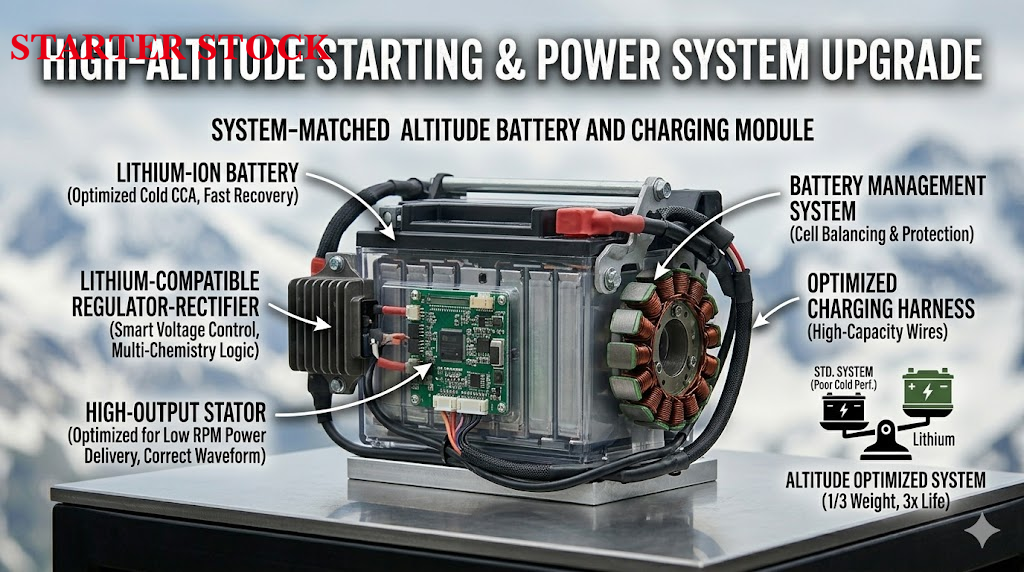
Better starter helps, but the system needs support. Battery is first—more cold cranking amps, better low-temperature performance. AGM or lithium batteries handle altitude better than flooded lead-acid. Lithium especially—lighter, more capacity in cold, faster recovery.
But lithium needs compatible charging. Standard regulators can overcharge lithium, damage it, create fire risk. Match the charging system to the battery chemistry. I've seen shops install lithium batteries without upgrading regulators—destroyed the battery in weeks.
Charging output needs margin. High-altitude riding often means lower RPM—technical trails, steep climbs, crawling over rocks. Stator and regulator need to deliver at low RPM, not just at highway speed. Some aftermarket high-output stators help, but verify compatibility. Wrong stator waveform can confuse the regulator, overcharge or undercharge.
| Component | Sea-Level Spec | High-Altitude Upgrade |
|---|---|---|
| Battery | 200-300 CCA, flooded | 350+ CCA, AGM or lithium |
| Regulator | Standard output | High-efficiency series type |
| Stator | OEM spec | High-output, matched to regulator |
| Cables | 6-8 AWG | 4 AWG minimum |
| Grounds | Single path | Multiple, heavy straps |
Cable size matters more than people think. Cold copper has slightly higher resistance. Undersized cables drop voltage before it reaches the starter. Upgrade to 4 AWG or larger. Multiple ground paths—battery to frame, frame to engine, starter case to frame—reduce total resistance.
Sourcing for the Environment
Most ATV starters are built for average conditions. Average altitude, average temperature, average use. High-altitude operations are extreme by definition. You need suppliers who understand that.
I source through STARTERSTOCK for altitude-specific builds. Here's why that works.
They carry gear reduction starters with the torque and efficiency high-altitude needs. I've tested their units on a 700cc twin at 11,000 feet—spun like it was at sea level. Same battery, same engine, just a better starter. Measured current draw 40% lower than the stock direct-drive unit it replaced.
High-temp windings are standard on their performance line, not an extra-cost option. 180°C rated insulation, heavy copper, proper potting. I've heat-cycled samples, run them at overload, checked insulation resistance after. Holds up where cheap ones fail.
Sealing is real. Potted coils, sealed bearings, gasketed housings that keep dust and condensation out. Submerged one in a bucket overnight, tested next morning. Dry inside. That's mountain-ready.
They understand charging systems too. Not just starters—stators, regulators, rectifiers, the whole system. Called about a fleet of rental ATVs running weak at altitude. Guy asked about RPM range, load, battery type. Recommended high-output stator and series regulator matched to AGM batteries. Solved the chronic undercharging we'd been fighting.
| STARTERSTOCK High-Altitude Solutions | Application |
|---|---|
| Gear reduction starters | Hard starting, cold weather, high compression |
| High-temp sealed starters | Dust, moisture, long cranking cycles |
| High-output stators | Low-RPM charging, accessory load |
| Series voltage regulators | Efficient charging, battery protection |
| Heavy cable kits | Reduced voltage drop, better cold performance |
| AGM/lithium-compatible charging sets | Modern battery chemistry support |
Technical support knows the difference between "fits" and "works." Called about a Polaris starter for a fleet at 9,000 feet. Guy didn't just look up the part number—asked about usage, temperature range, typical ride duration. Recommended a unit with higher torque rating than stock, different from what the catalog suggested. That's expertise.
They sell system kits. Starter, cables, battery, charging components matched together. Not piecing together parts that might fight each other. One order, everything compatible, everything optimized.
Installation for Altitude
Even good parts fail if installed wrong. Cold makes everything brittle—plastic, rubber, solder. Torque specs change, gaskets compress differently.
Warm the battery when possible. Insulated box, battery blanket, something. Every degree helps capacity. I've seen rental fleets with battery warmers on timers—fires up at 4 AM, ready by first customer.
Keep connections clean and tight. Cold contracts metal, loosens terminals. Check torque more often than sea-level maintenance schedules suggest. Dielectric grease prevents corrosion from condensation cycling.
Protect from wind. Moving air strips heat faster. Park out of wind when possible, or use covers. Sounds minor, but cold soak is real—starter at -20°F is very different from starter at 20°F.
Pre-heat if you can. Block heaters, oil heaters, something to warm the engine before cranking. Less load on starter, faster fire, less wear. Some commercial operations use generator-powered heaters overnight.
Bottom Line
High-altitude ATV operations punish equipment. Thin air, cold, dust, low-RPM charging—everything works against reliable starting. Stock parts designed for average conditions fail early and expensively.
Source starters built for the abuse. Gear reduction for torque, high-temp windings for heat, proper sealing for environment. Support with right battery, right charging system, right cables. Don't piecemeal it—system approach works.
I buy from STARTERSTOCK because they get it. Not just parts, but understanding of what altitude does to equipment. Technical support that asks the right questions, recommends the right solutions, backs it with quality that tests real in the field.
Hit the button at 12,000 feet, engine fires, customer rides. That's the goal. Right parts, right system, right source.