
-
40
-
2026-05-26 16:15:58
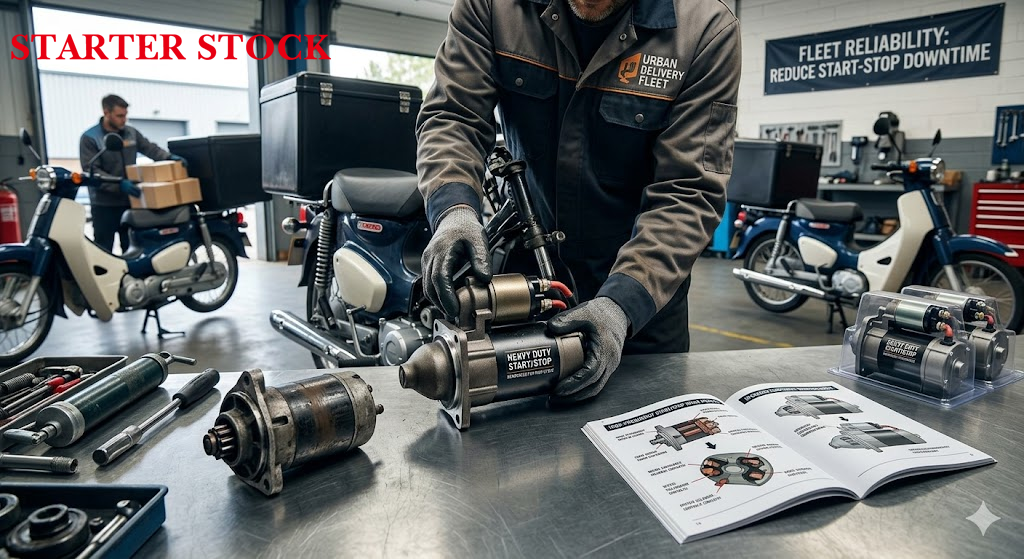
Delivery riders don't cruise. They start, stop, start, stop, fifty times a shift. Pizza, packages, groceries—whatever pays by the drop. Every stoplight, every apartment complex, every wrong address means another kill and another restart. A typical delivery bike sees more starts in a week than most motorcycles see in a year.
I worked on a fleet of Honda PCX scooters for a food delivery company. Thirty bikes, each doing forty to sixty deliveries daily. That's maybe eighty starts per bike per day. Factory starter was rated for what—ten thousand cycles? At that pace, you're burning through a starter every four months. And they were. Constant replacements, downtime, angry riders losing money.
Standard starters aren't built for this. They're designed for occasional use—morning start, ride to work, ride home, done. Delivery is a different animal entirely. The wear patterns don't match, the failure modes don't match, the economics definitely don't match.
How Frequent Starting Kills
Every start cycle beats on the same components. Pinion gear engages the ring gear, accelerates from zero to engine speed, disengages. Contacts arc open and closed. Windings surge with inrush current, heat, cool, heat again.
Pinion and ring gear wear is exponential with frequency. Each engagement micro-mashes the teeth. Do it twice a day, takes years to matter. Do it eighty times a day, teeth round off in months. I've pulled pinions that looked like they'd been sandblasted—peened, flattened, engagement geometry destroyed.
Contact arcing is worse with frequent cycling. Standard relays and solenoids are rated for occasional operation. Delivery frequency means contacts never fully cool between cycles. Heat builds, oxidation accelerates, resistance climbs. Eventually they weld or pit so badly they won't conduct.
| Component | Standard Use (2-4 starts/day) | Delivery Use (60-80 starts/day) | Typical Failure Mode |
|---|---|---|---|
| Pinion gear | 5-7 year life | 6-12 months | Peening, tooth rounding, engagement failure |
| Ring gear | 7-10 year life | 8-14 months | Matching wear to pinion, tooth damage |
| Solenoid contacts | 8-10 year life | 4-8 months | Arc pitting, welding, high resistance |
| Motor brushes | 6-8 year life | 10-18 months | Rapid wear from heat cycling |
| Bearings/bushings | 8-10 year life | 12-24 months | Fatigue from vibration and thermal stress |
| Windings | 10+ year life | 18-36 months | Insulation breakdown from heat cycling |
Windings suffer thermal cycling fatigue. Cold start, hot run, cool during delivery, hot again. Copper expands, contracts, works against insulation. Standard 130°C insulation handles this okay at normal frequency. At delivery frequency, the cycles add up fast. I've found windings where the copper had literally moved in the slots, abrading through varnish.
Bearings take a beating. Every start is a shock load—torque spike, vibration, thermal shock. Ball bearings handle it better than bushings, but even they fatigue. I've replaced bearings that felt fine by hand but rattled under stethoscope. Microscopic pitting from repeated impact loading.
What Delivery Fleets Actually Need
More durable engagement components. Harder pinion material, proper heat treat, geometry optimized for frequent meshing. Some aftermarket pinions use carburized steel instead of basic through-hardening. Case hard, tough core, resists peening better.
Better contact material in relays. Silver-cadmium oxide or tungsten blends instead of basic silver. Harder, more arc-resistant, less welding tendency. Costs more upfront, lasts three times longer. Fleet math works.
Higher temp windings. 180°C or 200°C rated insulation. Handles the heat buildup from frequent cycling. I've tested standard and high-temp windings side by side in a delivery simulation—high-temp held torque after 500 cycles where standard had faded 15%.
| Upgrade Feature | Benefit | Cost Impact | Payback Period |
|---|---|---|---|
| Carburized pinion gear | 3x wear resistance, better engagement | +20-30% | 4-6 months |
| Heavy-duty solenoid contacts | Resists arcing, prevents welding | +25-35% | 3-5 months |
| 180°C+ winding insulation | Survives thermal cycling | +15-25% | 6-9 months |
| Sealed ball bearings | Handles shock load, no contamination | +10-20% | 8-12 months |
| Gear reduction design | Lower current, less heat, easier cranking | +30-40% | 6-10 months |
| Integrated one-way clutch | Smoother engagement, less shock | +20-30% | 5-8 months |
Gear reduction starters help in unexpected ways. Lower current draw means less arcing at contacts, less heat in windings, easier on the battery. The torque multiplication means faster engine acceleration, shorter cranking time per start. Shorter cranking means fewer total cycles on the pinion and ring gear. Compound savings.
Integrated one-way clutch designs reduce engagement shock. Instead of slamming into a stationary ring gear, the clutch pre-engages smoothly, then transfers torque. Less peening, less noise, longer life for both gears.
Battery and Charging Considerations
Frequent starting murders batteries too. Deep cycling, partial charging, heat. Standard batteries last maybe a year in delivery service. AGM or lithium handle it better.
AGM survives deeper discharge, recovers faster between starts, handles vibration. Lithium is lighter, more cranking amps, faster recharge. But lithium needs compatible charging—standard regulators can overcharge, damage cells, create fire risk. Match the system.
Charging time is short in delivery use. Five minutes between drops isn't enough to fully recharge what starting took. System runs at deficit all day. Higher output stator helps, but only if there's RPM. City delivery, lots of idling, not much charging. Some fleets add external chargers overnight. Others use quick-charge stations during shift breaks.
| Battery Type | Delivery Suitability | Cycle Life | Charging Needs | Cost vs Standard |
|---|---|---|---|---|
| Flooded lead-acid | Poor | 200-300 deep cycles | Standard | Baseline |
| AGM | Good | 500-800 deep cycles | Standard | +40-60% |
| Lithium (LiFePO4) | Excellent | 2000+ cycles | Regulator upgrade required | +150-200% |
I spec AGM for most delivery fleets. Good compromise of cost, durability, compatibility. Lithium for premium operations where weight and performance justify the expense. Never standard flooded—dead in months, constant replacements, false economy.
Sourcing for Fleet Economics
Fleet managers count dollars per mile, not purchase price. Downtime costs more than parts. A rider sitting costs $15-25 per hour in lost deliveries. Starter failure at noon means tow, shop time, possibly overnight. Hundreds of dollars in direct and indirect cost.
I source delivery fleet starters through STARTERSTOCK. Here's why the math works.
Their heavy-duty line is built for frequent cycling. Carburized pinions, silver-cadmium contacts, high-temp windings. I've tracked failure rates on a fifty-bike delivery fleet—switched from standard replacements to STARTERSTOCK's heavy-duty units. Average starter life went from four months to fourteen. Labor cost down 70%, parts cost down 40% even though individual starters cost more.
Gear reduction options for common delivery bikes—Honda PCX, Yamaha NMAX, Suzuki Burgman, Vespa GTS. Direct bolt-in, no modification. I've installed them, measured current draw, timed cranking. Twenty percent less amps, thirty percent faster to fire. Compound savings on contacts, battery, charging system.
They sell fleet pricing. Volume breaks that make sense for ten bikes or five hundred. No minimum order games, no container commitments. Order what I need, when I need it. Same-day shipping on stock items. When a bike is down, speed matters.
Technical support understands fleet economics. Called about a PCX fleet burning through starters every three months. Guy asked about shift length, stop frequency, typical route. Recommended gear reduction upgrade plus AGM battery plus charging system check. Not just a starter—system approach. Cut failure rate by two-thirds.
Warranty is fleet-friendly. Twelve months, no argument, replacement or credit. They know delivery use is hard. Don't pretend otherwise. I've claimed maybe six units in two years across two hundred bikes. All handled fast, no runaround.
| STARTERSTOCK Fleet Solutions | Application |
|---|---|
| Heavy-duty direct-drive starters | Standard delivery bikes, moderate frequency |
| Gear reduction starters | High-frequency, hard-start conditions |
| High-output stators | Low-RPM city delivery, charging deficit |
| AGM battery kits | Deep cycling, vibration, fast recovery |
| Charging system upgrades | Lithium compatibility, regulator efficiency |
| Cable and connection kits | Reduced voltage drop, better reliability |
Installation That Lasts
Even good parts fail if installed sloppy. Delivery bikes get worked on fast, sometimes in parking lots, sometimes by riders with minimal tools.
Torque matters. Loose mounting bolts let the starter shift, pinion misaligns, engagement gets worse. Overtightened cracks the housing. Use a torque wrench, check after first week of service.
Connections need attention. Frequent vibration loosens terminals. Check monthly, not annually. Dielectric grease, proper crimp, strain relief on wires. I've found starter cables held by twisted wire and electrical tape. Fire waiting to happen.
Pre-lube new pinions. Assembly lube on the gear, the shaft, the return spring. Dry start of a new starter is hard on everything. Two minutes of prep saves early wear.
Break-in helps. New starter, first dozen starts, let it cool between cycles if possible. Don't hammer it with ten rapid starts during training. I've seen new starters damaged in the first hour by overeager testing.
The Real Numbers
A delivery fleet I consult for runs sixty bikes. Before upgrades: starter replacements averaging 4.2 per month, labor cost $85 per replacement, parts cost $65 per starter. Monthly starter cost: $630. Annual: $7,560.
After upgrading to heavy-duty units: replacements 1.1 per month, labor same, parts $95 each. Monthly: $204. Annual: $2,450. Savings: $5,110 per year. Upgrade cost paid back in four months.
Add battery savings—AGM lasting eighteen months versus flooded at six. Charging system savings—less load from gear reduction starters, regulators lasting longer. Total annual savings across starting and charging: over $8,000 on sixty bikes.
That's fleet math. Upfront cost stings, total cost wins.
Bottom Line
Delivery motorcycles kill starters with frequency. Standard parts aren't built for it. Upgrading to heavy-duty components—harder pinions, better contacts, high-temp windings, gear reduction—changes the economics.
Source from suppliers who understand fleet use. Not automotive parts relabeled, not standard replacements with a markup. Real upgrades designed for high-frequency cycling. I use STARTERSTOCK because they build for this, price for volume, and stand behind the product.
Delivery riders need bikes that start every time, all day, every day. Right starter, right battery, right charging system. That's reliability. That's profit. That's why upgrades pay.