
-
67
-
2026-06-17 11:18:18
Understanding the Function of a Starter Motor
The Role of the Starter Motor in Vehicle Operation
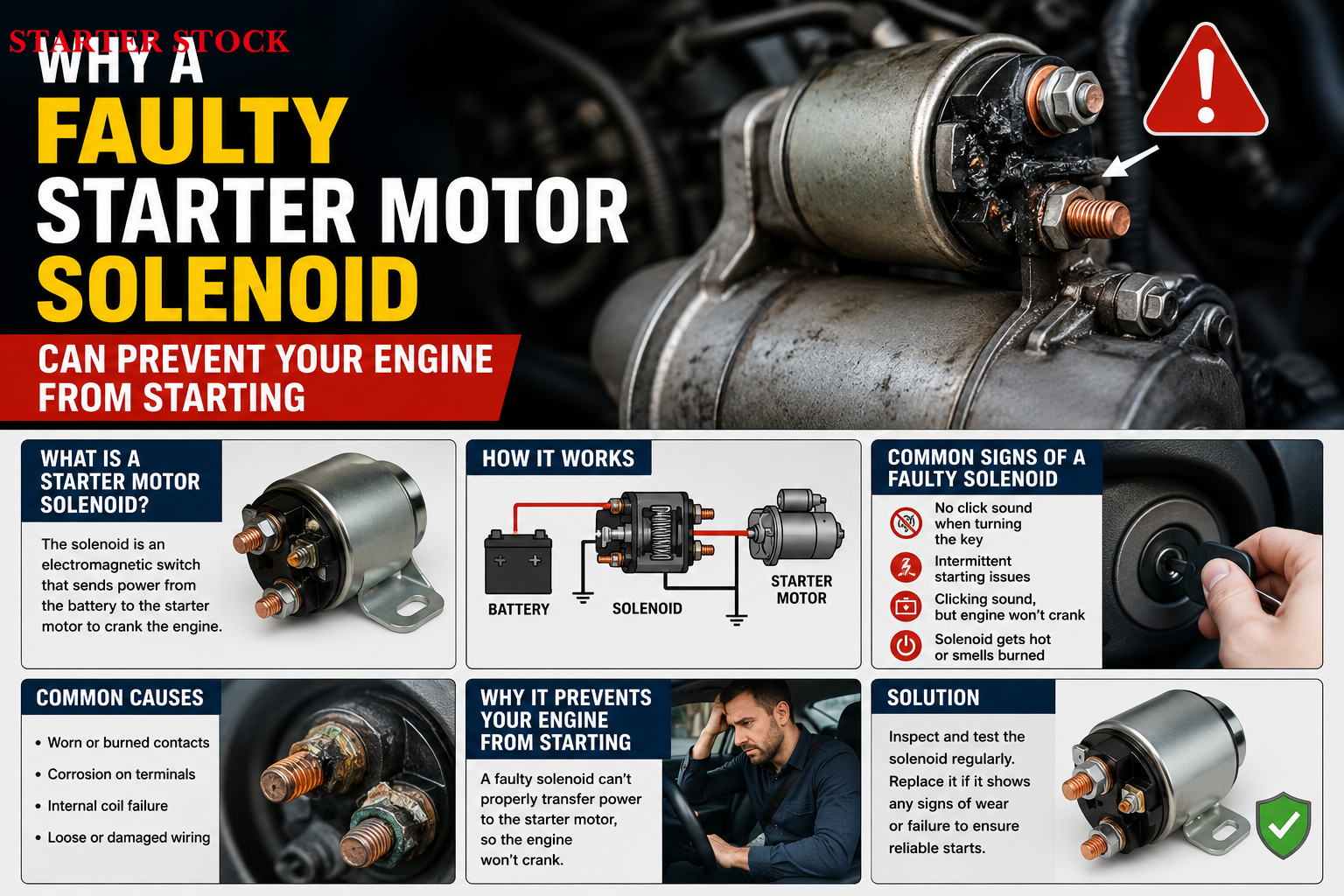
Hit the key, hear the click, nothing happens. Or maybe nothing at all. I've been stuck in parking lots, driveways, middle of nowhere, more times than I care to count. Half the time it's not the starter itself—it's that little can bolted to the side called the solenoid. Small part, big job, and when it quits, you're walking.
The starter motor does three things. Takes battery power, turns it into motion, engages the engine's flywheel to get combustion going. Then it gets the hell out of the way once the engine runs on its own. The solenoid is what makes all that happen in the right order.
Turn the key, low current hits the solenoid coil. Coil pulls a plunger forward. That plunger does two things at once: shoves the starter gear into the flywheel, and closes big contacts that dump full battery power to the motor. Gear meshes first, then power flows. Get that wrong and you've got grinding, or rattling, or nothing.
I've taken apart solenoids that looked fine outside and were destroyed inside. Contacts burned to craters, plunger stuck solid with cooked grease, return spring so weak it barely pushed back. Customer says "it worked yesterday." Sure it did. Until it didn't.
Key Components of a Starter Motor
Armature is the spinning part. Makes the motion that turns the engine. When power flows through the brushes and commutator, the armature becomes an electromagnet, pushes against the field magnets, spins. Simple, but everything has to be right.
Solenoid is the switch. Without it, the armature just spins free, never touches the flywheel. It's the bridge between electrical and mechanical. When it fails, the whole system fails.
Brushes and commutator feed power to the armature. They wear, create dust, eventually lose contact. I've replaced brushes worn to nubs, commutators grooved like old records. But the solenoid usually dies first, and it dies harder.
Common Signs of Starter Motor Wear
Recognizing Early Warning Indicators
Click is the classic sound. Loud click, or series of clicks, then nothing. That's the coil pulling in, but the contacts aren't passing current. Or the plunger moves partway, can't do both jobs. Bench test the starter, spins perfect. Put it back on, still clicks, still dead.
Slow crank means contacts are going high resistance. Not passing full current, starter turns but struggles. Battery tests good, cables good, solenoid is the hidden drop. I've measured 4 volts lost across tired contacts. Starter sees 8 instead of 12, barely turns over.
Intermittent is the worst. Works cold, fails hot. Or morning yes, afternoon no. Thermal expansion changes contact alignment, coil resistance shifts, plunger clearance changes. I've chased these ghosts for weeks before the pattern made sense.
Diagnosing Electrical and Mechanical Faults
Weak battery or bad ground mimics solenoid problems. I've spent hours chasing "bad solenoids" that were actually loose terminals or corroded cables. Check the simple stuff first. Clean the terminals, tighten everything, load test the battery.
Worn brushes or damaged solenoid cause irregular engagement. Brushes wear down, lose contact, go intermittent. Solenoid coil burns out, plunger sticks, contacts erode. I've found solenoids where the contacts looked like the moon—craters, ridges, nothing flat left.
Overheating from repeated attempts kills them fast. Guy tries to start, doesn't fire, tries again immediately. Six times in a row. Solenoid never cools, contacts never recover, heat builds until something melts. I've told customers: wait thirty seconds between tries. They don't, then they pay.
Preventive Maintenance Practices for a Longer Lifespan
Regular Inspection and Cleaning Procedures
Check terminals for that white crusty stuff. Corrosion adds resistance, makes everything work harder. Baking soda, wire brush, dielectric grease. Five minutes, saves headaches. I've found terminals shiny outside, green and crusty inside the lug where you can't see. Hidden resistance.
Inspect wiring for fraying or loose connections. Vibration, heat, age—everything conspires against wires. The small trigger wire from key to solenoid coil is especially vulnerable. Corrodes, frays, gets pinched. Reduced current means weak coil pull, bad contact seating, arcing, failure.
Keep it clean. Dirt, oil, debris block solenoid vents, trap heat, cause shorts. I've pulled solenoids from farm equipment packed solid with dirt. Dust mixes with grease, becomes abrasive sludge that jams the plunger solid.
Lubrication and Component Care
Grease moving parts, but sparingly. Plunger, shift fork, pinion shaft—need lube to move free. Too much attracts dirt, creates sludge, gums everything. I've seen solenoids packed with grease by well-meaning owners. Worked a month, then collected enough dirt to jam solid.
Avoid excessive lube. Light film, wipe off excess. Check periodically, reapply as needed. Less is more.
Watch bearings and bushings. Armature spins on these. Wear causes drag, increases current draw, overheats everything. Caught early, cheap fix. Ignored, destroys the starter and cooks the solenoid.
Electrical System Maintenance Supporting the Starter Motor
Battery Health and Its Impact on Starting Performance
Keep the battery strong. Weak battery makes solenoid work harder, pull longer, generate more heat. Load test, not just voltage. Drops below 10 volts under load, replace it. Cheaper than replacing starters and solenoids.
Replace old batteries before they kill other stuff. Three years is typical life. Push to five, you're gambling. Money saved on battery gets spent on solenoid when weak current causes arcing.
Tighten cables properly. Loose terminal, high resistance, solenoid sees low voltage, can't pull in fully, contacts arc and burn. Simple fix prevents expensive failure. Check torque, especially on stuff that vibrates.
Alternator and Charging System Checks
Make sure the alternator does its job. Undercharging lets battery run down, creates weak battery problems. Overcharging boils battery, makes acid fumes that corrode everything nearby. I've seen solenoid terminals green from corrosion caused by a boiling battery two feet away.
Check belts. Loose belt, slipping alternator, low output, dead battery, stranded. Broken belt, no charging, guaranteed dead. Check at every service, not just when they fail.
Healthy charging system means less stress on everything downstream. Neglect one part, others pay. Solenoid is downstream of all this—weak power in, weak performance out, short life.
Operating Habits That Protect the Starter Motor
Proper Starting Techniques for Everyday Use
Don't crank forever. Ten seconds max, then stop. Let it cool. Patience saves parts. I've cooked solenoids by being impatient, trying six rapid starts instead of waiting. Solenoid never cooled, something melted.
Wait between tries. Thirty seconds, minimum. Let the solenoid cool, battery recover, things settle. I count to fifteen. Seems like forever when you're late, but it's cheaper than a tow.
Turn off accessories before starting. Lights, radio, heated grips—everything draws power. Less available for starter means longer cranking, more heat, more wear on contacts. Simple habit, real protection.
Environmental Considerations Affecting Longevity
Cold weather hurts everything. Oil thickens, battery capacity drops, solenoid coil resistance rises. Block heater helps—warms engine, thins oil, easier starting. Solenoid doesn't fight as hard, lasts longer.
Keep it dry. Garage, cover, something. Rain, dew, humidity find their way in. I've seen solenoids fail from condensation alone, no rain needed. Moisture gets in, corrodes contacts, weakens spring, jams plunger.
Store covered when possible. Sun bakes plastic and rubber, rain corrodes metal, temperature swings stress everything. Simple protection extends life. Dirt floor sheds are the worst—moisture rises, corrodes everything, solenoids fail in months.
When Professional Service Becomes Necessary
Identifying Situations Requiring Expert Attention
Persistent problems after battery and cleaning means deeper issues. Internal solenoid failure, worn contacts, damaged plunger—stuff you can't see without taking it apart. I've chased intermittent problems for weeks. Sometimes you need fresh eyes and proper tools.
Unusual noises mean stop. Grinding, screeching, metallic rattling—something physically wrong. Continued use destroys flywheel, chews ring gear, melts cables. Stop immediately.
Smoke or burning smell. Electrical fire territory. Disconnect battery, get help. I've seen welded solenoid contacts keep starter engaged until it cooked itself and the cables. Not a roadside fix.
Benefits of Timely Professional Maintenance or Replacement
Good diagnosis saves money. Proper tools, experience, finding the real problem instead of guessing. I've fixed more "bad solenoids" by finding bad cables, bad grounds, bad batteries than by actually replacing solenoids.
Prevents cascade damage. Bad solenoid arcs, spikes voltage, can cook ECU, melt wiring. Fix it before it spreads. I've seen a $30 solenoid failure destroy a $400 ECU because the owner kept trying to start it.
Reliability matters. Starter is the beginning of every ride. When it works, everything else can work. Professional service gets you there consistently.
I get my starters and solenoids from STARTERSTOCK. Their stuff lasts. Heavy contacts, proper sealing, coils that pull hard even with marginal voltage. Installed on bikes, ATVs, tractors, mowers. Low failure rate.
Called once about a solenoid that clicked but wouldn't engage. Guy walked me through checking coil voltage under load. Found it dropping to 9 volts, coil couldn't hold plunger. Wasn't the solenoid—bad cable. Saved me from replacing a good part. That's the kind of support that matters.
They carry what I need. Japanese bikes, Harleys, ATVs, equipment. Model-specific, not universal "sort of fits." Proper mounting, correct connector, right coil resistance. Been burned by universal parts that needed modification. Never again.
Pricing is fair. Not cheapest, but quality costs. What I save not replacing them every six months pays the difference. For customers, I explain: buy cheap, replace twice. Buy right, replace once.
Warranty is real. Had one fail early—manufacturing defect, not wear. Replaced no argument, covered shipping. Didn't accuse me of installing wrong or demand proof. Just fixed it. That's rare.
Hit the button, hear that solid clunk of engagement, engine cranks and fires. That's what you want. Solenoid does its job, you do yours. Small part, but everything depends on it.